
Description
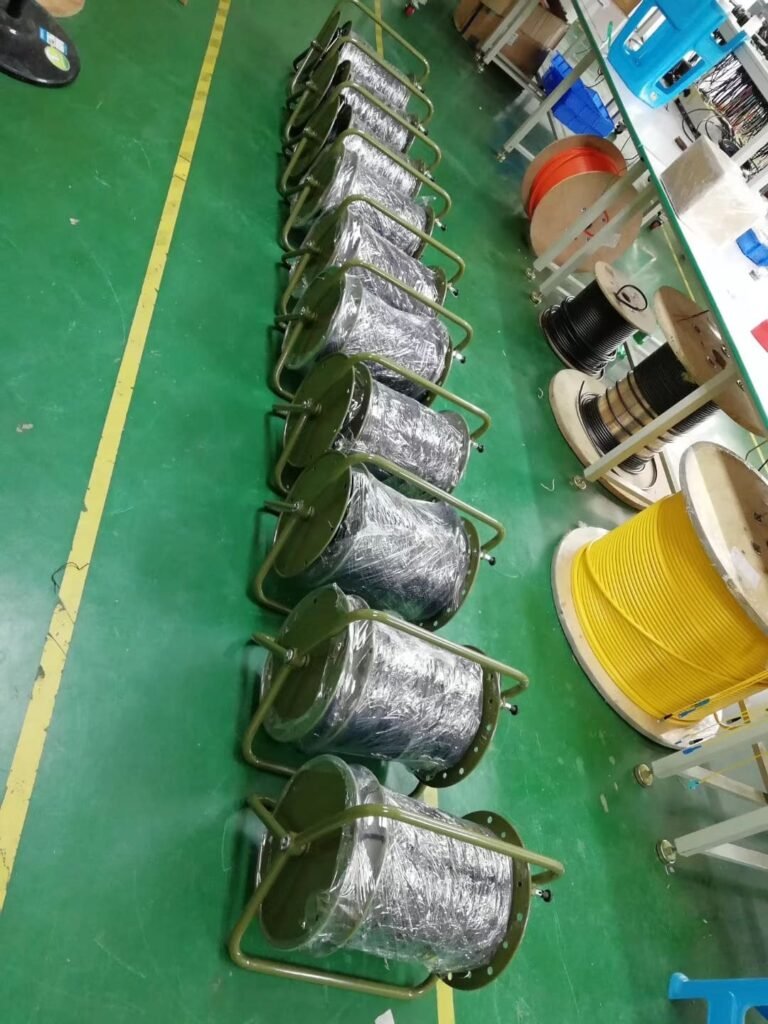
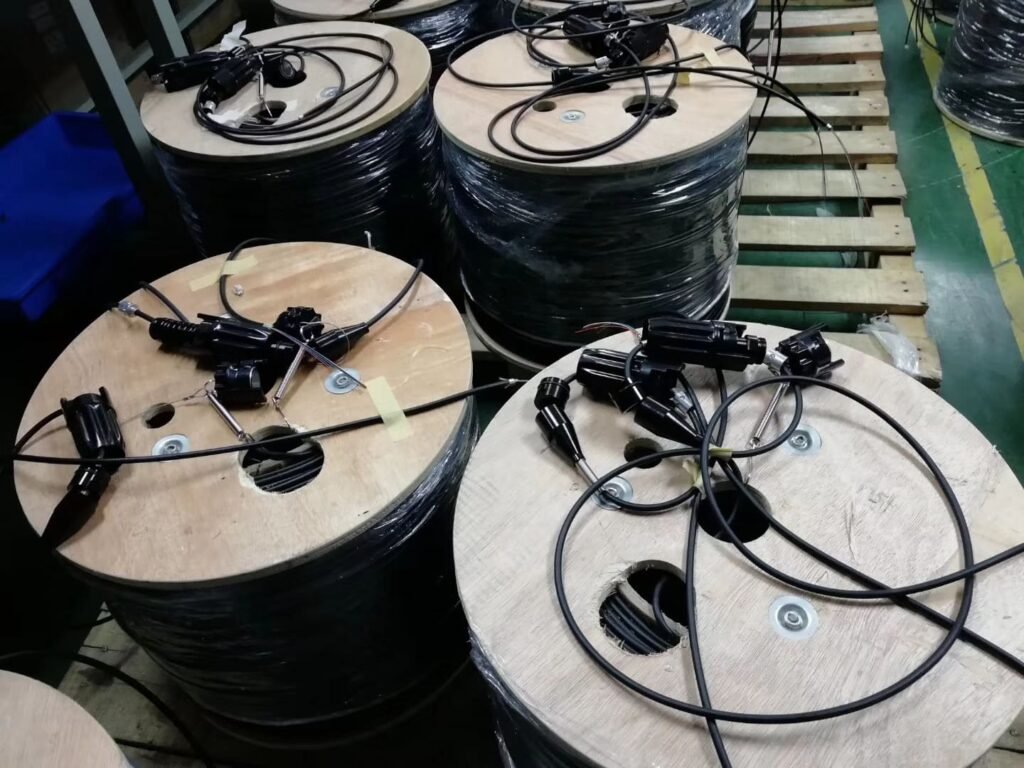
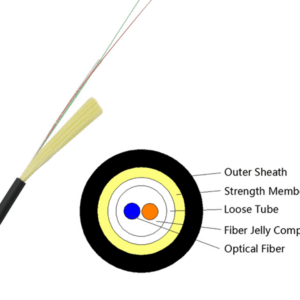
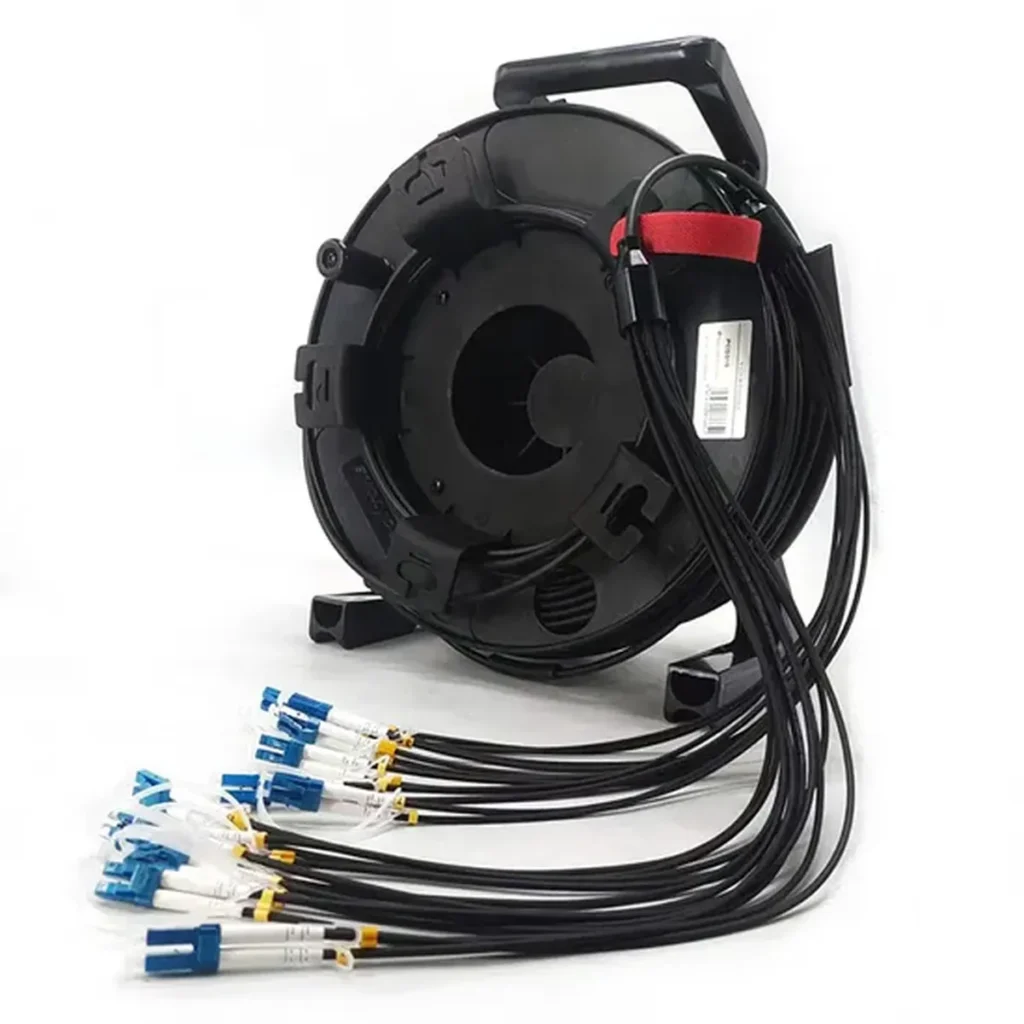
AIMIFIBER Tactical Field Cable is a harsh-environment optical cable designed to be laid, retrieved, and re-used repeatedly. The TPU jacket resists cuts, oils, and chemicals while staying flexible at low temperatures. Inside, thick aramid yarns protect bend-insensitive fibers (OS2 G.657.A1/A2 or OM3/OM4). Order as bulk cable or as pre-terminated assemblies on field reels for rapid deployment.
Where it’s used
- Military and public safety field communications
- Outside broadcast and live events (temporary fiber trunks)
- Industrial sites, mining, oil & gas corridors
- Emergency restoration and mobile command networks
Why TPU tactical over standard PE
- Much higher cut/abrasion and chemical resistance
- Remains flexible in cold climates; “no memory” after repeated reeling
- Withstands frequent drag, stomp, and vehicle traffic better than standard outdoor cable
Specifications
A) Construction & Materials
| Item | Spec | Notes |
|---|---|---|
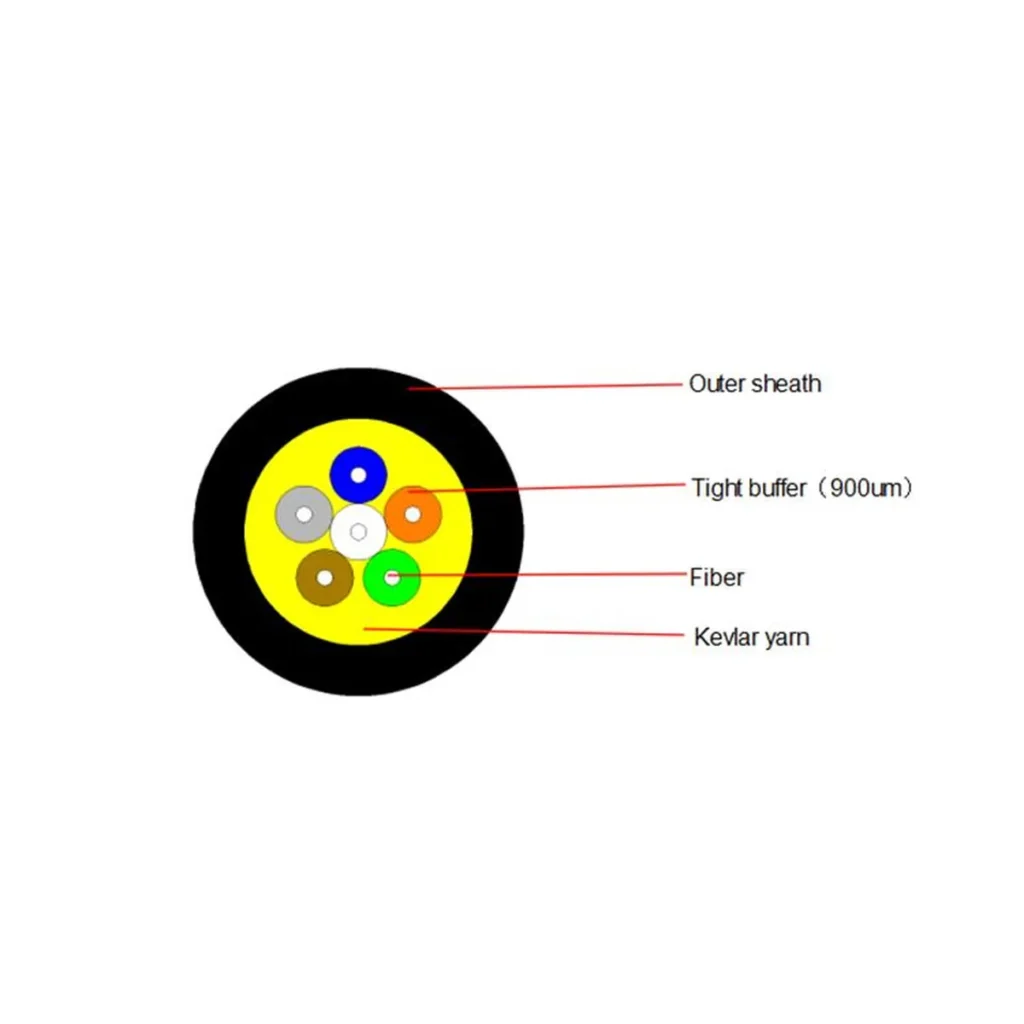
| Fiber count | 2,4,6,8,12 | Other counts on request |
| Fiber types | OS2 G.657.A1/A2; OM3/OM4 | Bend-insensitive single-mode or MM |
| Strength members | High-tenacity aramid yarns | Thick layup for repeated deployment |
| (Optional) inner armor | SUS spring tube or flexible metal braid | For extra crush/rodent resistance |
| Outer jacket | TPU, matte, black | Oil/chemical/abrasion resistant; memory-free |
| Nominal O.D. | 5–6 mm (2–12F typical) | Compact for field reels |
| Identification | Meter marks + custom print | Per order |
B) Optical (typ., cabled)
| Parameter | OS2 | OM3/OM4 |
|---|---|---|
| Attenuation @1310/1550 nm | ≤0.36/≤0.22 dB/km | — |
| Attenuation @850/1300 nm | — | ≤3.0/≤1.0 dB/km |
C) Mechanical & Environmental (typical)
| Parameter | Value | Reference |
|---|---|---|
| Tensile strength (long/short) | 600 N / 1500 N | Field assembly baseline values |
| Crush (long/short) | 700 N / 1500 N per 100 mm | |
| Min. bend radius | 20D dynamic / 10D static | |
| Operating temperature | −40 °C to +85 °C (cable); −20 °C to +60 °C (assembly baseline) | Assembly spec baseline shown in ref. |
| Jacket properties | Abrasion/oil/chemical resistant; UV-resistant | TPU |
D) Factory-Terminated Field Assemblies (optional)
| Feature | Spec |
|---|---|
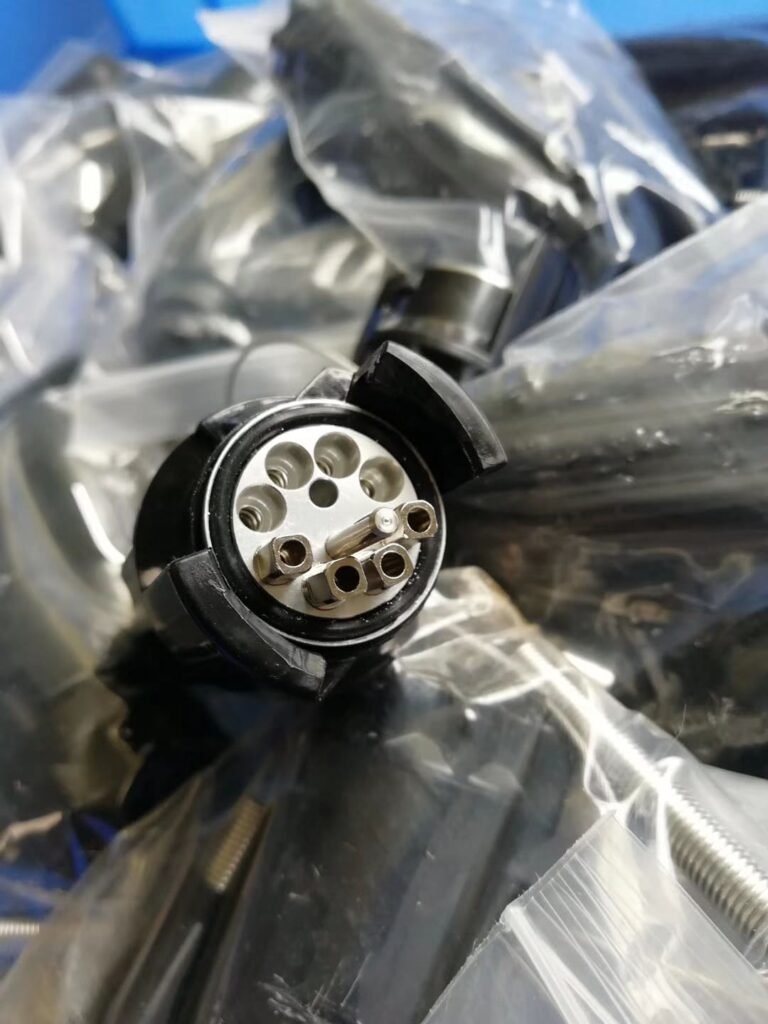
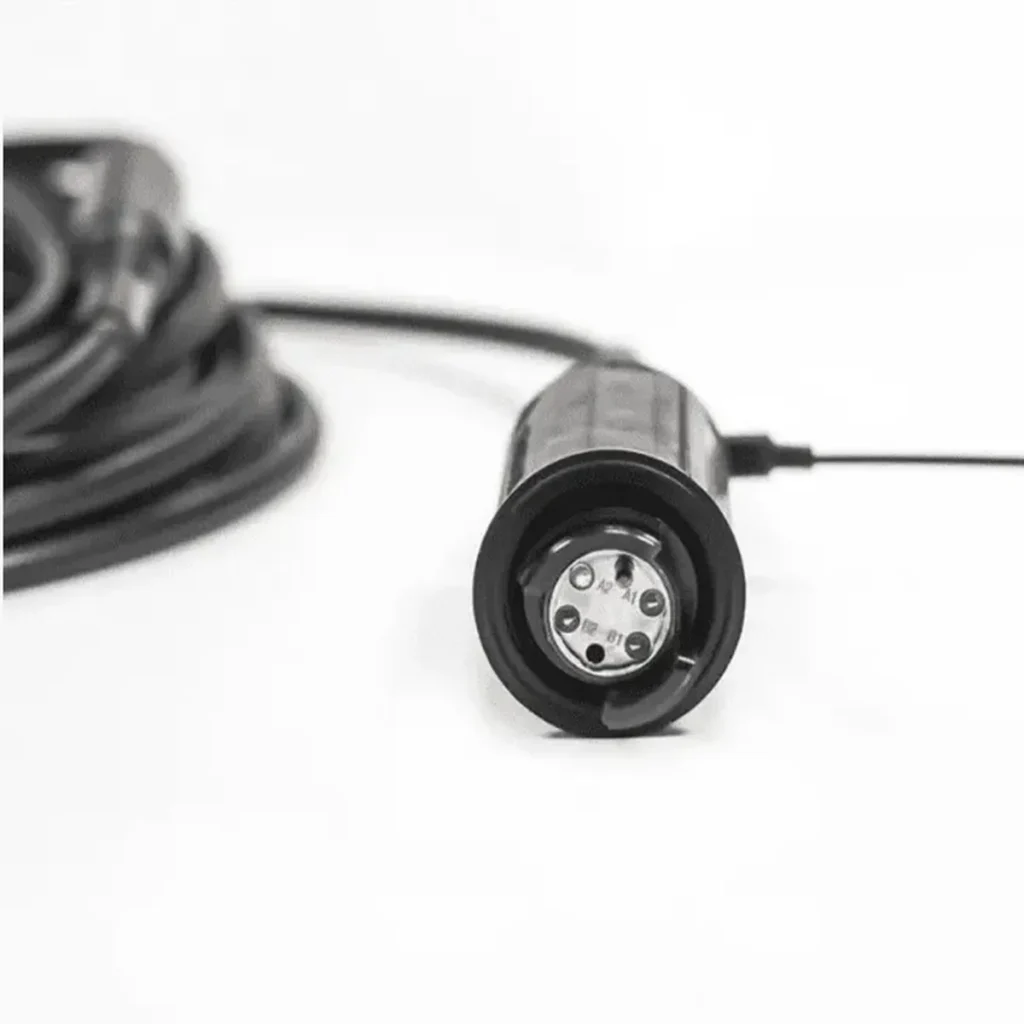
| Front-end | Hermaphroditic tactical interface (plug-to-plug mating, no gender) for daisy-chain field runs |
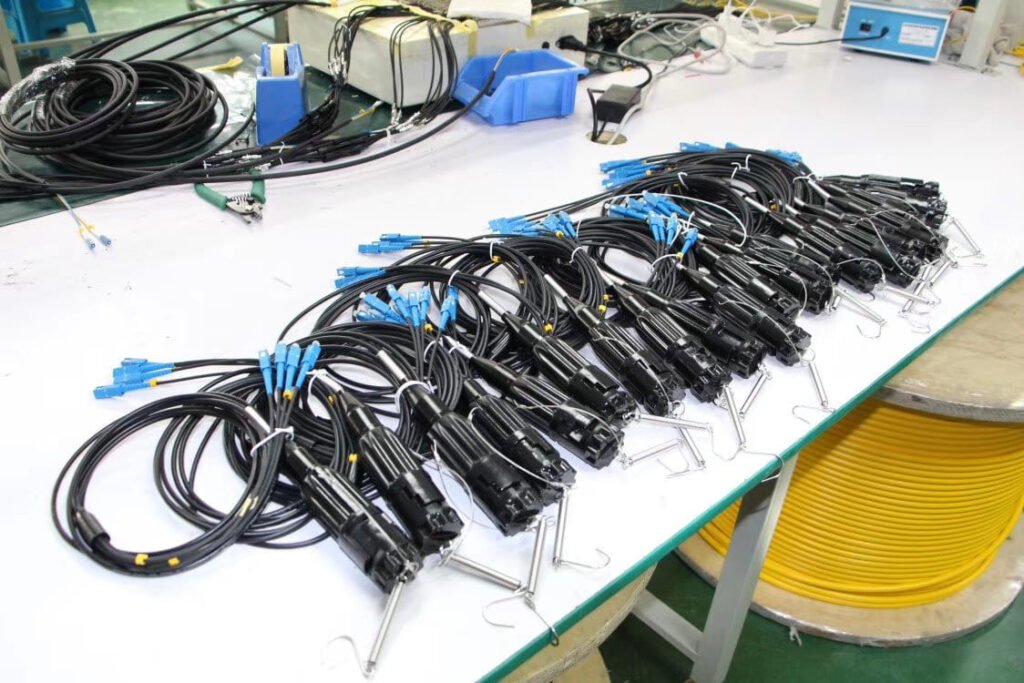
| Tail options | LC/SC/FC/ST/MTP at the far end; IP-rated fanouts on request |
| Insertion/return loss (assembly) | IL ≤0.8 dB @1310 nm, ≤0.7 dB @1550 nm; RL ≥45 dB (typ.) |
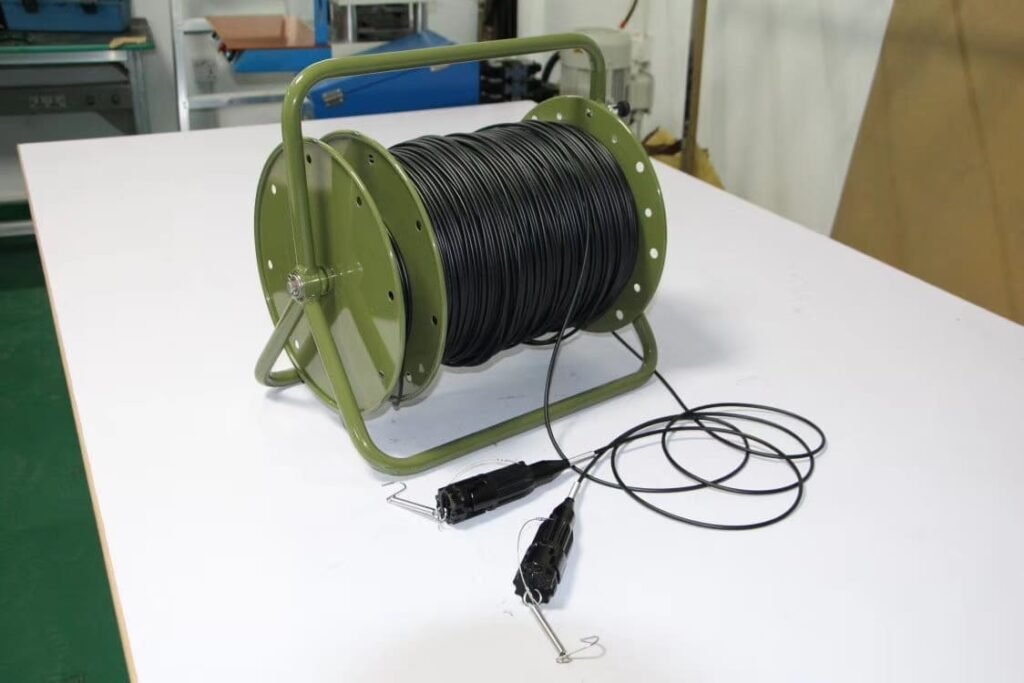
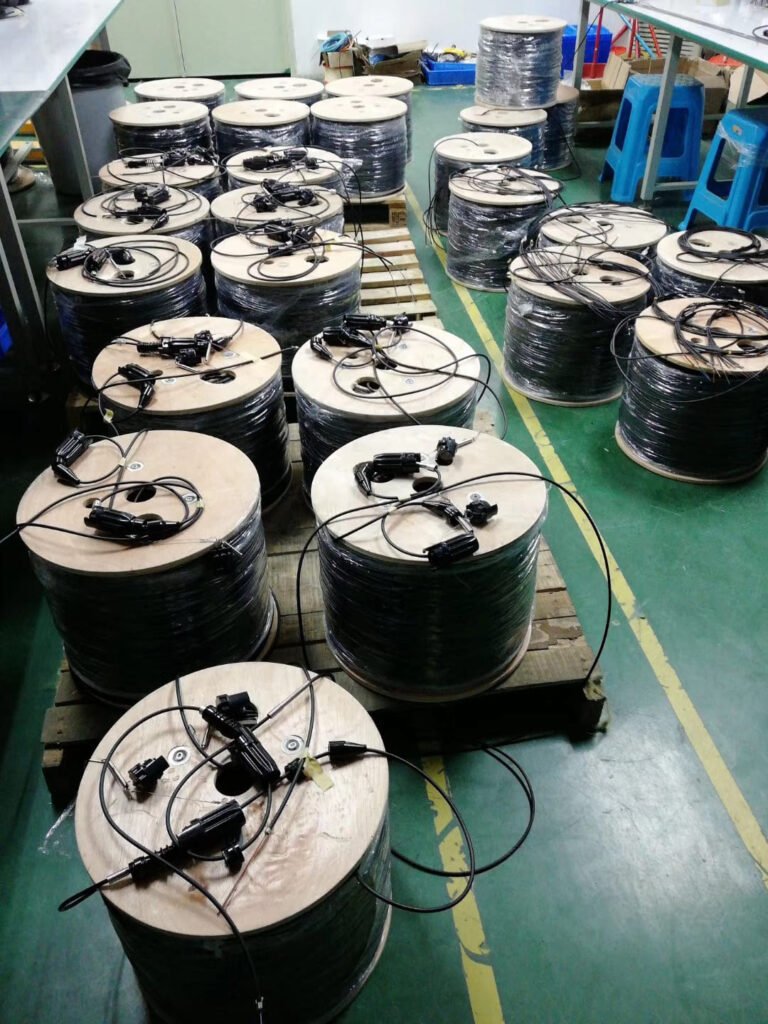
| Reels | Portable steel or composite field reels; brake + handle |
| Testing | 100% IL/RL + end-face inspection + visual fault |
Key Benefits
- TPU survivability: resists cuts, abrasion, oils, and chemicals; stays flexible in cold/heat.
- High tensile + crush: thick aramid layup and compact O.D. handle repeated deploy/retrieval.
- Rapid turn-up: optional hermaphroditic tactical connectors mate directly in the field; no adapters.
- Memory-free handling: smooth payout and re-spool; fewer kinks and induced loss.
- Configurable: 2–12 fibers, single-mode or multimode, with IP-rated fanouts and reels.
Options & Ordering
- Cable only: TPU tactical bulk cable (2–12F).
- Pre-terminated assemblies: dual-ended hermaphroditic tactical interface; far-end LC/SC/MTP pigtails; choose reel length.
- Ruggedization upgrades: stainless spring-tube inner armor; rodent-resistant braid; glow-trace jacket.
- Labeling: serial/meter marks; QR for test data.
Ordering code example:
TAC-TPU-[02/04/06/08/12]F-[OS2-G657A2|OM3|OM4]-OD5.8-AR-BLK-[Bulk|Asm-Herm-LC/APC]-Lxxxm
Engineer’s FAQ
Q1. What’s the advantage of a hermaphroditic tactical connector?
It mates plug-to-plug without gendered adapters, enabling fast daisy-chains and quick field restoration.
Q2. Can I drag the cable across ground and re-reel many times?
Yes—the TPU jacket plus heavy aramid yarns are designed for repeated deployment and retrieval in harsh terrain.
Q3. What fiber should I choose?
Use OS2 G.657.A2 for sharp bends in vehicles/racks; OM3/OM4 for short high-bandwidth camera or production links.
Q4. Typical assembly performance?
Insertion loss ≤0.8 dB @1310 nm (≤0.7 dB @1550 nm) and return loss ≥45 dB are standard acceptance targets.
Q5. Temperature range?
Cable build supports wide ambient extremes; assembly ratings of −20…+60 °C are typical baselines in the field reference.