Fiber-to-the-Home (FTTH) projects rely heavily on efficient production lines to meet the growing demand for high-speed connectivity. Setting up a production line for FTTH drop cables involves understanding which machines are necessary for both indoor and outdoor applications, addressing cable dynamics, and factoring in cost-effective add-ons. This guide offers key insights into the machinery required, operational adjustments for varying environments, and how to merge advanced features into wider production economics. From telecom project managers to factory investors, each chapter is designed to provide actionable information tailored to your needs.
Essential Machinery for FTTH Drop Cable Manufacturing
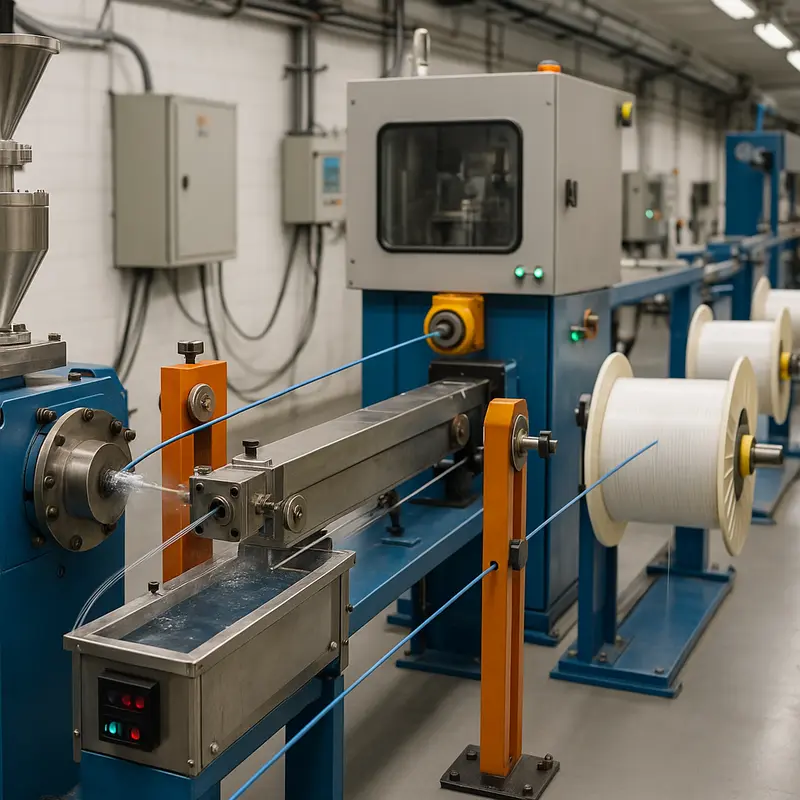
When constructing a production line for Fiber-to-the-Home (FTTH) drop cables, a variety of specialized machines come into play, each fulfilling a critical function in the creation of high-quality, durable cables suitable for both indoor and outdoor applications. This meticulous orchestration of equipment not only ensures precision in manufacturing but also enables scalability and efficiency in production. Below, we unravel the core machinery required to establish a successful FTTH drop cable manufacturing line.
The Heart of Production: Extrusion Machines
At the core of FTTH drop cable production lies the extrusion machine. This machine transforms raw materials, such as polyethylene and PVC, into protective cable coatings, forming the first layer of shielding. Precision is paramount here, as the extrusion process determines the cable's strength and longevity. Modern extrusion machines often come equipped with programmable controls, ensuring consistent output and minimizing material wastage. To learn more about the nuances of this process, refer to this guide on FTTH drop cable extrusion.
Strengthening the Cable: Stranding and Tensioning Systems
To create FTTH drop cables capable of enduring harsh environments, reinforcement is crucial. Stranding machines integrate strength members, such as steel wires or fiberglass rods, within the cable. These systems ensure the cable is robust enough to withstand tension during aerial installations or stress in ducts. Additionally, precise tensioning systems prevent over-tightening, which could damage the integrity of the cable.
Insulation and Jacketing Systems
Another indispensable piece of equipment is the jacketing system. After extrusion, this machine applies outer layers to the cable, offering shielding against environmental factors like UV radiation, moisture, and temperature variations. Depending on whether the cable is intended for indoor or outdoor use, the jacketing material may differ. Indoor cables prioritize flexibility and discreet colors, while outdoor cables emphasize durability.
Quality Assurance with Optical Testing Units
No production line is complete without advanced optical fiber testing machines. These units assess critical parameters—like insertion loss, attenuation, and reflectance—ensuring every cable meets industry standards. As FTTH networks demand uninterrupted connectivity, comprehensive quality assessment is non-negotiable.
Precision Cutting and Spooling Equipment
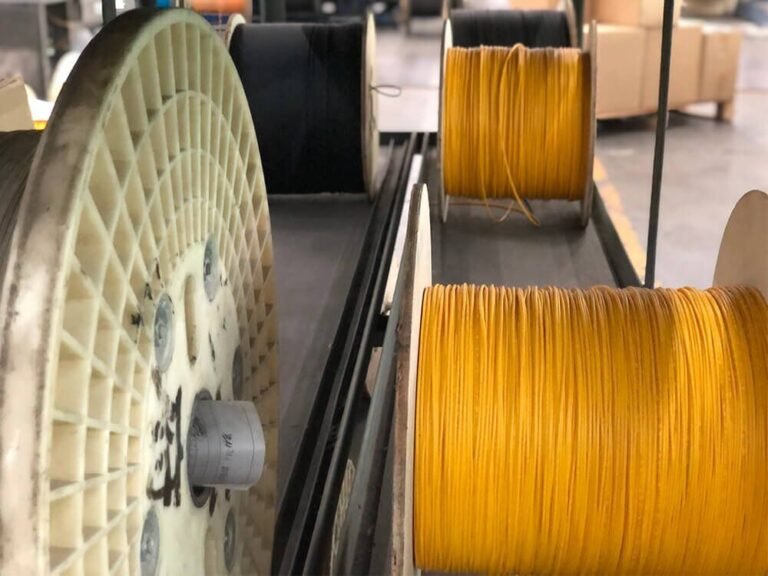
To prepare cables for deployment, precision cutting machines slice them into designated lengths. Paired with automated spooling systems, these machines organize the cables into reels, making transportation and installation hassle-free. In large-scale operations, spooling systems with integrated labeling capabilities are particularly advantageous for streamlining supply chains.
Conclusion
Every machine in an FTTH drop cable production line carries its own weight—collaborating to manufacture cables capable of meeting the expanding demands of modern fiber optic networks. Investing in state-of-the-art equipment not only enhances product quality but also positions manufacturers to better serve burgeoning global FTTH markets. By prioritizing precision and reliability in each stage of production, businesses can confidently contribute to today's hyper-connected world.
Balancing Precision: Indoor and Outdoor Fiber Cable Production Demands

When it comes to shaping the manufacturing infrastructure for fiber-to-the-home (FTTH) drop cables, the differences in indoor and outdoor applications demand nuanced attention. These distinctions directly impact the types of machines required for production and the operational considerations that arise. By examining the dynamics of each environment, manufacturers can optimize their production lines to ensure efficiency and robustness while meeting specific deployment needs.
Indoor Cable Requirements: Precision with Elegance
Indoor fiber cables often serve environments where aesthetics, compactness, and safety are paramount. Consequently, the production equipment focuses on creating cables that are lightweight, flexible, and visually unobtrusive. Essential machines include precision extruders that coat optical fibers with thin, non-invasive sheaths. The coating materials are typically flame-retardant and designed for low-smoke emissions to adhere to indoor safety norms.
Spooling and winding equipment further fine-tune the process by ensuring neatly arranged reels that can be seamlessly integrated into interior systems. Indoor use often involves shorter distances, necessitating machinery calibrated for smaller batch sizes without sacrificing quality. Additionally, indoor cable types frequently feature soft jacket materials. Machines handling this process must be capable of extrusion and cooling without warping the softer jacket compounds.
Outdoor Cable Requirements: Toughness with Reliability
Outdoor scenarios, on the other hand, are worlds apart. They demand cables capable of withstanding environmental extremes such as UV radiation, temperature shifts, moisture, and mechanical stress. The production line for outdoor FTTH cables typically incorporates high-grade extruders designed to apply rugged outer sheaths. Materials such as polyethylene dominate this segment, ensuring long-term resilience.
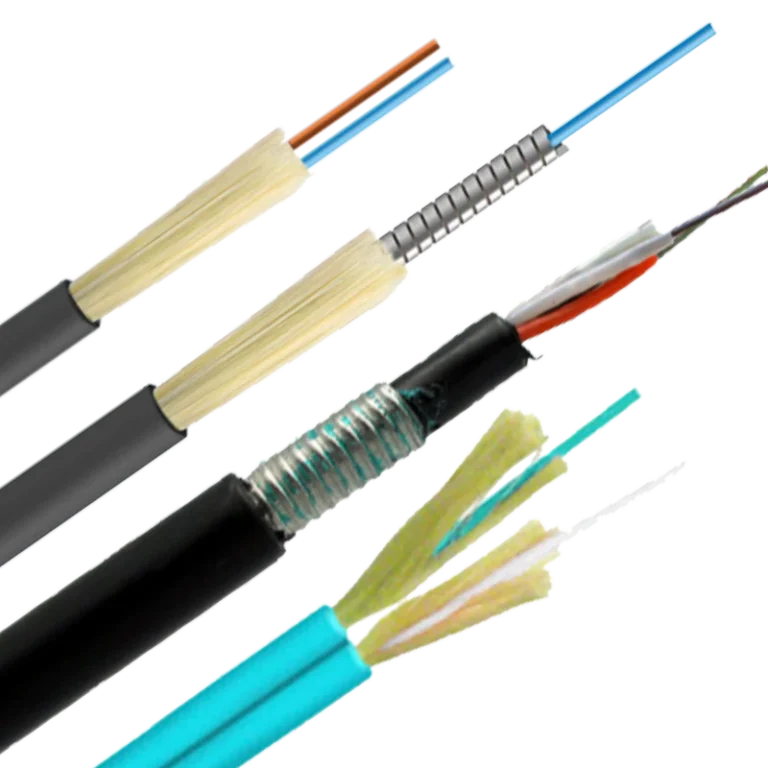
An integral machine is the armoring unit, used to reinforce optical cables with elements like steel tape or other protective overlays. This shields the delicate optical fibers from damage during deployment in aerial or underground setups. Further along the line, UV stabilization equipment ensures outdoor cables resist degradation from prolonged exposure to the sun.
Finally, tensile testing machines simulate real-world stress scenarios, guaranteeing product reliability before installation in demanding environments. These tests are especially critical for cables that will be laid in harsh outdoor conditions.
Making the Transition Seamless
Modern FTTH cable factories often integrate machinery that can adjust production outputs for both indoor and outdoor specifications with minimal downtime. Automated systems capable of quick material changeovers are invaluable in maintaining efficiency. This versatility enables manufacturers to meet diverse market demands without significant operational interruptions.
For deeper insights into scaling fiber cable production lines while addressing indoor-outdoor market demands, refer to the helpful resources provided in this guide. Bridging the gap between these contrasting requirements is a testament to the industry’s innovation, ensuring FTTH networks thrive in every environment imaginable.
Expanding Efficiency: Merging Cable Production and Market Economics

In the fiber-to-the-home (FTTH) cable production landscape, scalability and economic alignment are vital for both indoor and outdoor manufacturing environments. To achieve operational efficiency and market adaptability, producers need to consider the integration of advanced machinery with strategic, market-driven production techniques.
FTTH drop cable production lines, whether designed for indoor use, outdoor environments, or both, require a precise interplay of technology and economic strategy. The primary components of these setups include extrusion lines, sheathing equipment, tension controllers, and high-speed cutting systems. These machines collectively ensure the production of high-quality, durable cables designed to meet rigorous industry standards. However, beyond the basic machinery, integrating add-on technologies can revolutionize production efficiency.
One critical add-on is automated monitoring systems. These solutions streamline the detection of manufacturing defects, allowing for real-time quality assurance. By reducing downtime caused by manual inspections, automated systems can increase production throughput and reduce costs in the long term. For outdoor FTTH drop cables, equipment that incorporates weather-resistance testing modules can be invaluable. Testing for UV resistance, water ingress, and temperature fluctuations ensures that cables will perform reliably in harsh outdoor conditions, boosting customer confidence and minimizing costly maintenance or replacements.
Economically, merging production line enhancements with market demand plays a decisive role. As global fiber optic network expansion accelerates, manufacturers must align their production capabilities with trends in both local and international markets. Lightweight FTTH drop cables, for instance, have become increasingly popular in high-density residential areas due to their ease of installation and reduced material costs. By integrating machinery tailored specifically for lightweight cable production, businesses position themselves to capture a growing segment of the market efficiently.
Another layer of economic integration lies in modular production lines. These systems enable manufacturers to pivot between indoor and outdoor cable types with minimal reconfiguration, allowing for dynamic responses to shifting market needs. This versatility reduces capital expenditure, as one production line can serve multiple purposes, and creates a competitive edge in fluctuating economic conditions. To explore more about scalable production approaches, the article at this resource provides detailed insights.
Additionally, the role of sustainability cannot be overlooked. Energy-efficient machinery and recycling units help manufacturers reduce their environmental footprint while capitalizing on government incentives aimed at promoting green practices. Coupled with intelligent inventory management systems, sustainable structures ensure waste reduction, better resource allocation, and enhanced profitability.
In conclusion, the convergence of advanced machinery, market-driven adaptability, and sustainability creates the foundation for a successful FTTH cable production operation. Indoor and outdoor production lines, equipped with the right technological and economic strategies, not only meet current demands but are also primed for future industry evolutions.
Final thoughts
Establishing an indoor and outdoor FTTH drop cable production line requires precise machinery selections for extrusion, buffering, and testing. By considering installation dynamics and cost-effective add-ons, telecom professionals can maximize efficiency and scalability in deployment. These insights help optimize FTTH manufacturing while ensuring high performance in diverse environments.
Optimize your FTTH cable production and deployment. Contact AIMIFIBER for custom solutions, OEM/ODM services, and expert consultation today!
Learn more: https://aimifiber.com/contact-us/
About us
AIMIFIBER specializes in pre-terminated fiber optic solutions, offering FTTH drop cables, patch cords, pigtails, and FTTA products. Our OEM/ODM services cater to telecom, ISP, and data center projects, ensuring precision and efficiency for diverse applications.