FTTH drop cable is the last-meter fiber link between the optical distribution point and the subscriber's home. For ISPs and telecom operators rolling out fiber-to-the-home networks, drop cable procurement mistakes — wrong fiber spec, wrong jacket type, or wrong tension rating — translate directly into rework costs and subscriber complaints. This guide covers everything you need to source FTTH drop cable correctly the first time.
What Is FTTH Drop Cable?
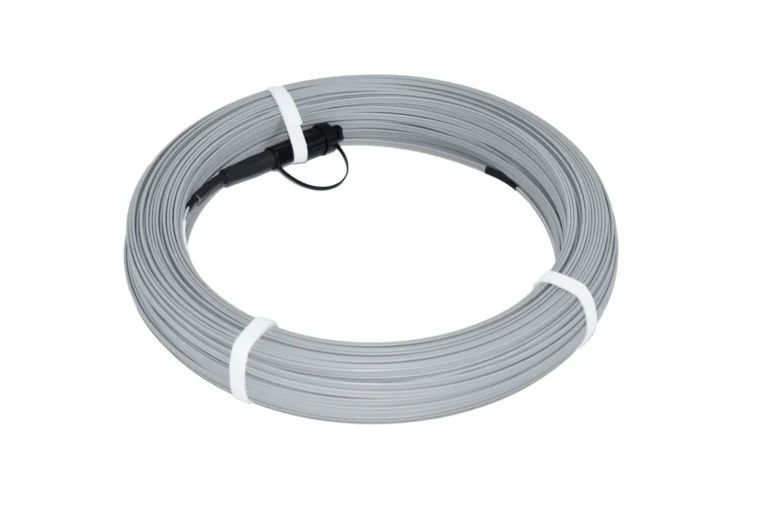
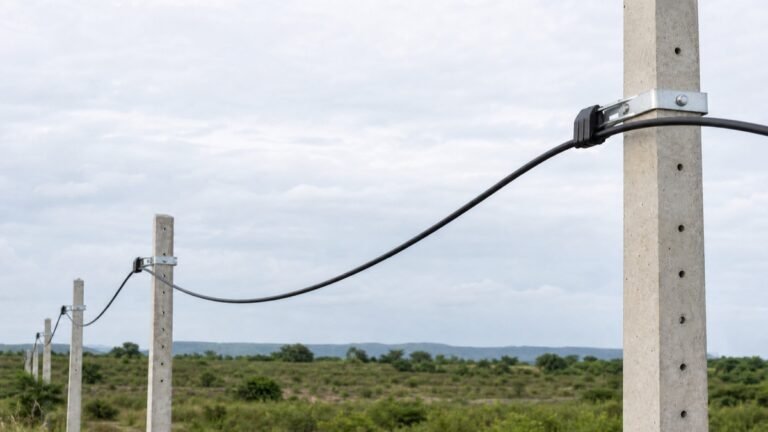
FTTH drop cable (also called fiber drop wire or subscriber drop fiber) is a small-diameter, single-fiber or 2-fiber outdoor-rated cable designed for the final segment of an FTTH network — from the optical network terminal (ONT) closure or splitter box on the pole/building to the subscriber premises. Drop cables are characterized by:
- 1 or 2 optical fibers (occasionally 4F for multi-unit buildings)
- Small outer diameter: typically 2.0 × 3.0 mm flat or 2.0 mm round
- Built-in strength members: FRP (fiberglass-reinforced plastic) rods or steel wire
- UV-resistant PE (polyethylene) or LSZH jacket for outdoor aerial or buried installation
- Bend-insensitive fiber: ITU-T G.657A1 or G.657A2
FTTH Drop Cable Specifications Comparison
| Parameter | Indoor Drop | Outdoor Aerial Drop | Self-Supporting (Figure-8) |
|---|---|---|---|
| Fiber standard | G.657A1 / G.657A2 | G.657A1 | G.657A1 / G.652D |
| Min. bend radius | 7.5 mm (A2) / 10 mm (A1) | 15 mm | 20 mm |
| Strength member | FRP or aramid yarn | FRP rod × 2 | Steel messenger wire |
| Max tensile load | 100 N | 200 N (short term 400 N) | 2000–5000 N (messenger) |
| Jacket material | LSZH / PVC | HDPE / PE | HDPE |
| Temperature range | –20 °C to +60 °C | –40 °C to +70 °C | –40 °C to +70 °C |
| Typical OD | 2.0 × 3.0 mm flat | 2.0 × 3.0 mm or 2.0 mm round | Combined OD 6–8 mm |
| Span length | N/A (indoor routing) | 30–80 m (with clamps) | 50–150 m (self-support) |
| UV resistance | Not required | Required — carbon black PE | Required — carbon black PE |
G.657A1 vs G.657A2: Which Bend-Insensitive Standard Do You Need?
Both G.657A1 and G.657A2 are bend-insensitive variants of single-mode fiber, backward-compatible with G.652D. The key difference is the minimum bend radius:
- G.657A1: 10 mm minimum bend radius. Suitable for most aerial and in-building drop installations where cable routing avoids tight bends.
- G.657A2: 7.5 mm minimum bend radius. Required for indoor routing in conduit or cable trays where the cable must navigate tight corners, ceiling tiles, or wall-box terminations.
For outdoor aerial FTTH drops, G.657A1 is the standard choice and costs less than G.657A2. If your project includes routing cable directly into ONT boxes with tight internal bends, specify G.657A2 for the indoor portion.
Relevant Standards for FTTH Drop Cable
- ITU-T G.657: Optical fiber characteristics for single-mode optical fibres and cables used in access networks
- IEC 60794-2-11: Outdoor drop cables for FTTH networks
- YD/T 1997: Chinese telecommunications standard for FTTH indoor optical drop cables
- RoHS Directive: Required for EU deployments — restricts lead, mercury, cadmium, and other hazardous materials in cable jacketing
- ISO/IEC 11801: Building cabling standard — relevant when drop cable routes through in-building structured cabling zones
AIMIFIBER's FTTH drop cables are certified to ITU-T G.657A1/A2 and IEC 60794-2-11. CE, RoHS, and TÜV certifications available for EU-bound shipments. Country-specific certifications (Anatel for Brazil, BIS for India) available — please inquire.
FTTH Drop Cable Price Ranges (China Factory 2026)
| Cable Type | Quantity (km) | Price Range (USD/km) |
|---|---|---|
| 1F G.657A1 Flat Drop (FRP) | 10–50 km | USD 45–65 |
| 1F G.657A1 Flat Drop (FRP) | 100+ km | USD 35–50 |
| 1F G.657A2 Indoor Drop (LSZH) | 10–50 km | USD 55–80 |
| 2F G.657A1 Flat Drop (FRP) | 10–50 km | USD 60–85 |
| Figure-8 Self-Supporting 1F | 10–50 km | USD 90–130 |
| Pre-connectorized Drop 1F SC/APC | 500–2000 pcs | USD 3.50–6.00 each |
Note: Prices are indicative ex-works Shenzhen. Final pricing depends on raw material costs (HDPE resin, SiO₂ preform), quantity, and delivery terms. Request a formal quote for accuracy.
What to Specify in Your FTTH Drop Cable RFQ
- Fiber count — 1F, 2F, or 4F
- Fiber standard — G.657A1 or G.657A2
- Installation method — aerial, direct burial, indoor, or a mix
- Strength member type — FRP (non-metallic, recommended for lightning-prone areas) or steel wire
- Jacket material — PE/HDPE for outdoor, LSZH for indoor, PE for direct burial
- Reeling — drum size, footage per drum (500 m / 1000 m / 2000 m reels common)
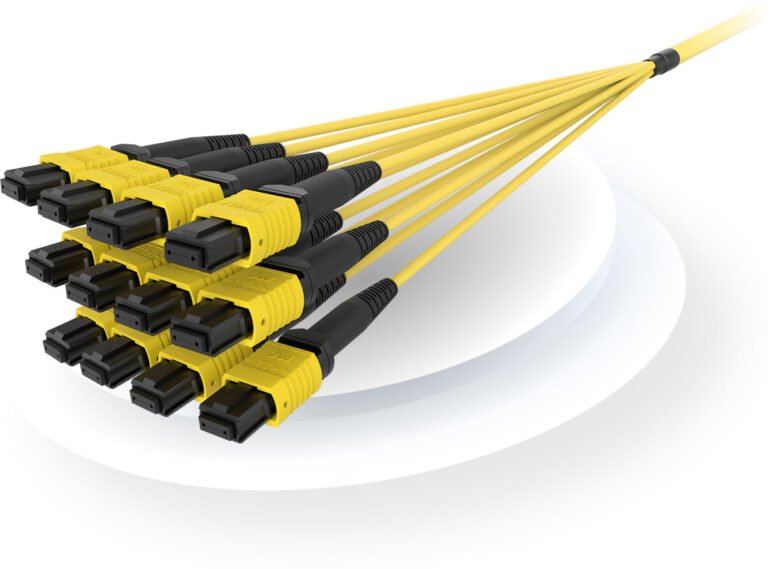
- Pre-connectorization — flat SC/APC or SC/UPC ends? Factory-terminated reduces field splicing costs but increases unit price
- Certifications required — CE, RoHS, Anatel, BIS, TÜV, etc.
- Total quantity in km — break by type if mixing aerial and indoor
Why Source FTTH Drop Cable from AIMIFIBER?
AIMIFIBER manufactures FTTH drop cables at our Shenzhen facility with end-to-end production control:
- Preform sourcing: PCVD/VAD preforms from qualified ITU-T G.657A1/A2 suppliers
- Draw tower: ≤ 0.02 dB/km @ 1310 nm attenuation on production fibers
- Jacket extrusion: In-house HDPE/PE/LSZH extrusion with online OD measurement
- QC: 100% OTDR test on finished reels; attenuation, PMD, and return loss reports included
- MOQ: 5 km for standard types; 20 km for project pricing
- Lead time: 15–25 business days for standard orders; 10–15 days for ≤ 50 km
Frequently Asked Questions
- What is the maximum span for an FTTH aerial drop cable without a messenger wire?
- A standard G.657A1 flat drop cable with FRP strength members can span 30–50 m with intermediate clamps. For spans up to 80 m, use a reinforced 4-FRP version. For spans above 80 m, specify a Figure-8 self-supporting cable with a steel messenger wire rated for the required span and local wind/ice load.
- Can FTTH drop cable be direct buried without additional conduit?
- Some PE-jacketed drop cables are rated for direct burial in dry or moist soil, but standard flat-drop cables are not. For direct burial, specify a round-profile, gel-filled or water-blocked variant with a corrugated PE jacket. AIMIFIBER offers both conduit-pull and direct-burial versions.
- How do I calculate how much FTTH drop cable I need for a project?
- Multiply the number of subscribers by the average drop length (typically 30–80 m per subscriber), then add 15% slack factor for routing, splicing, and future access loops. For a 1,000-subscriber greenfield FTTH project with 50 m average drops, estimate: 1,000 × 50 m × 1.15 = 57,500 m ≈ 58 km of drop cable.
- What is the minimum bend radius for FTTH drop cable routing at the ONT?
- For G.657A1 cable, the long-term minimum bend radius is 15 mm; short-term (during installation) is 30 mm. For tighter in-box routing, use G.657A2 cable (7.5 mm long-term) or pigtails with the same spec inside the ONT enclosure.
- Does AIMIFIBER offer pre-connectorized FTTH drop cables?
- Yes. We offer factory-terminated FTTH drop cables with SC/APC, SC/UPC, LC/APC, or FC/APC connectors on one or both ends. Factory termination eliminates field splicing, reduces installation time by 40–60%, and provides a warranty-backed IL guarantee of ≤ 0.3 dB. See our pre-terminated product range.
Request a Quote for FTTH Drop Cable
Share your project specs — fiber count, cable type, total length, and any certification requirements. AIMIFIBER will respond within 24 hours with pricing, datasheet, and available sample stock.