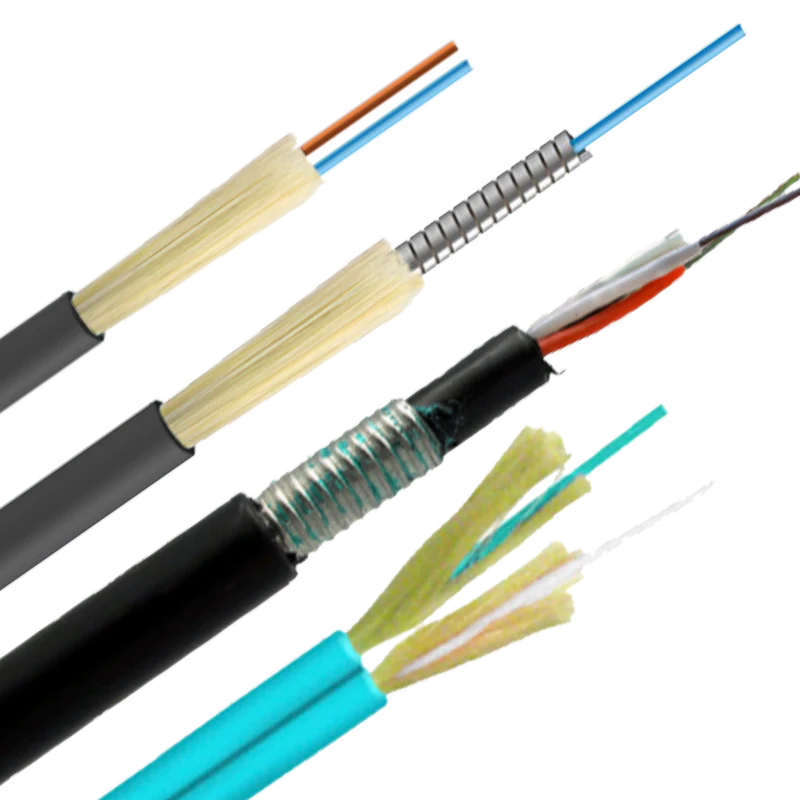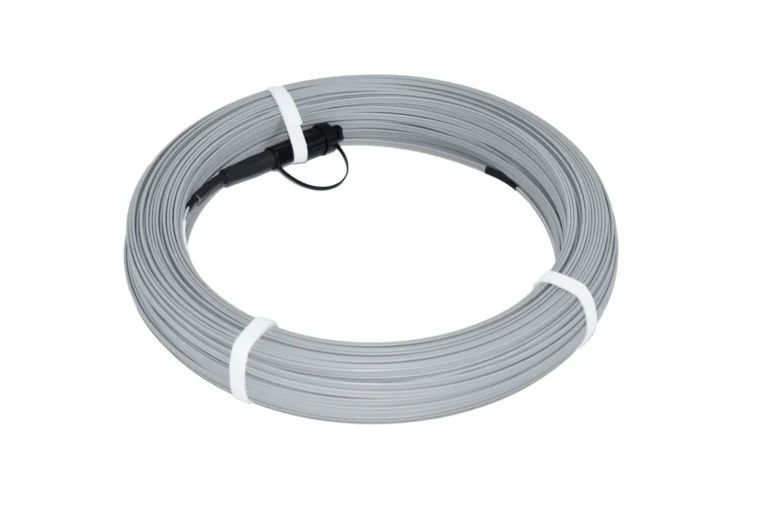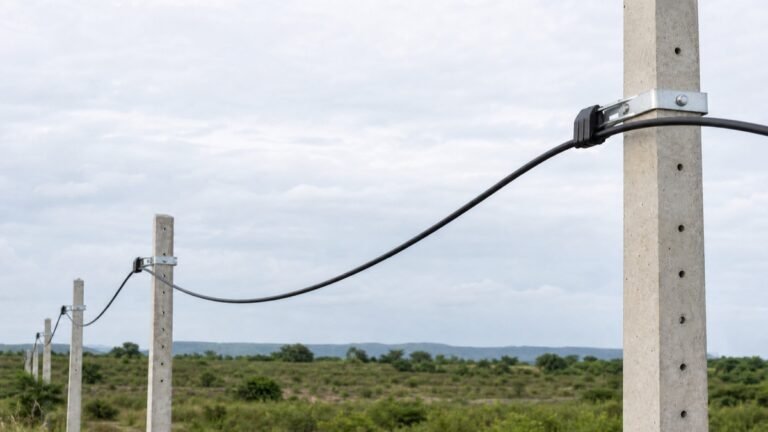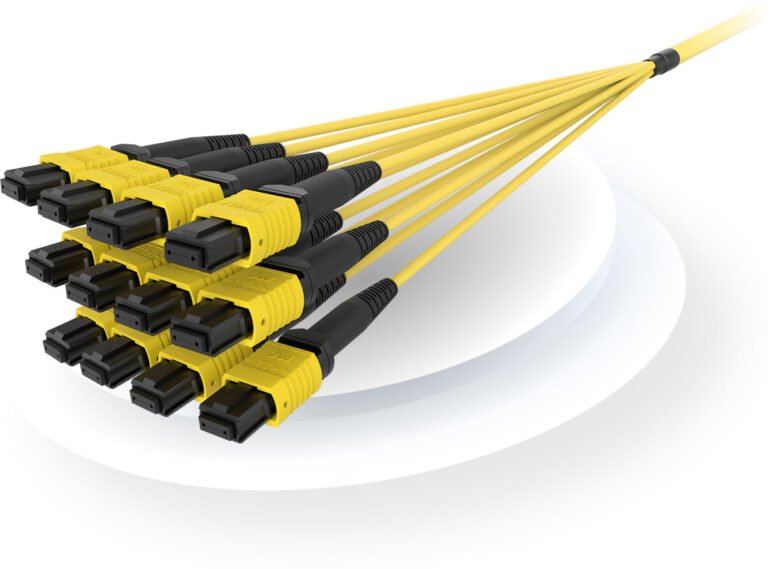
The jacket material of a fiber optic cable determines how it performs in fire, extreme temperatures, and harsh environments. Choosing the wrong jacket material can mean failed building inspections, cable degradation, or — in a fire — toxic smoke filling an occupied building. This guide compares the three most common options: LSZH, PVC, and PE.
Quick Comparison
| Property | LSZH | PVC | PE |
|---|---|---|---|
| Full name | Low Smoke Zero Halogen | Polyvinyl Chloride | Polyethylene |
| Fire behavior | Self-extinguishing, slow spread | Burns; supports flame spread | Burns; drips molten material |
| Smoke output | Very low, clear | High, dense black | Moderate |
| Toxic gas emission | None (halogen-free) | HCl, dioxins (toxic) | Low |
| Temperature range | −20 to +70°C | −20 to +70°C | −40 to +85°C |
| UV resistance | Moderate | Poor | Excellent |
| Water resistance | Good | Good | Excellent |
| Flexibility | Good | Good | Moderate (stiff when cold) |
| Cost (relative) | High | Low | Medium |
| Primary use | Indoor, occupied buildings | Indoor, low-risk areas | Outdoor, underground, aerial |
LSZH (Low Smoke Zero Halogen)
LSZH jackets are made from halogen-free polymer compounds that resist fire propagation and produce minimal smoke when burning. The key standards are:
- IEC 60332-1 / IEC 60332-3: Flame propagation test (single cable and bunched cables)
- IEC 61034: Smoke density test
- IEC 60754-1: Halogen content test (must be <0.5% halogens)
When to specify LSZH:
- Data centers, telecom rooms, and server rooms
- Public buildings: hospitals, schools, airports, train stations
- Underground transit systems (metro, subway)
- Any installation where evacuation in a fire could be hindered by smoke
- EU buildings: mandatory in many countries under construction regulations
Limitations: LSZH is typically 20–40% more expensive than PVC equivalents. In extreme cold (below −30°C), some LSZH compounds can become brittle. Not ideal for outdoor UV exposure without an additional PE outer sheath.
PVC (Polyvinyl Chloride)
PVC remains the most widely used jacket material globally due to its low cost, good flexibility, and compatibility with standard cable installation tools.
When to specify PVC:
- Indoor installations in non-critical areas where fire code allows
- Low-budget residential FTTH drop cable
- Short indoor patch cord runs in enclosed spaces
- Markets where LSZH is not mandated (US, parts of Asia)
Important warning: PVC releases hydrogen chloride (HCl) when burning — a toxic, corrosive gas. In enclosed spaces, PVC fire smoke is a primary cause of fire fatalities. Many European countries now ban PVC in occupied public buildings. The US NEC (NFPA 70) uses plenum/riser ratings (CMP/CMR) instead of LSZH/PVC terminology, but the fire performance criteria are similar.
PE (Polyethylene)
PE is the standard outdoor cable jacket material. Black PE with carbon black UV stabilizer can last 20–30 years in outdoor environments without jacket degradation.
When to specify PE:
- Direct burial underground cables
- Aerial cables (ADSS, Figure-8, self-supporting)
- FTTH outdoor drop cables
- Any installation exposed to UV, moisture, or temperature extremes
- Industrial outdoor environments: oil fields, mining, marine
PE vs HDPE vs MDPE: Standard PE (medium density) works for most applications. HDPE (high density) offers better crush resistance for direct burial. MDPE (medium density) provides the best balance of flexibility and durability for aerial drops.
What About LSZH Outdoor Cables?
Some applications require LSZH-PE combination jackets: an inner LSZH layer for fire safety and an outer PE layer for UV and weather protection. These are specified for:
- Cables entering buildings from outside (indoor-outdoor dual-rated)
- Riser and plenum-rated LSZH cables that also have some outdoor exposure
- Tunnels and underground car parks where cables have some outdoor exposure at entry/exit points
Which Jacket to Specify: Decision Guide
| Application | Recommended Jacket |
|---|---|
| Indoor data center / server room | LSZH |
| Indoor office building (EU) | LSZH (mandatory in most EU countries) |
| Indoor office building (US) | CMR/CMP rated PVC or LSZH |
| Hospital / public building | LSZH |
| Outdoor aerial (ADSS, Figure-8) | PE (black, UV-stabilized) |
| Direct burial | HDPE or gel-filled PE |
| FTTH drop (outdoor) | PE or LSZH-PE dual jacket |
| Indoor-outdoor transition | LSZH-PE dual jacket |
| Industrial/harsh environment | PE or armored PE |
Ordering Tips
- Always specify the jacket standard (IEC 60332, IEC 61034) rather than just "LSZH" — "LSZH" alone does not guarantee compliance
- Request the material safety data sheet (MSDS) for the jacket compound
- For EU projects, ask for CPR (Construction Products Regulation) classification: Eca minimum, Dca/Cca for critical applications
- Black PE = better UV resistance; colored PE requires UV additives
AIMIFIBER offers FTTH drop cable, loose tube, and ADSS cables in LSZH, PVC, and PE jacket options. All cables are IEC-compliant with full test documentation. Request a sample or quote today.