G.657A1 and G.657A2 are both ITU-T bend-insensitive single-mode fibers, backward-compatible with G.652D — but they have different minimum bend radius limits. Choosing the right one prevents signal loss in tight-bend applications like FTTH indoor routing, ONT box terminations, and aerial drop clamp points. This guide explains the technical differences, cost implications, and when each standard applies.
G.657A1 vs G.657A2: Side-by-Side Comparison
| Parameter | G.652D (Reference) | G.657A1 | G.657A2 |
|---|---|---|---|
| ITU-T Standard | G.652D | G.657A1 | G.657A2 |
| Min. bend radius (long-term) | 30 mm | 10 mm | 7.5 mm |
| Min. bend radius (short-term) | 60 mm | 30 mm | 15 mm |
| Max. bend loss @ 1550 nm (10 mm / 100 turns) | ≤ 0.5 dB | ≤ 0.1 dB | ≤ 0.1 dB |
| Max. bend loss @ 1550 nm (7.5 mm / 1 turn) | Not specified | Not specified | ≤ 0.5 dB |
| Attenuation @ 1310 nm | ≤ 0.40 dB/km | ≤ 0.40 dB/km | ≤ 0.40 dB/km |
| Attenuation @ 1550 nm | ≤ 0.30 dB/km | ≤ 0.30 dB/km | ≤ 0.30 dB/km |
| Mode field diameter @ 1310 nm | 8.6–9.5 μm | 8.6–9.5 μm | 6.3–9.5 μm |
| Backward compatible with G.652D? | N/A | Yes | Yes (with note*) |
| Typical price premium vs G.652D | Baseline | +10–15% | +25–40% |
*G.657A2's narrower MFD range at some specifications may cause slightly higher splice loss with standard G.652D splicing equipment — always verify with your fusion splicer settings.
What Makes G.657 Fiber "Bend Insensitive"?
Standard G.652D single-mode fiber uses a simple step-index core design. When bent tightly, the evanescent field of the guided mode leaks out of the core, causing signal loss — this is called macrobending loss. G.657 fibers mitigate this using a trench-assisted or ring-assisted profile: a low-index trench or depressed inner cladding ring around the core reflects the leaking mode back in, dramatically reducing bend loss.
G.657A2 achieves its tighter 7.5 mm bend radius by using a more aggressively designed trench profile and a slightly smaller mode field diameter, which confines the light more tightly to the core. This comes at the cost of slightly higher splicing sensitivity vs. G.652D.
Where to Use G.657A1
G.657A1 is the workhorse standard for outdoor FTTH drop cables and moderate indoor applications:
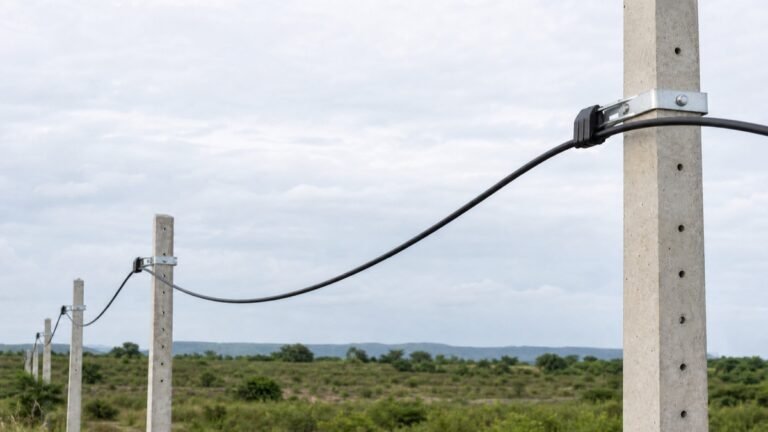
- Aerial FTTH drop cables: The 10 mm long-term bend radius handles all normal clamp, staple, and routing bend points on aerial spans
- In-building riser cables routed through conduits where bend radii exceed 10 mm
- FTTx access networks from the distribution cabinet to the building entry point
- Pre-terminated patch cords for structured cabling in data centers and enterprise networks
- Any application where G.652D would be used but tighter bending is expected
G.657A1 is the most widely deployed fiber type in FTTH networks globally. It offers excellent bend resistance with minimal splice loss penalty and is competitively priced.
Where to Use G.657A2
G.657A2 is specified for ultra-tight indoor routing where G.657A1's 10 mm limit is regularly exceeded:
- ONT/ONU box internal routing: The fiber often makes a 180° U-turn inside a small ONT housing with a bend radius under 10 mm — G.657A2 is the correct choice here
- In-home cabling using surface-mounted raceways with tight corner clips (some clip profiles impose a 7.5 mm bend)
- Fiber-to-the-desk (FTTD) applications where cable routes under carpet edge strips or through furniture cable channels
- Pigtails inside splice closures with tight coil trays — particularly in compact wall-mount closures
- Micro-duct drop cables designed to be pushed or blown through 5–7 mm micro-ducts, which involve tight bends at direction changes
G.657A1 vs G.657A2: Which Should You Order?
For most FTTH projects, the answer is: use G.657A1 for the outdoor drop span and outdoor-to-indoor entry, G.657A2 for the final indoor routing and ONT interface pigtail.
Over-specifying G.657A2 for outdoor drops adds unnecessary cost — outdoor spans rarely impose bend radii below 15 mm with standard clamps. Under-specifying (using G.657A1 inside an ONT housing) risks chronic microbending loss at the customer premise that generates support tickets.
AIMIFIBER recommends this split-spec strategy for most ISP FTTH rollouts:
- Outdoor aerial drop: G.657A1 flat drop, 1F, FRP, PE jacket
- Indoor entry and ONT pigtail: G.657A2 round drop, 1F, LSZH jacket
AIMIFIBER G.657 Fiber Cable Products
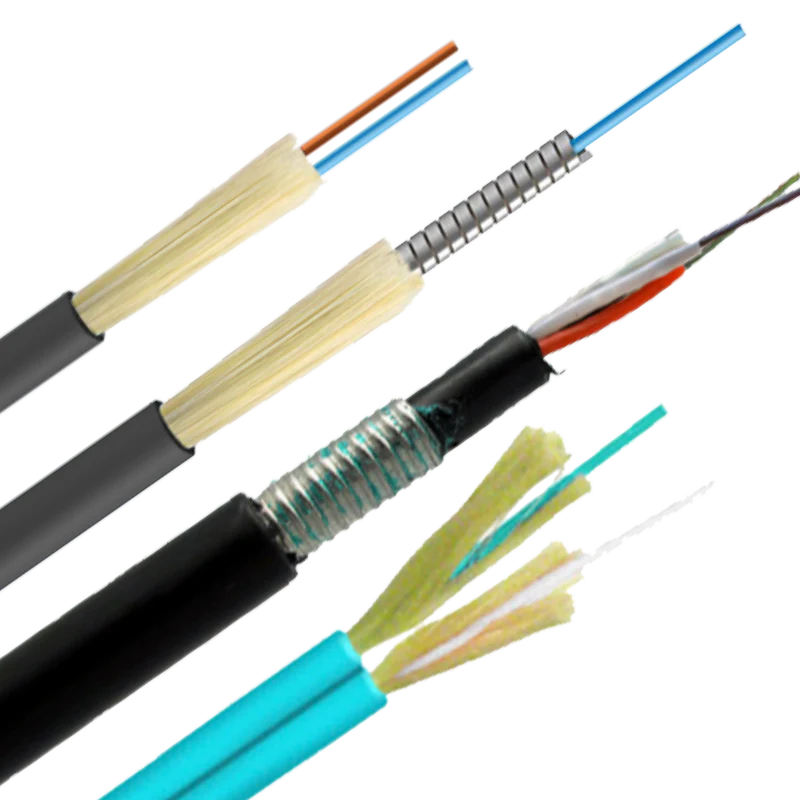
AIMIFIBER manufactures both G.657A1 and G.657A2 cables across the full FTTH drop cable range:
- G.657A1 flat drop: 1F, 2F, outdoor PE, FRP strength members, 500/1000/2000 m drums
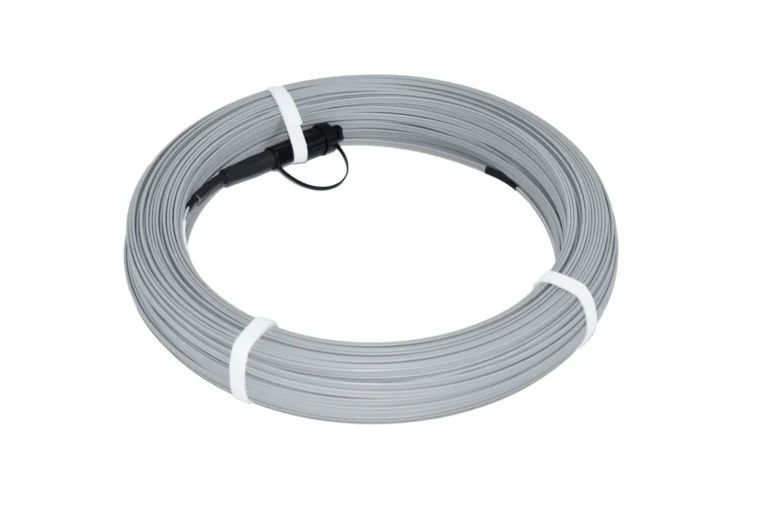
- G.657A2 indoor drop: 1F, LSZH jacket, aramid yarn, 200/500 m spools
- G.657A2 micro-duct cable: 1F/2F, blown installation, 1000 m drums
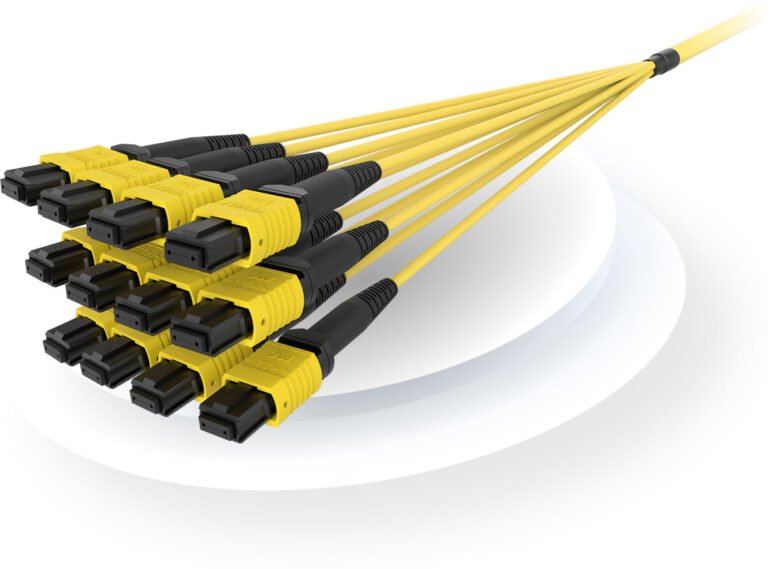
- Pre-connectorized G.657A2 pigtails: SC/APC, SC/UPC, LC/UPC, factory-terminated
- All cables carry ITU-T compliance, CE/RoHS marking, and include OTDR test reports per reel
MOQ: 5 km for bulk cable; 50 pcs for pre-connectorized assemblies. Lead time: 15–20 business days standard.
Frequently Asked Questions
- Is G.657A2 fiber backward compatible with G.652D equipment?
- Yes, G.657A2 is fully backward compatible with G.652D systems and can be spliced to G.652D fiber using standard fusion splicers. However, splice loss may be slightly higher (typically +0.05–0.1 dB) due to the smaller mode field diameter in some G.657A2 variants. Always verify with your splicer's arc power settings.
- Can I use G.657A1 inside an ONT box?
- It depends on the ONT internal routing design. If the fiber U-turn inside the ONT housing has a bend radius consistently above 10 mm, G.657A1 is fine. If the housing is compact and imposes a 7.5 mm or tighter bend, use G.657A2 to avoid chronic bend loss.
- What is the difference between G.657A and G.657B?
- G.657A (A1 and A2) is backward compatible with G.652D for both transmission and splicing. G.657B is not fully backward compatible — it has a smaller core and can only be reliably spliced to other G.657B fiber. G.657B is rarely used in telecom networks; G.657A1 and A2 are the market standard for FTTH.
- Does bend-insensitive fiber prevent all types of fiber loss?
- Bend-insensitive fiber prevents macrobending loss caused by tight curves in the cable route. It does not prevent microbending loss (caused by lateral pressure on the fiber, e.g., from improper clamping), connector loss, or splice loss. A well-designed cable structure (proper buffer, strength members, and jacket) prevents microbending independently of the G.657 spec.
- What is the price difference between G.657A1 and G.657A2 drop cable?
- G.657A2 drop cable typically costs 25–40% more than equivalent G.657A1 cable due to the more complex fiber preform profile and tighter manufacturing tolerances. For a 1,000-subscriber FTTH project using 58 km of drop cable, the incremental cost of specifying A2 across the entire run would be approximately USD 8,000–15,000 extra — which is why splitting the spec (A1 outdoor, A2 indoor) is recommended.
Need G.657A1 or G.657A2 Fiber Cable?
AIMIFIBER supplies both standards for FTTH projects of any scale. Share your project details and get a technical recommendation plus pricing within 24 hours.
→ Request a Quote from AIMIFIBER | → View FTTH Fiber Cable Range