How Can Pre-Terminated Fiber Solutions Accelerate 5G Deployments?
Deploying 5G is a race. Crews work under noise, dust, wind, and tight permits. Field termination slows everything and adds risk. I have watched good teams lose days searching for a 0.8 dB mystery at the top of a tower. Pre-terminated fiber solutions change the script with factory-built, plug-and-play cables that arrive ready to pull, label, and plug.
Short answer: pre-terminated fiber solutions cut 5G rollout time because there is no on-site connector work. Every assembly ships with test data. You reduce crew size, remove most rework, and get predictable link loss from day one.
I proved this on a Brazil cell site with a hard launch date. Field splicing fell behind. We switched to pre-terminated MPO trunks and ODVA/FullAXS jumpers. The crew finished in one weekend, and drive-tests passed the first time.
Why Does Traditional Fiber Deployment Slow 5G?
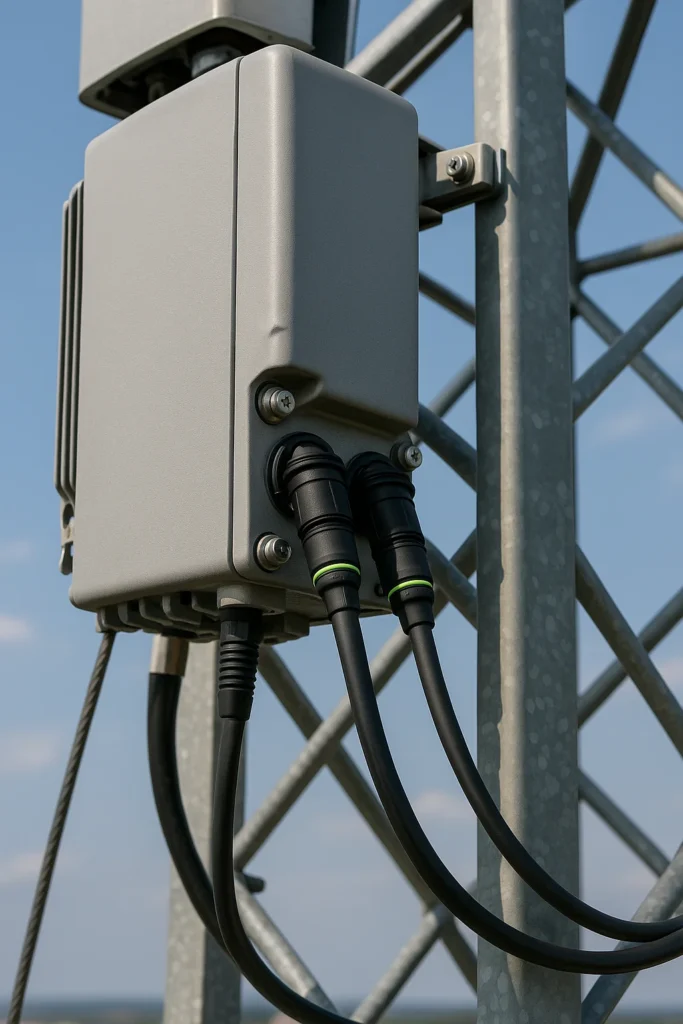
Field builds break into many small, risky steps. Each step needs tools, weather, and skill. Any miss adds hours.
Where Time Disappears
| Step | What Happens on a 5G Site | Typical Risk |
|---|---|---|
| On-site pulling & cutting | Hoist raw cable, cut on a lift or rooftop | Bend violations, jacket nicks, wrong length |
| Fiber preparation | Strip, clean, cleave, protect | Dust, wind, fiber shards |
| Termination or splice | Fusion splice or field connector | Geometry errors, bad polish, scrap |
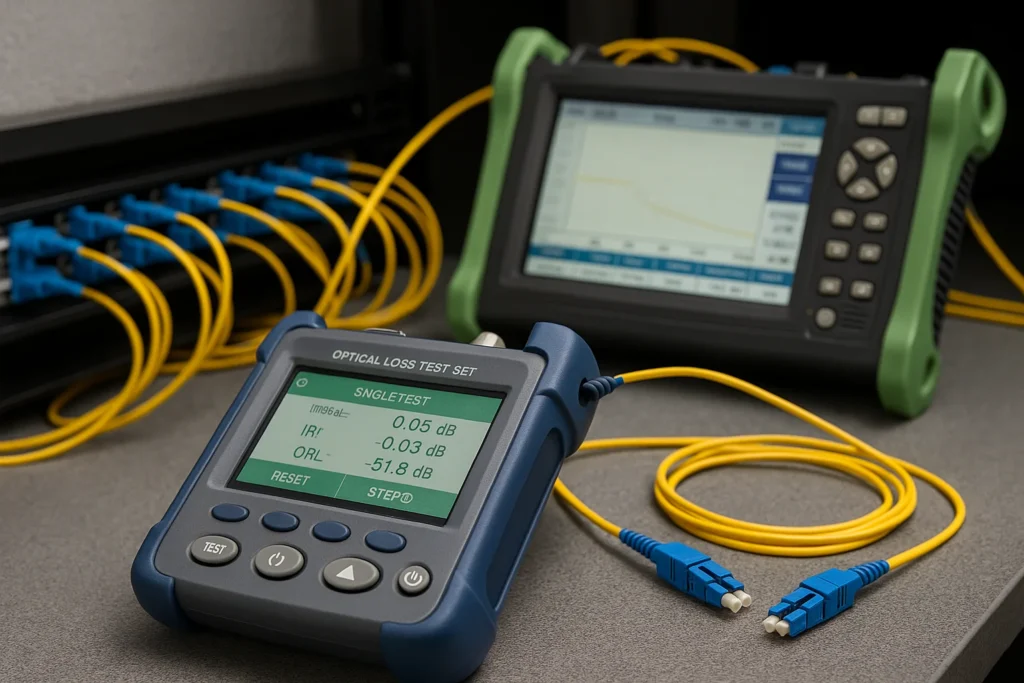
| Test & troubleshoot | OLTS + OTDR, repeat on fails | Schedule slips, night work for access |
Risk Matrix for Field Termination
| Failure Mode | Likelihood | Impact on 5G Schedule | Mitigation with Pre-Terminated |
|---|---|---|---|
| Dirty endface | High | Medium | Shipped capped, pre-inspected |
| Bad splice arc | Medium | High | No splicing on site |
| Wrong length | Medium | Medium | Measured and labeled length |
| Label/document mismatch | High | Medium | Factory labels + CSV handover |
What Exactly Are Pre-Terminated Fiber Solutions for 5G?

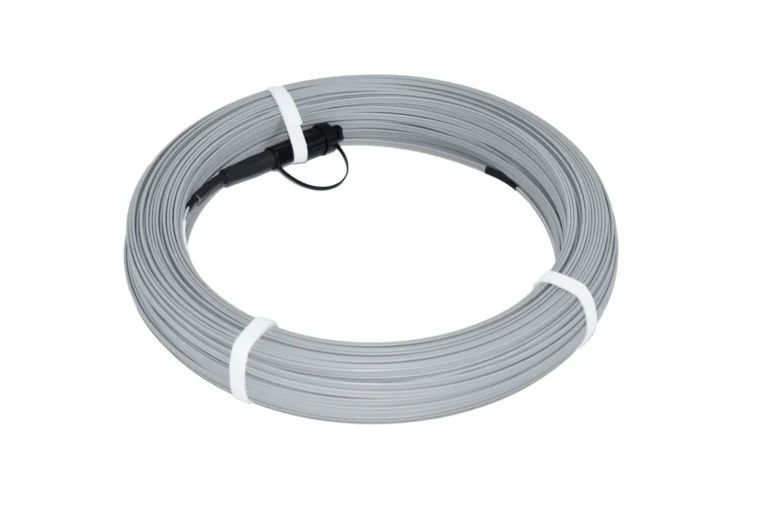
A pre-terminated assembly is a cable built to your drawings in a cleanroom. Connectors are machine-polished, inspected, and tested. The reel ships with pulling eyes, dust caps, labels, and a test report.
Core Components of a 5G-Ready Assembly
| Component | Practical Benefit on Site |
|---|---|
| Factory termination | No cleave/polish; consistent geometry and low loss |
| Factory polishing | Stable return loss for CPRI/ eCPRI optics |
| Certified testing | IL/RL per leg in PDF + CSV; easy acceptance |
| Pulling hardware | Mesh sock and bend-limit boot for hoists and tray pulls |
| Ruggedization | IP67/IP68 boots (ODVA, FullAXS, NSN), UV-stable jacket for outdoor |
Common Connector Types for 5G
| Connector | Typical 5G Use Case |
|---|---|
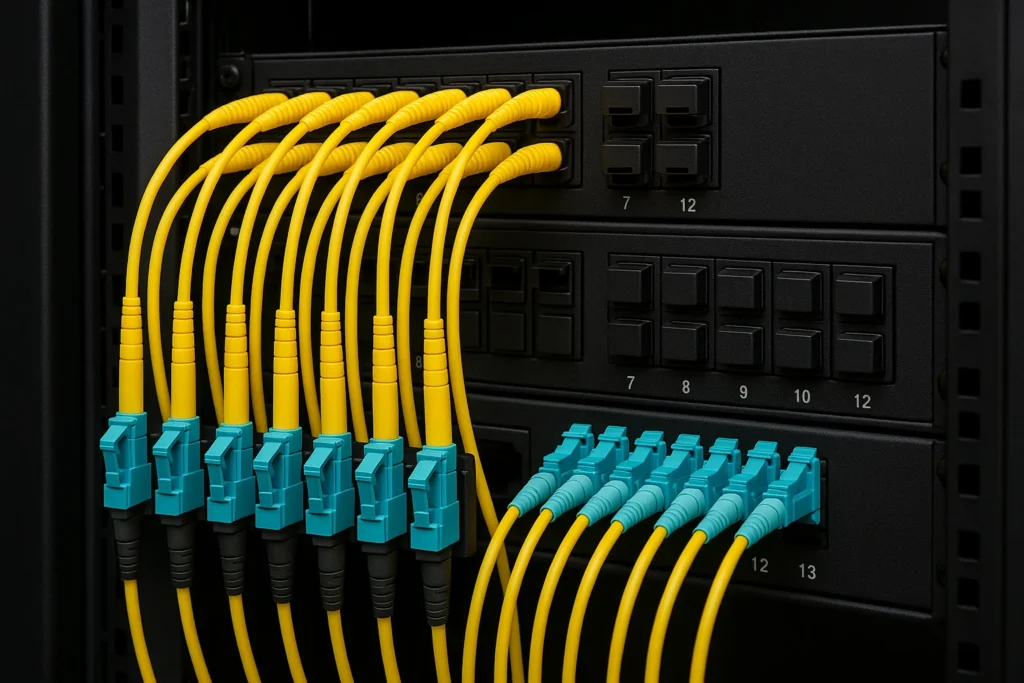
| LC/SC | BBU head-end shelves, DAS head-ends |
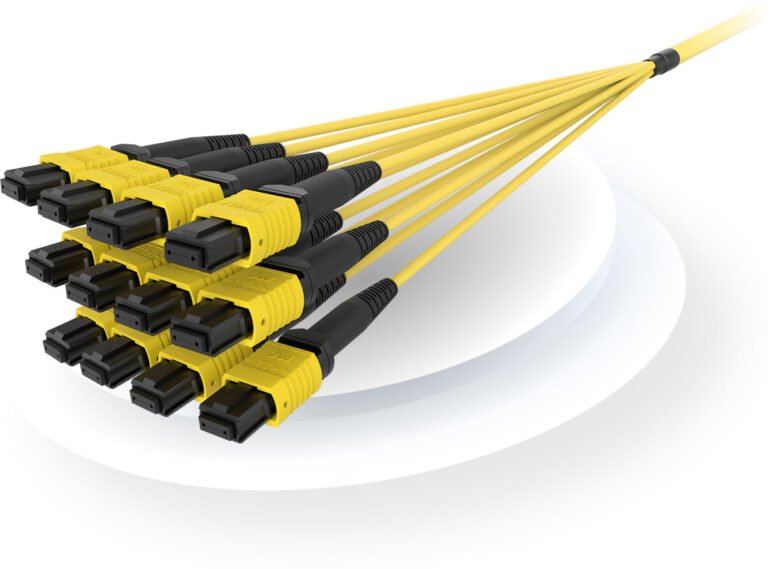
| MPO/MTP | High-count trunks between shelters and sectors |
| ODVA/PDLC | Outdoor RRH jumpers with IP sealing |
| FullAXS / NSN | OEM-specific RRH/RRU ports |
Helpful internal resources:
How Do Pre-Terminated Fiber Solutions Cut 5G Rollout Time?
Time drops because work shifts from a windy site to a clean factory. On site, the job becomes pull-route-plug-test.
Crew and Time Comparison (per sector)
| Item | Field Termination | Pre-Terminated |
|---|---|---|
| Techs on tower | 2–3 | 1–2 |
| Fiber terminations | 12–24 | 0 |
| Tests per link | 2–3 | 1 |
| Typical hours per sector | 8–12 h | 3–5 h |
| Rework probability | 20–30% | 3–5% |
Simple Schedule Math
If a cluster has 12 sectors, and you save 5 hours per sector, you save 60 hours. That often removes one whole week from the Gantt.
Which 5G Site Types Benefit Most?
Not all sites are equal. I select assemblies by site physics, port style, and access limits.
Recommended Bills of Materials (BOM)
| Site Type | Typical Run | Recommended Pre-Terminated Build | Notes |
|---|---|---|---|
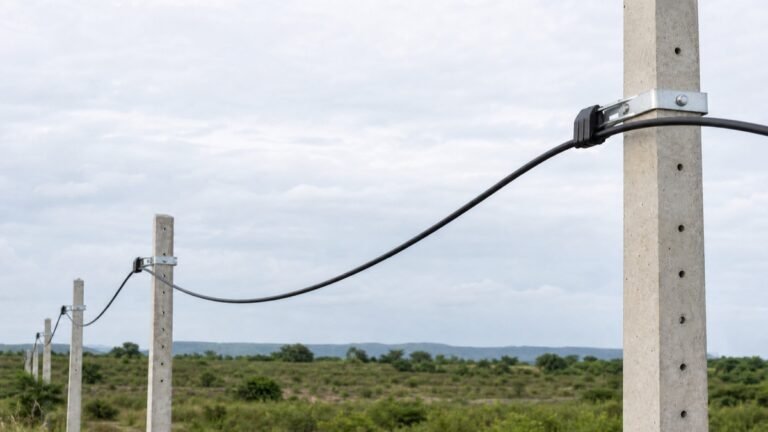
| Macro tower | Shelter → tower head (60–120 m) | MPO trunk to sector box + ODVA/FullAXS jumpers | Add armored or figure-8 if exposed |
| Rooftop | Riser → parapet (30–60 m) | LSZH indoor section + outdoor PE tail with IP67 boots | Plan indoor–outdoor transition fire stop |
| Small cell | Pole or strand (10–30 m) | Pre-cut outdoor PE drop, ODVA to RRU, QSFP-MPO at base | Use toneable jacket for locate |
| iDAS/oDAS | Head-end → remotes | High-count MPO trunks + LC breakouts in cassettes | Label per floor/zone with QR codes |
How Do I Size a 5G Optical Loss Budget with Pre-Terminated Links?
I keep budgets simple and conservative. I pick OS2 single-mode, low-loss connectors, and minimal splices.
Sample Macro-Sector Loss Budget
| Element | Qty | Allowance (dB) | Subtotal (dB) |
|---|---|---|---|
| Fiber 1310/1550 nm (0.35 dB/km) | 0.12 km | 0.042 | 0.042 |
| MPO mated pair (low-loss) | 1 | 0.35 | 0.35 |
| LC mated pair | 1 | 0.30 | 0.30 |
| Splice | 0 | 0.10 | 0.00 |
| Total | 0.692 dB |
Most 5G optics accept budgets well above this. The margin lets you add one emergency splice without risk.
What Environmental and Mechanical Specs Matter Most?
5G lives outdoors. I protect glass from sun, water, and pull force.
Selection Table
| Spec | Target for 5G Outside Plant |
|---|---|
| Jacket | UV-stable PE, carbon black ≥ 2% |
| Water blocking | Dry-swell yarn or gel tape |
| Temperature | −40 °C to +70 °C |
| Ingress protection | IP67 or IP68 at device boots |
| Pull tension | ≥ 300 N short-term for armored leads |
| Bend radius | ≥ 20× OD during pull; ≥ 10× OD installed |
How Do Labels and Documentation Speed Turn-Up?
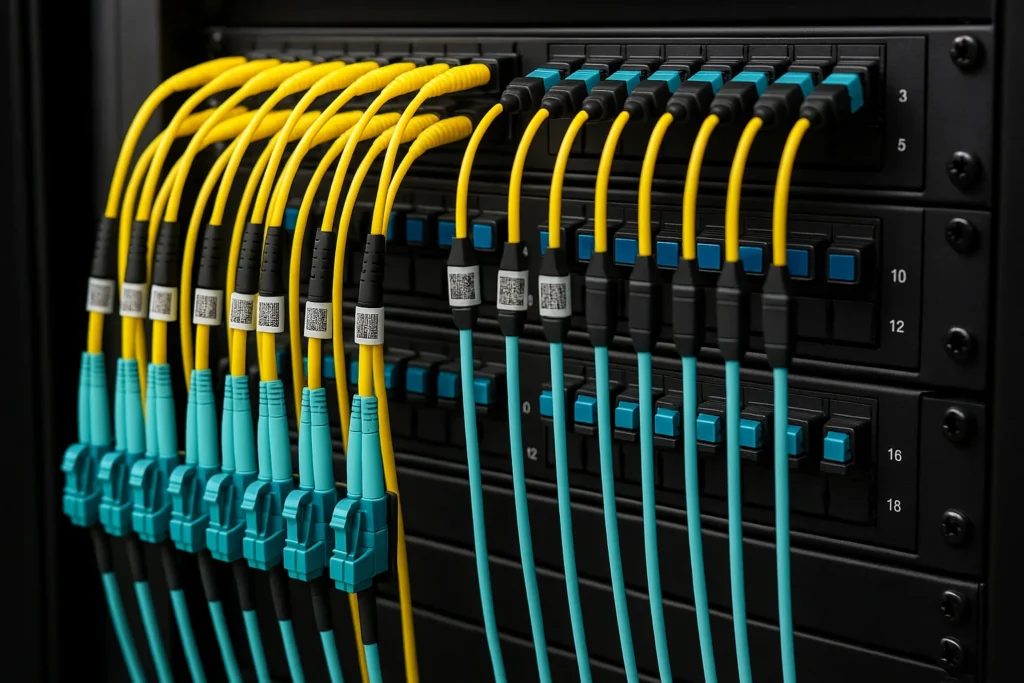
Label errors kill time. Factory labels fix that. We print from/to port IDs, serial/QR, length, and fiber type. We ship a CSV to load into your CMDB, and a one-page polarity map for the crew.
Acceptance Packet
| Document/File | Purpose |
|---|---|
| IL/RL results (PDF + CSV) | Evidence per leg for hand-over |
| Endface images (sample) | QC record |
| Reel and label photos | Traceability |
| As-built patch map | Future troubleshooting |
What Does the Cost and ROI Look Like on a Real 5G Cluster?
Unit cable price may be higher. Project cost is usually lower. Time to revenue improves.
Illustrative ROI (12-sector cluster)
| Item | Field Termination | Pre-Terminated |
|---|---|---|
| Crew hours | 120 h | 48 h |
| Blended labor rate | \$85/h | \$85/h |
| Labor cost | \$10,200 | \$4,080 |
| Rework & scrap | \$1,500 | \$300 |
| Gear rental/consumables | \$1,000 | \$300 |
| Subtotal | \$12,700 | \$4,680 |
| Revenue delay (3 days @ \$8k/d) | \$24,000 | \$0–\$8,000 |
| Total impact | \$36,700 | \$4,680–\$12,680 |
Even with premium assemblies, the time saved and earlier on-air date carry the business case.
What Is a Clean, Repeatable 5G Installation Plan?
I use the same steps on every sector. The crew learns once and repeats.
My 10-Step FTTA Playbook
- Confirm drawings, polarity, and port maps
- Stage reels; verify labels match BOM
- Install pull socks; cap all connectors until mating
- Pull route; protect bend radius with corner guides
- Land trunks at base; route to sector box or fiber tray
- Dress to RRH/RRU; fit ODVA/FullAXS/NSN boots
- Clean and inspect endfaces; mate once only
- OLTS test each link; OTDR any outlier
- Load CSV results to CMDB; attach panel photos
- Sign off; file as-built and warranty data
What Pitfalls Should I Avoid?
- Over-tight zip ties that crush jackets
- Sharp edges in trays that bite over time
- Hanging connectors uncapped in rain or dust
- Mixing polarity types across clusters
- Forgetting fire-stop at indoor–outdoor penetrations
Conclusion
Pre-terminated fiber solutions fit 5G because they remove fragile work from harsh sites. You pull measured trunks, click sealed boots, and read “PASS” on the first test. Crews finish sectors in hours, not days. Budgets hold. Launch dates stick. If your next rollout needs speed and certainty, build it with pre-terminated trunks, cassettes, and outdoor-rated jumpers from AIMIFIBER.
Summary
I showed why field work slows 5G, what a 5G-ready pre-terminated assembly contains, and how it saves crew hours. I mapped builds to macro, rooftop, small cell, and DAS, gave a simple loss budget, picked outdoor specs, and shared a repeatable FTTA plan with acceptance docs. Use this playbook to shorten schedules and raise first-pass success.