Description
Pre-Terminated Optical + Electrical Hybrid Cable for FTTR (Optical Power Composite Cable) — SC/UPC Hybrid or XC/UPC
If you’re deploying FTTR (Fiber-to-the-Room) and need a cleaner, faster way to connect room terminals/APs with both signal and low-voltage power, this is the cable we recommend.
AimiFiber’s Optical + Electrical Hybrid Cable (also called optical power composite cable) combines G.657A2 bend-insensitive fiber with integrated copper conductors in one compact jacket, then factory pre-terminates the ends for consistent optical performance and reliable power delivery.
It is widely used in FTTR low-voltage indoor wiring, where installers want a standardized “one-cable” solution that avoids messy parallel runs and reduces on-site termination work.

Why this hybrid cable is used in FTTR projects
Most FTTR retrofit sites have the same constraints:
- Homeowners demand clean aesthetics (no trunking, no exposed power lines).
- Installers want speed and repeatability across many rooms.
- Integrators need stable optical performance and predictable power delivery.
With a hybrid cable, you route one cable instead of separate fiber + power, and you avoid variability caused by field termination.
Key benefits (what your target buyer cares about)
1) One run for signal + power
- Fiber link (G.657A2) + copper conductors in the same cable
- Cleaner routing, fewer installation steps, easier maintenance
2) Factory pre-terminated, consistent quality
- Controlled termination conditions
- Every assembly can be tested before shipment (optical + electrical)
3) Built for tight indoor routing
- Bend-insensitive fiber supports complex indoor paths (corners, frames, concealed routes)
- Compact OD helps keep wiring discreet
4) More predictable power design
- Multiple conductor cross-sections are available so you can match distance vs load
- Helps reduce voltage drop risk in multi-room FTTR layouts
Typical FTTR use cases
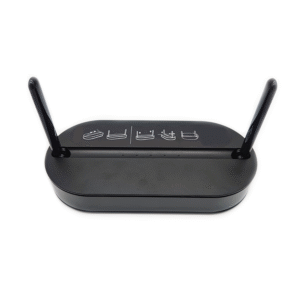
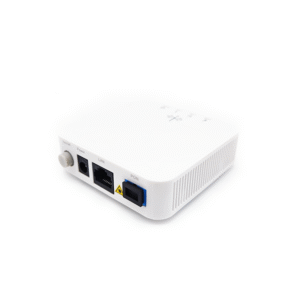
- Room-level FTTR terminals / mini-ONUs
- Room AP backhaul + low-voltage power distribution
- MDUs / apartments / hotel rooms where fast standardized deployment matters
- Retrofits where drilling and conduit work must be minimized
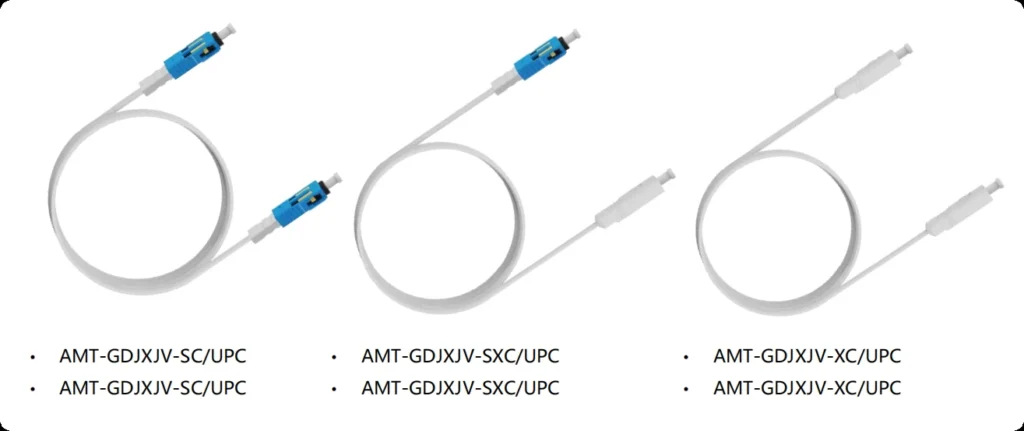
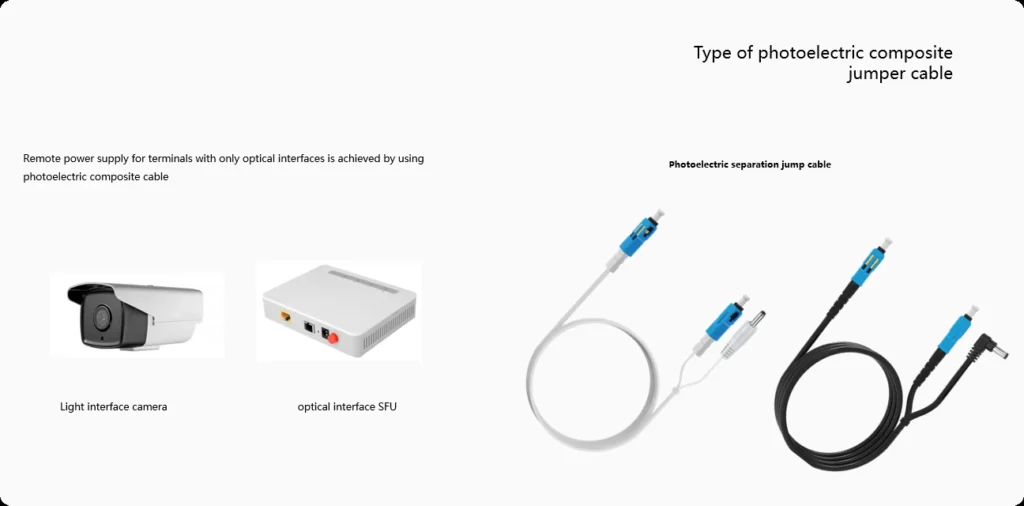
Product options (choose the structure that matches your project)
We typically supply three structural styles depending on routing and handling preferences:
| Cable Type | Outer Dimension (Typical) | Fiber | Copper Conductor (Typical) | Jacket | Notes |
|---|---|---|---|---|---|
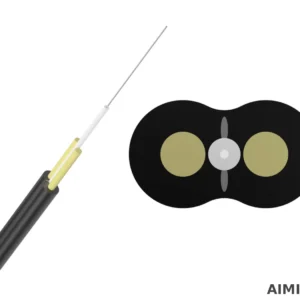
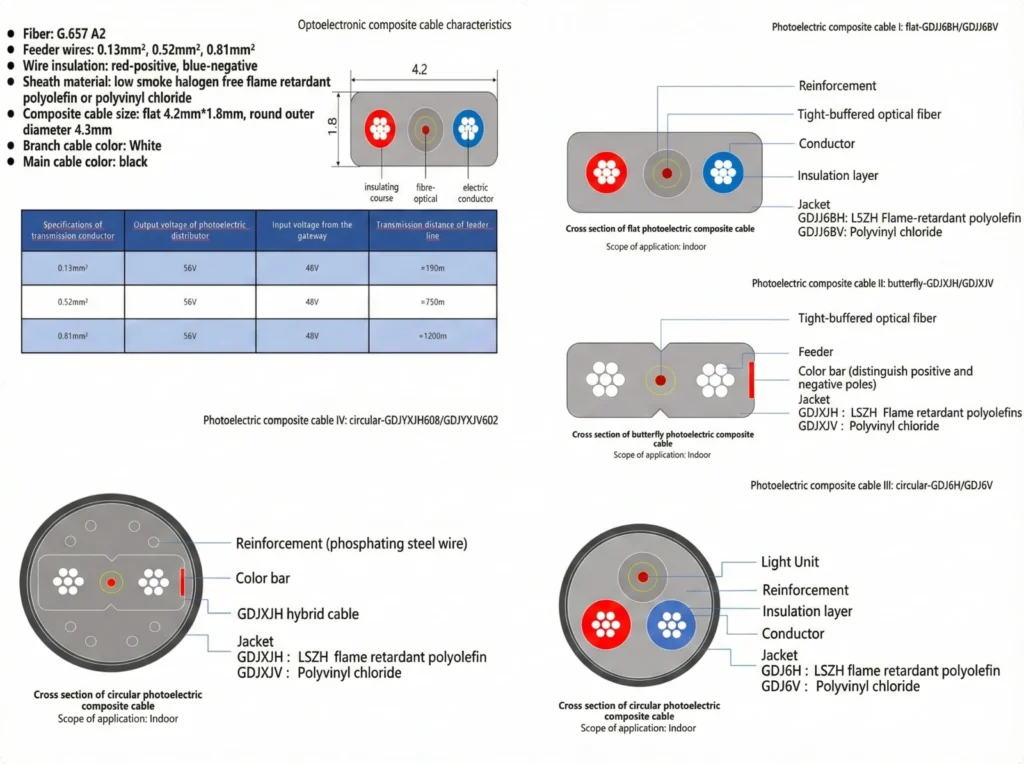
| Flat Composite Cable (recommended for indoor routing) | ~ 4.2 × 1.8 mm (customizable) | G.657A2 | 0.13 mm² (branch) / other options | LSZH (common) | Easy to route along edges; clean indoor look |
| Round Composite Cable (often used as “trunk”) | ~ 4.3 mm OD | G.657A2 | 0.52 mm² (trunk) / other options | LSZH (common) | Better for longer distance / higher power loads |
| Butterfly Composite Cable | ~ 4.4 × 2.0 mm | G.657A2 | 0.32 mm² (typical) | LSZH (common) | Balanced option for specific routing preferences |
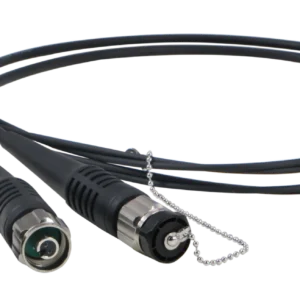
Fiber interface (standard): SC/UPC, SC/UPC (Hybrid), XC/UPC
OEM options: SC/APC, LC/UPC, customized hybrid connector formats (project-based)
Practical recommendation: in FTTR projects, we usually define a “trunk + branch” concept—use larger conductor for trunk runs, then branch into rooms with smaller, more flexible flat cable.
Technical specifications (optical + electrical)
Optical performance (typical)
| Parameter | Specification |
|---|---|
| Fiber Type | G.657A2 (bend-insensitive SM) |
| Insertion Loss (Connector) | ≤ 0.35 dB (typical project requirement) |
| Return Loss | ≥ 50 dB (UPC) |
| Wavelength | 1310 / 1550 nm |
| Attenuation | ≤ 0.35 dB/km @ 1310 nm; ≤ 0.20 dB/km @ 1550 nm |
| Min. Bend Radius | ≥ 30 mm (typical indoor routing guideline) |
Electrical performance (typical)
| Parameter | Specification |
|---|---|
| Copper Conductor Material | Oxygen-free copper (common configuration) |
| Conductor Cross-Section Options | 0.13 / 0.32 / 0.52 / 0.81 mm² (project-based) |
| Contact Resistance | ≤ 30 mΩ |
| Insulation Resistance | ≥ 500 MΩ |
Engineering note (important for serious buyers): distance vs voltage drop
In FTTR low-voltage distribution, the main constraint is usually voltage drop over distance, not optical loss.
That’s why trunk runs often use larger conductor area (example: 0.52 mm²), and branches use smaller flexible sizes.
If you tell us:
- target voltage (typical low-voltage systems),
- device power consumption (W),
- cable run length (m),
we can help you select a conductor size that keeps terminal voltage within an acceptable range.
Installation guidance (field-friendly)
- Route the cable first, then connect—avoid pulling directly on the connector body.
- Keep bends smooth; avoid sharp pinching at corners.
- Maintain clean connector endfaces; inspect/clean before mating.
- For trunk/branch designs: label each branch length to reduce troubleshooting time later.
- Verify power polarity and continuity before final device connection.
What we test before shipment (quality you can prove)
As a direct manufacturer, we control quality from cable materials to termination and assembly. Typical outgoing checks include:
- 100% optical IL test on terminated ends
- Return loss verification per connector type (UPC/APC)
- DC continuity + insulation check
- Visual inspection for jacket integrity and connector protection
Test reports and labeling can be provided for project deliveries and OEM lots.
Ordering information (how to specify correctly)
To quote and produce quickly, please provide:
1) Cable structure: Flat / Round / Butterfly
2) Fiber type: G.657A2 (default)
3) Conductor area: 0.13 / 0.32 / 0.52 / 0.81 mm²
4) Interface type: SC/UPC, SC/UPC (Hybrid), XC/UPC (or OEM)
5) Length plan: trunk length + branch lengths (if applicable)
6) Jacket requirement: LSZH / other
OEM services available:
- logo/labeling
- customized packaging
- connector boot / color / length plan standardization
- project documentation support

FAQ
Q1: Is this cable “PoE”?
No. PoE is Ethernet over copper. This is an optical + power composite cable for FTTR-style optical networks where you want fiber signal + low-voltage power in one run.
Q2: Why not just run fiber and power separately?
You can—but on real sites that usually means:
- more labor,
- messier routing,
- more failure points,
- harder maintenance.
Hybrid cable standardizes installs and improves consistency in multi-room rollouts.
Q3: Which connector should I choose: SC/UPC or SC/APC?
For hybrid FTTR indoor networks, SC/UPC is common.
If your network design requires APC (reflection-sensitive scenarios), SC/APC can be supplied as an OEM option.
Q4: How do I choose conductor size?
It depends on distance and load.
As a rule: longer distance / higher power → larger conductor area. Share your layout and device power, and we’ll recommend a safe configuration.
Q5: Can you supply trunk + branch pre-planned assemblies?
Yes. Many FTTR projects use standardized trunk/branch kits to speed up multi-room deployment and reduce on-site mistakes.