Which fiber connector should I choose for FTTH—SC/APC or LC/UPC?
Choosing the wrong connector tanks budgets and schedules. Reflection spikes, intermittent alarms, finger-pointing. I see it most when polish types get mixed on site. The fix is simple: standardize polish, color, and mating rules before crews pull the first jumper.
Use SC/APC (green) where return loss matters most—outdoor drops, PON splitters, ONTs—thanks to its typical RL ≥ 60 dB. Use LC/UPC (blue) in space-constrained racks and central offices for high port density with typical RL ≥ 50 dB. Never mate APC with UPC; always match polish to polish.
I’m Sophie Wang at AIMIFIBER. In Telefonica bids with Andy (Spain), we audited every jumper, adapter, and pigtail. Disputes stopped once polish, color, and mating rules were printed on the work order—then verified at handover with IL (LSPM) and ORL/OTDR tests.
What are the fundamental differences in connector polishes?
When you choose a connector, the end-face geometry decides reflection and stability. That’s why polish type is the first line on my BOMs and RFQs.
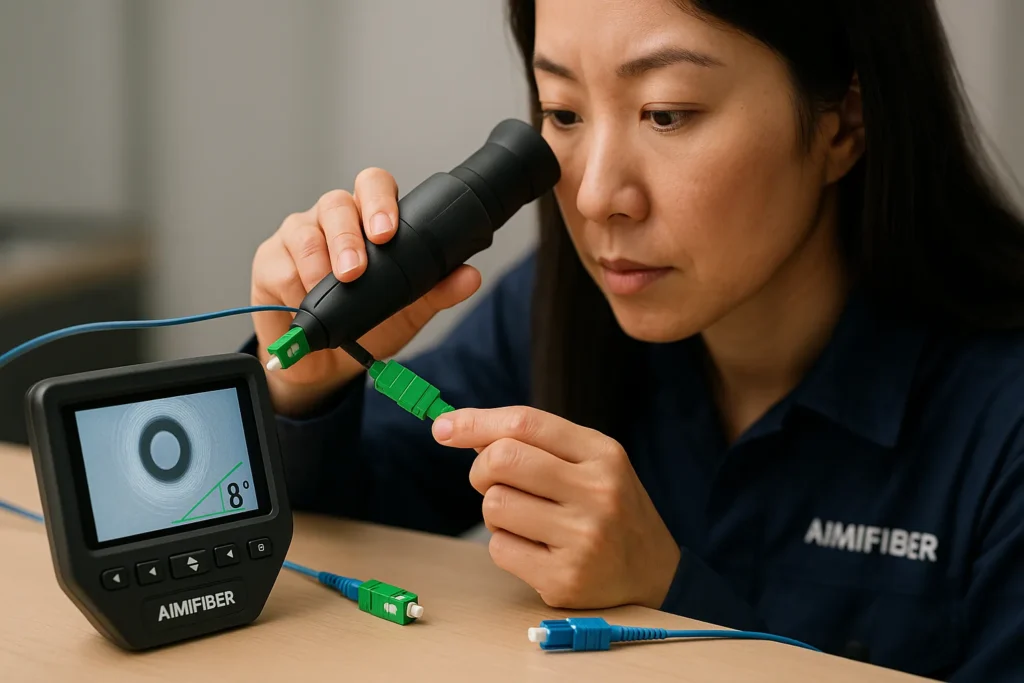
APC uses an ~8° angled end-face that redirects reflections into the cladding, delivering lower back-reflection (typ. RL ≥ 60 dB). UPC is flat/domed for direct contact with typ. RL ≥ 50 dB. Lower reflection protects PON/analog paths; UPC is proven for digital patching and dense CO gear.
Quick spec comparison (typical)
| Parameter | SC/UPC | LC/UPC | SC/APC | LC/APC | Typical Range | When to choose |
|---|---|---|---|---|---|---|
| Return loss (dB) | ≥50 | ≥50 | ≥60 | ≥60 | 50–65 | RL-sensitive links → APC |
| Insertion loss (dB) | ≤0.30 | ≤0.30 | ≤0.30 | ≤0.30 | 0.20–0.35 | Keep IL budget margin |
| Color code | Blue | Blue | Green | Green | — | Avoid mix-ups in field |
| Footprint | SC (larger) | LC (small) | SC (larger) | LC (small) | — | High density → LC |
| Typical use | CO patch | CO/IDC density | FTTH/PON outdoor | Niche PON panels | — | Match polish to topology |
Polish types overview: PC/UPC/APC explained.
Mapping to real FTTH scenarios
| Scenario | Preferred Connector | Why it fits | Notes |
|---|---|---|---|
| Outdoor drop → ONT (FTTH) | SC/APC | Superior RL through splitters | Hardened boots available |
| PON splitter shelves (ODF) | SC/APC | RL critical with high split ratios | Green color prevents mixing |
| CO/Data room high density | LC/UPC | ~2× port density vs SC | Use LC panels/cassettes |
| DWDM/transport patching | LC/UPC | Digital systems tolerate RL | Verify vendor specs |
| Test jumpers | Match DUT polish | Avoid interface mismatch | Keep separate APC/UPC sets |
How do you correctly pair connectors without damaging links?
Most “mystery loss” tickets I see are polish mismatches. Fix the rule; fix the network.
Always mate APC↔APC (green↔green) and UPC↔UPC (blue↔blue). Never cross-mate APC with UPC—angles create an air gap, raising IL and back reflection, and can stress laser sources. Standardize adapters, dust caps, and tray labels to enforce the rule at every rack.
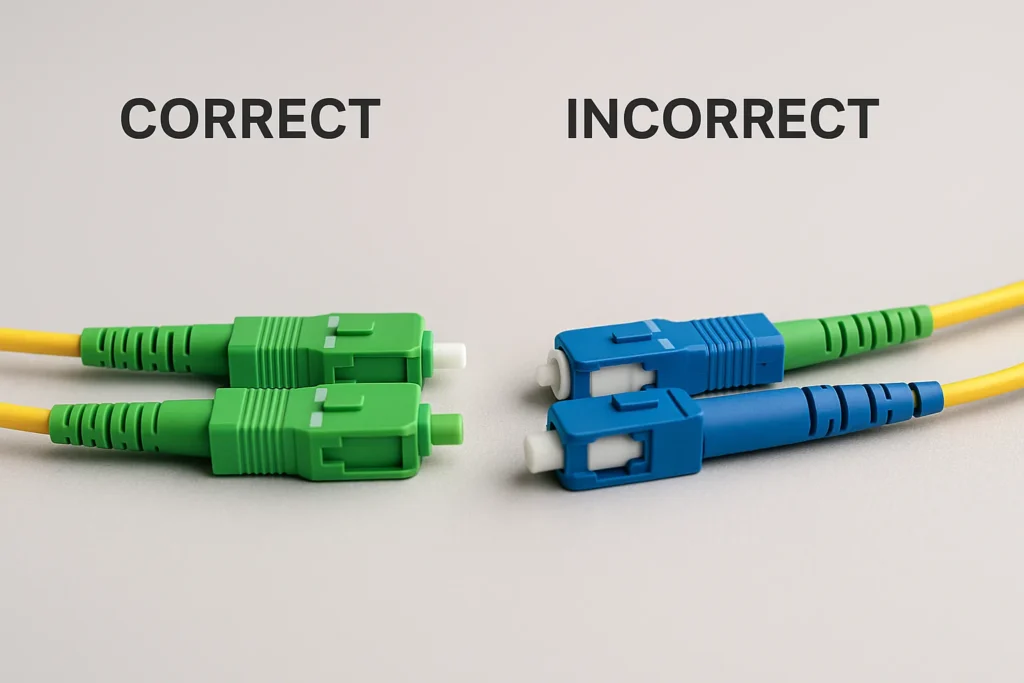
Allowed vs forbidden pairings
| Connector / Polish | Color | Allowed Pairings | Forbidden Pairings | Field note |
|---|---|---|---|---|
| SC/UPC | Blue | SC/UPC, LC/UPC (via adapter) | Any APC | Flat vs angled = gap |
| LC/UPC | Blue | LC/UPC, SC/UPC (via adapter) | Any APC | Keep LC adapters handy |
| SC/APC | Green | SC/APC, LC/APC (via adapter) | Any UPC | Protect RL in PON |
| LC/APC | Green | LC/APC, SC/APC (via adapter) | Any UPC | Niche; check panel spec |
Install checklist (prevent pairing errors)
| Step | Tool | Pass/Fail | Pitfalls |
|---|---|---|---|
| Verify polish by color | Visual | Blue↔Blue / Green↔Green | Mixed bins/caps |
| Verify polish by label | Label gun | Part code shows APC/UPC | Old stock, faded print |
| Clean & inspect | One-click + scope | Endface clear (no debris) | Skipping dry-wet-dry |
| Measure IL/RL | LSPM & ORL meter | Within design limits | 1-jumper ref. not set |
| Record serial & port | App/Sheet | Traceable handover | Missing ticket photos |
Where do SC/APC and LC/UPC deliver the best results?
Choose by environment + density + reflection sensitivity; then lock it into your standard BOM.
Use SC/APC for FTTH outdoors, splitter trunks, and ONTs where low back-reflection protects PON optics. Use LC/UPC in central offices, MMR/IDF, and dense racks where every RU counts. If you standardize both, color-code trays and enforce adapter types to prevent cross-mating.
BOM templates (copy/paste to your RFQ)
| Node | Connector | Cable/Assembly | Spec to confirm |
|---|---|---|---|
| CO patch field | LC/UPC | LC–LC jumpers (OS2/OM4) | IL ≤ 0.30 dB; RL ≥ 50 dB; length set |
| PON splitter shelf | SC/APC | SC/APC pigtails + trays | RL ≥ 60 dB; 0.9 mm G657.A2 |
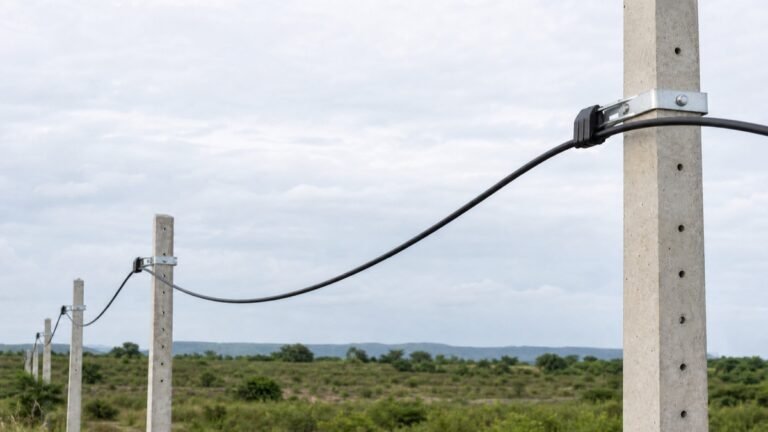
| Outdoor drop | SC/APC | Hardened drop (IP-rated) → SC/APC | Tensile spec; bend radius |
| ONT patch | SC/APC | SC/APC–SC/APC short jumper | Boots; strain relief |
| IDC/IDF density | LC/UPC | MTP–LC cassettes + LC patch | Polarity; IL class; labeling |
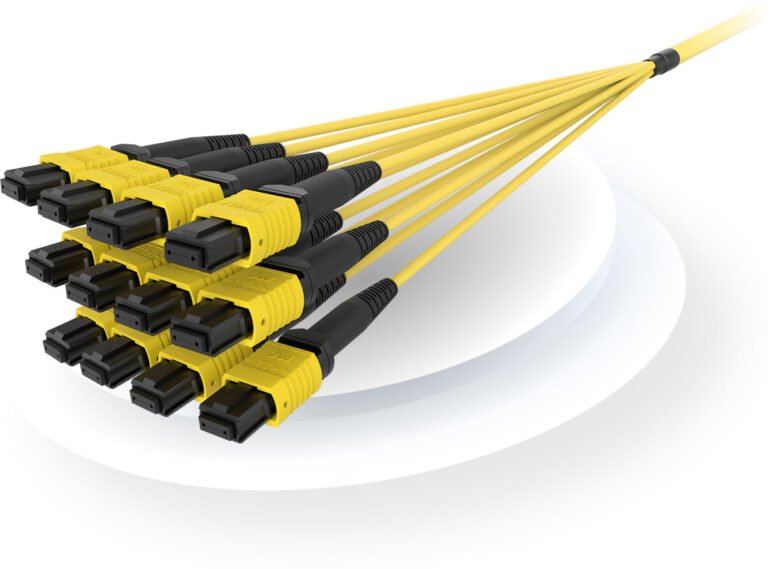
- Pre-terminated options: MTP/MPO trunks & LC cassettes
- Patch cords: Fiber Patch Cables (SC/LC/APC/UPC)
How do you prove connectors are paired and performing at handover?
Procurement cares about documents; engineers care about numbers. Let’s give both.
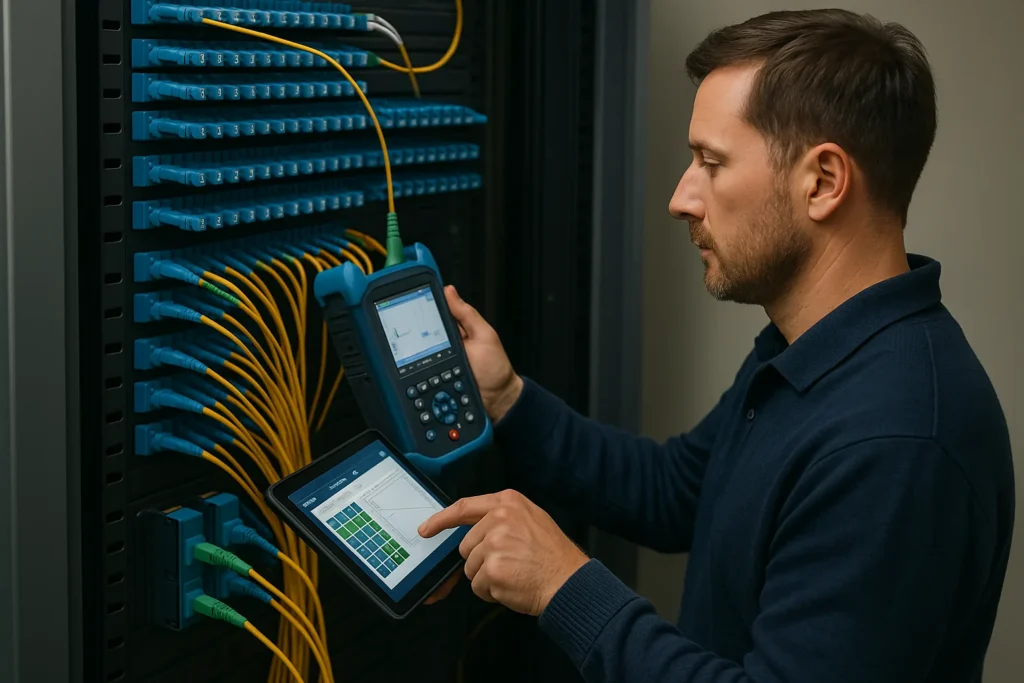
Ship and accept with traceable part codes, IL/RL test sheets, endface photos, and color-coded labels. On site, run 1-jumper LSPM for IL and ORL/OTDR for reflection/events. Attach before/after readings to the ticket and use keyed adapters that physically block cross-mating.
Procurement & QA checklist
| Item | Spec to confirm | Doc required | Typical lead time | Incoterm |
|---|---|---|---|---|
| SC/APC pigtails | RL ≥ 60 dB; IL ≤ 0.30 dB | Test report + endface photo | 1–2 wks | EXW/CIF |
| LC/UPC jumpers | RL ≥ 50 dB; IL ≤ 0.30 dB | Test report + labels | 1–2 wks | EXW/CIF |
| Adapters (SC-A, LC-U) | Keys match polish; panel fit | Datasheet + sample | Stock/1 wk | EXW |
| Cassettes (MTP-LC) | Polarity A/B/C; IL class | Polarity map + test | 1–3 wks | EXW/CIF |
| Labels & caps | Color-coded (blue/green) | Photo of tray layout | — | — |
Conclusion
Pick SC/APC when back-reflection is the risk (FTTH/PON, outdoor drops, splitters). Pick LC/UPC when density wins (CO/IDF). Do not mate APC with UPC. Lock rules into BOMs, color-code in the tray, and close tickets with IL/RL evidence. If you want my connector mini-atlas and handover templates, email sophie@aimifiber.com—I’ll share a clean, audit-ready pack.
FAQ
Q1: Is LC/APC practical for FTTH if I need density and low reflection?
It exists but is niche. Check panel and device support first. For mainstream FTTH/PON, SC/APC remains the safer, widely supported choice.
Q2: How much return loss is “good enough” for PON links?
System-dependent, but RL ≥ 60 dB per APC interface is a common design target. Confirm against your OLT/ONT vendor specs.
Q3: Can I use hybrid jumpers to connect APC equipment to UPC panels?
No. Hybridizing across polish types introduces reflection and risk. Keep polish consistent end-to-end; redesign the patch field if needed.
Q4: What’s the fastest field check to catch polish mistakes?
Color + label check at the tray (blue=UPC, green=APC), then run a quick ORL or OTDR sanity trace. If ORL is low or OTDR shows near-end reflection spikes, inspect and re-terminate correctly.
Q5: My IL passes but service still flaps—why?
Likely back-reflection or intermittent contact. Inspect endfaces, confirm polish matching, and review ORL/OTDR near the port. Replace worn adapters and re-seat jumpers after cleaning.