Key outcomes: Fewer disputes • Faster retests • First-pass acceptance ↑ • Truck rolls ↓
Create a Field Issue Atlas + One-Card Retest Workflow. The atlas gives photo-led diagnostics for common faults (micro-bending, contamination, connector defects).
The retest card standardizes cleaning, measurement, and sign-off. Together they align installation, QC, and O&M on one playbook, reduce rework loops, and shorten time-to-accept.
I’m Sophie at AIMIFIBER. In a Brazil rollout, install and O&M argued for weeks over intermittent loss. We introduced a two-page atlas and a retest card. Arguments stopped, first-pass acceptance rose above 95%, and the schedule recovered.
What is an FTTH Field Issue Atlas?
When crews hit a problem, they need one source of truth. An atlas makes diagnosis consistent and fast.
Plain definition: An FTTH Field Issue Atlas is a visual, pocketable guide that catalogs typical defects with “good vs bad” photos, symptoms, likely causes, and first actions—plus how to measure and document the fix for acceptance.
What goes inside (keep it simple)
| Section | Content | Purpose |
|---|---|---|
| Problem Type | Micro-bending, contamination, connector chip/crack, macro-bend, bad splice | Fast classification |
| Visual Catalog | “Pass/Fail” photos, OTDR/LSPM screenshots | Aligned diagnosis |
| Immediate Action | “Loosen tie”, “Clean ferrules (dry-wet-dry)”, “Replace pigtail” | First fix, not theory |
| Measurement | Method (1-jumper reference, 1310/1550 nm), pass/fail limits | Evidence standard |
| Data Capture | Site/Rack/Port, action taken, before/after IL, owner & time | Traceable handover |
How do you identify and fix micro-bending quickly?
Micro-bending is a hidden enemy in FTTH: hard to see, easy to cause, and responsible for intermittent loss.
Direct answer: Look for sharp, localized OTDR spikes with no splice events. Inspect for pinched jackets, over-tight ties, staples, or small bend radius. Relieve side pressure or replace the damaged section, then clean → re-measure → record with signatures.
Practical guide (field-ready)
| Detection | What to look for | Notes |
|---|---|---|
| OTDR | Sharp local attenuation without a splice/connector event | Compare 1310/1550 nm |
| LSPM | Low power; improvement after re-seat/clean | Use 1-jumper reference |
| Visual | Flattened jacket, white stress marks, tight ties | Add photos to ticket |
| Path | Tight corners, excessive pulling force | Bend radius ≥10×OD |
Further reading:
ACOME — Impact of micro-bends ·
SPIE — Bend-insensitive fibers.
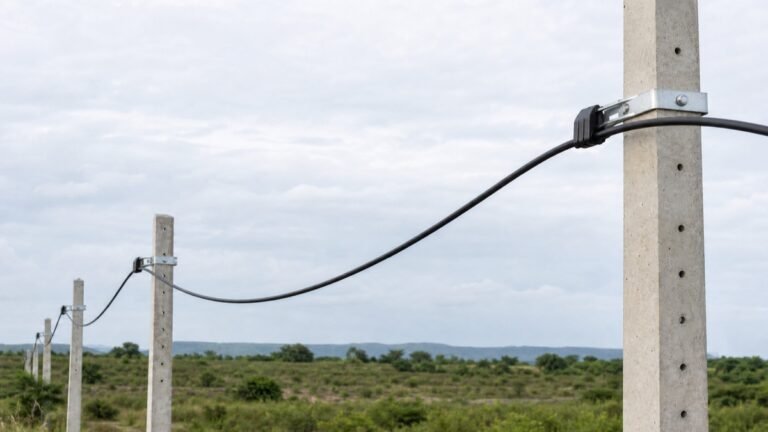
Choosing tougher drops helps: compare FTTH drop cable types.
What does a dispute-proof retest workflow look like?
Print this A6 waterproof card and keep it in every tool bag.
One-Card Retest SOP
| Step | Action | Tool | Pass/Fail |
|---|---|---|---|
| 1 | Clean both ends dry → wet (IPA) → dry and inspect | One-click cleaner, swabs, scope | Endface clear; no scratches |
| 2 | Restore bend radius / release side pressure | Adjustable ties, guides | Radius ≥10×OD |
| 3 | LSPM with 1-jumper reference | Source/Power Meter (1310/1550) | Meet design target |
| 4 | OTDR with launch/receive fiber | OTDR + coils | No abnormal spikes |
| 5 | Record & Sign-off (before/after IL, owner/time) | Atlas sheet or app | Ticket closed |
What templates and tools should I prepare for crews?
- Downloadables (lead magnet): Atlas PDF (8–16 pp), A6 retest card, Excel/Form log, sign-off page.
- Companion products: pre-terminated fiber solutions, FTTH patch cords, cleaning kits, bend-radius guides.
Proof that this works (mini case)
Brazil, urban FTTH cluster (92 sites)
- Before: acceptance ping-pong; average 2.3 retest loops/site
- After atlas + retest card: first-pass acceptance 95%, retest loops ≤0.6/site, tickets resolved in <48h
- Side effect: fewer truck rolls and clearer accountability in audits
Key facts
- Micro-bending clues: sharp local OTDR spike, pinched jacket, over-tight ties.
- Retest: dry-wet-dry → restore radius ≥10×OD → LSPM → OTDR → record & sign.
- Starter Kit: Atlas PDF, A6 card, Excel sheet, sign-off form.
- Companion SKUs: Pre-terminated fiber, FTTH patch cords.
Glossary
- Micro-bending
- Tiny, sharp bends from side pressure (ties/staples), causing local attenuation spikes.
- OTDR
- Optical Time-Domain Reflectometer, detects events/spikes along the link.
- LSPM
- Light Source & Power Meter for insertion-loss measurement; 1-jumper reference recommended.
- First-pass acceptance
- Links passing acceptance tests on the first attempt.
Get the FTTH Field Issue Atlas Starter Kit (PDF + A6 card + Excel log). Email sophie@aimifiber.com with subject “FTTH Atlas” and tell me “riser / MDU / SFU” and your target IL limits — I’ll tailor the pass/fail row to your spec.