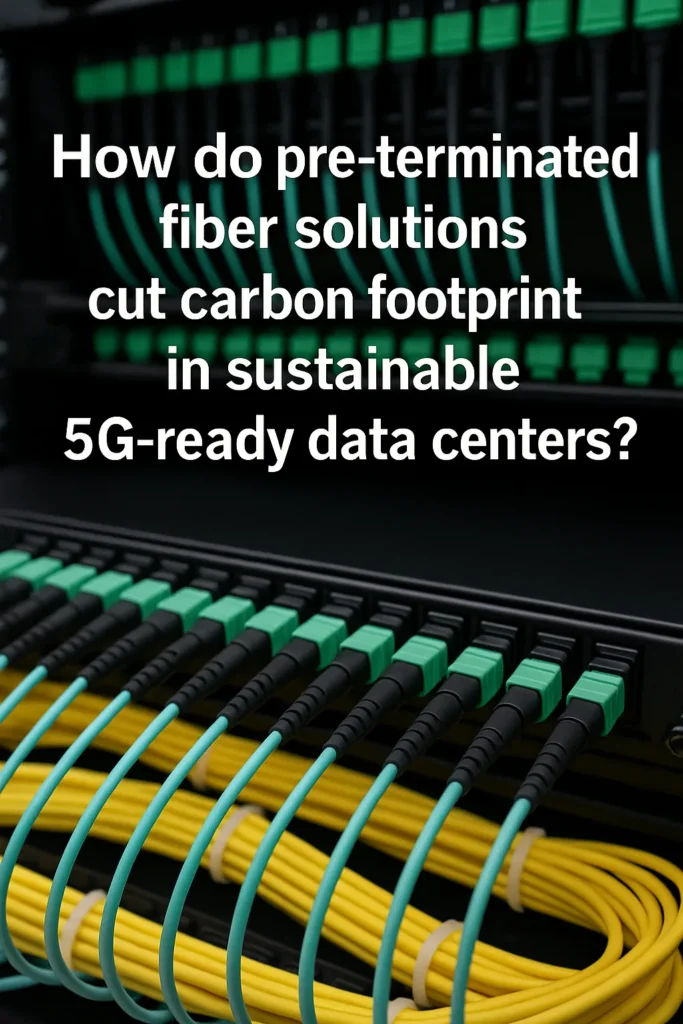
How do pre-terminated fiber cuts carbon in 5G-ready data centers?

Deadlines slip, waste piles up, and audits get tough when field terminations create scrap and rework. That hurts carbon targets and budgets. Pre-terminated builds fix root causes with right-length cables and fast, clean installs that align with EU tenders, LEED/BREEAM goals, and Scope 3 reporting.
Pre-terminated fiber cuts a data center’s embodied carbon and install energy by removing onsite terminations and rework. Factory IL/RL testing lifts first-pass yield, reducing truck rolls and commissioning time. In EU projects, these measures support LEED/BREEAM intents and Scope 3 documentation with conservative, audit-ready evidence.
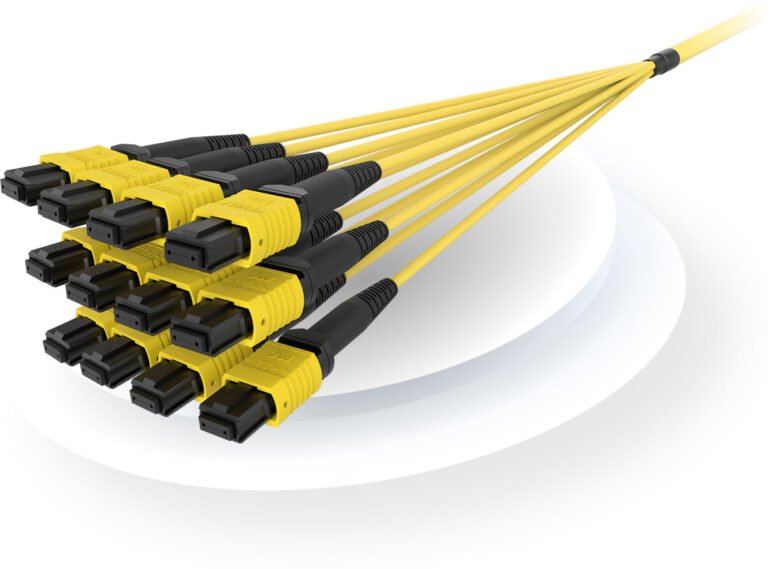
I’m Sophie at AIMIFIBER. Andy in Madrid sent me a tender with strict sustainability scoring. His team feared penalties for waste and delays. We mapped MTP/MPO trunks, MTP→LC cassettes], and low-waste packaging to the bid’s metrics. Install scrap dropped, QA passed first time, and the award board noted the clean documentation trail. We also framed the plan around EU Green Deal language and Scope 3 emissions so procurement could score the tender confidently.
What sustainability metrics matter for data center cabling (carbon, energy, waste)?
Start with three buckets: embodied carbon in materials and packaging, installation energy (tools, rework, truck rolls), and operational impacts from link quality. Then define how you’ll measure them: waste per 100 links, first-pass yield, and documentation that satisfies LEED/BREEAM reviewers and enterprise audit teams across the EU’s reporting landscape.
Track embodied carbon and packaging mass, onsite scrap per 100 links, rework rate, and first-pass yield. Add commissioning time, truck rolls avoided, and IL/RL stability over time. Use conservative ranges (typical, design-dependent) and keep evidence: BOMs, test reports, packing lists, and photos of recycled or recyclable materials.
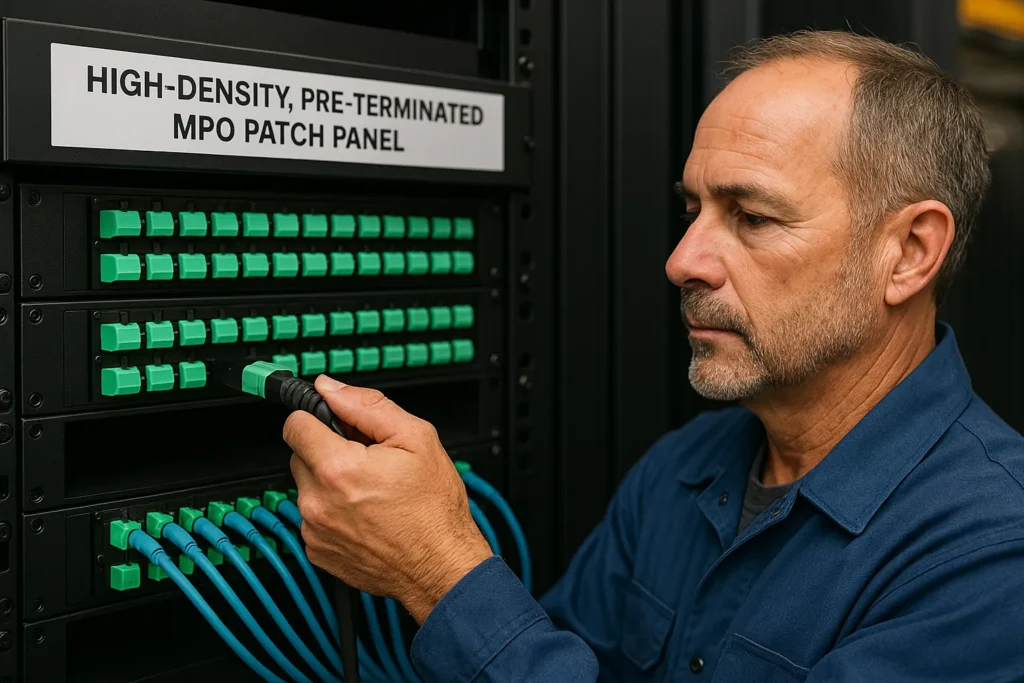
Spec comparison (typical ranges)
| Parameter | Option A | Option B | Typical Range | When to choose |
|---|---|---|---|---|
| Fiber type | OS2 (G.657.A2) | OM4 | — | OS2 for long reach/backbone; OM4 for short MM links |
| Insertion loss (dB) | ≤0.35 (standard) | ≤0.15 (elite) | 0.2–0.5 | Elite for 400/800G headroom |
| Return loss (dB) | ≥60 (APC SM) | ≥30 (MM) | 45–60 | APC where reflections impact PON/backhaul |
| Packaging | Recyclable carton | Returnable crate | — | Choose crate for large, repeat sites |
Waste & energy indicators (how to present ranges and proof)
When buyers ask “how much greener,” I give ranges and evidence types. Use ranges as typical and design-dependent, then tie each metric to a document or photo so auditors can verify.
| KPI (per 100 links) | Definition | Typical Range | Evidence |
|---|---|---|---|
| Embodied carbon avoided | From reduced scrap & packaging | 3–8% | Packaging sheets + waste logs |
| Scrap reduction | Cable off-cuts + failed connectors | 60–85% | Scale photos, disposal receipts |
| First-pass yield | Links passing IL/RL first time | 97–99% | Batch IL/RL reports |
| Commissioning time | Crew hours to ready-for-service | –25–45% | Timesheets, change logs |
| Truck rolls avoided | Site revisits vs. baseline | –20–40% | Dispatch records |
Note: ranges are typical; final values depend on lengths, density, and test limits.
Install checklist (low-waste focus)
| Step | Tool | Pass/Fail | Pitfalls |
|---|---|---|---|
| Pull length verification | Tape/plan | Matches cut sheet | Extra slack → waste |
| Connector seating | Hand torque | O-ring seated | Cross-threading in rain |
| Test & record | LSPM/OTDR | Within spec | Wrong reference cords |
How do factory-controlled, pre-terminated builds reduce material waste and rework?
Factory builds let us cut to exact length, terminate in clean rooms, and test every serial before shipping. That removes guesswork onsite, so crews install, test, and close. Less scrap and fewer retouches mean measurable carbon and cost improvements without slowing 5G-ready migration paths in your whitespace.
Pre-terminated assemblies trim waste by right-sizing lengths and eliminating onsite terminations. Factory IL/RL testing lifts first-pass yield, so you avoid recuts and return visits. Crews spend less time with powered tools, and packaging can be optimized for recycling. Net effect: less scrap, less energy, faster acceptance.
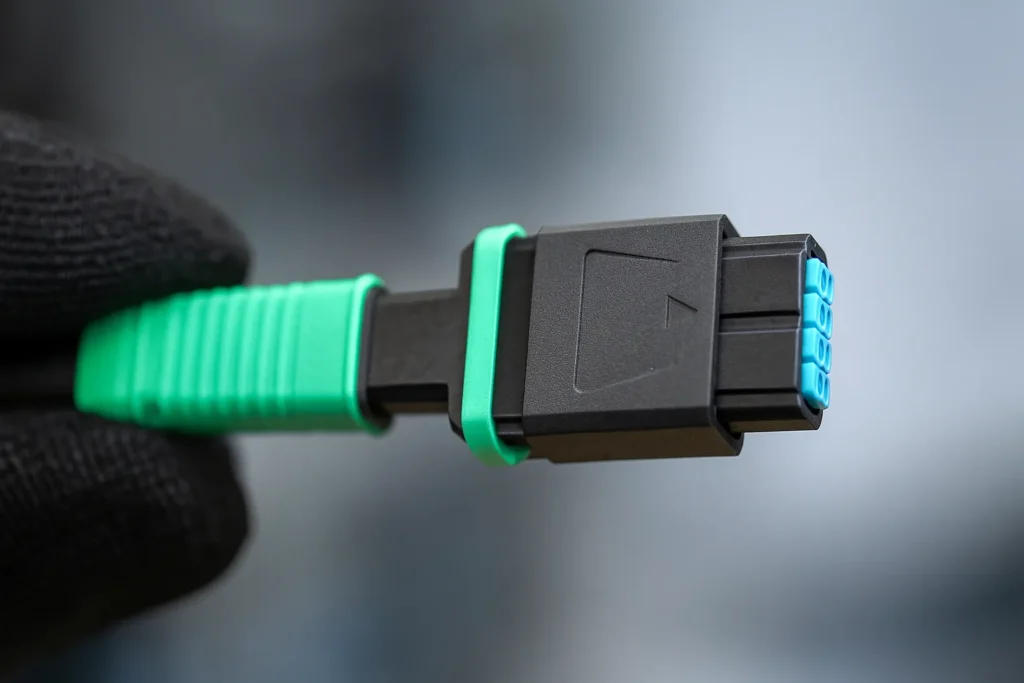
Field termination vs pre-terminated (material, rework, energy)
| Aspect | Field termination (baseline) | Pre-terminated | Typical Impact |
|---|---|---|---|
| Cable off-cuts | Length guess → high scrap | Right-length as-built | –60–85% scrap |
| Connector failures | Craft-dependent | Factory-controlled | FPY ↑到 97–99% |
| Tool energy | Splicer/cleaver use | Minimal (plug-and-play) | –20–40% tool time |
| Commissioning | Longer, more retouches | Faster, fewer retouches | –25–45% hours |
| Truck rolls | More call-backs | Fewer revisits | –20–40% trips |
Ranges are typical and design-dependent.
MTP/MPO mapping for clean installs
| Port/Rack Scenario | Trunk | Cassette | Polarity | Notes |
|---|---|---|---|---|
| 100G SR4 | 12F MTP | Pass-through | B | 8 fibers used |
| 400G DR4 | 8F/12F MTP | LC/CS breakout | A/B/C | Keep lane order |
| 800G | 16F/24F MTP | Pass-through | B | Vendor pinout check |
Mini BOM (low-waste kit)
| Line item | Example spec | Qty | Notes |
|---|---|---|---|
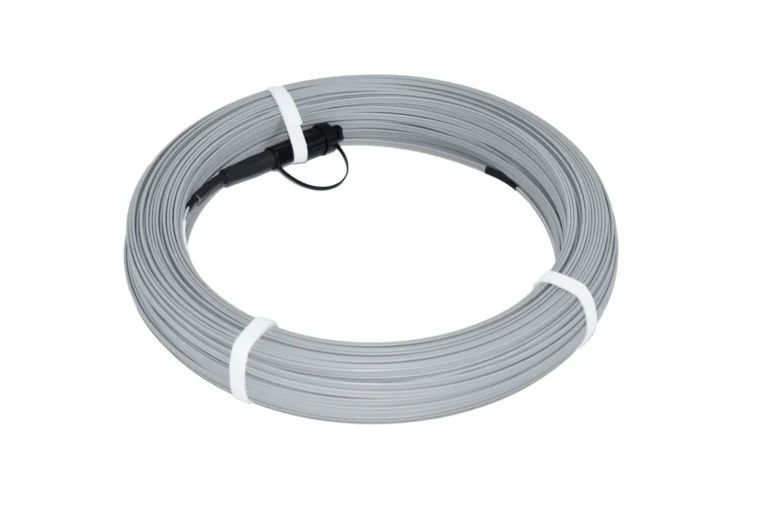
| Trunks | 144F OS2, G.657.A2 | As map | Returnable drum optional |
| Cassettes | MTP→LC, 24 LC duplex | As rack | Label map included |
| Patch cords | LC-LC OS2, 2 m | 1.1× ports | Spare 5% |
Can pre-terminated systems help with LEED and other green building credits?
Yes, when framed correctly. LEED does not “certify a cable,” but project teams can earn points with material, waste, and commissioning strategies. Pre-terminated designs support low-waste installs, recyclable packaging, and quicker, cleaner commissioning that aligns to LEED MR/EA intents and EU buyer expectations.
Use pre-terminated cabling to support credits: Materials & Resources (reduced construction waste; recyclable content/packaging) and Energy & Atmosphere (commissioning efficiency). Provide conservative calculations, vendor attestations, and photographs. Position benefits as “supports/helps meet” credit intents—not as direct certification claims.
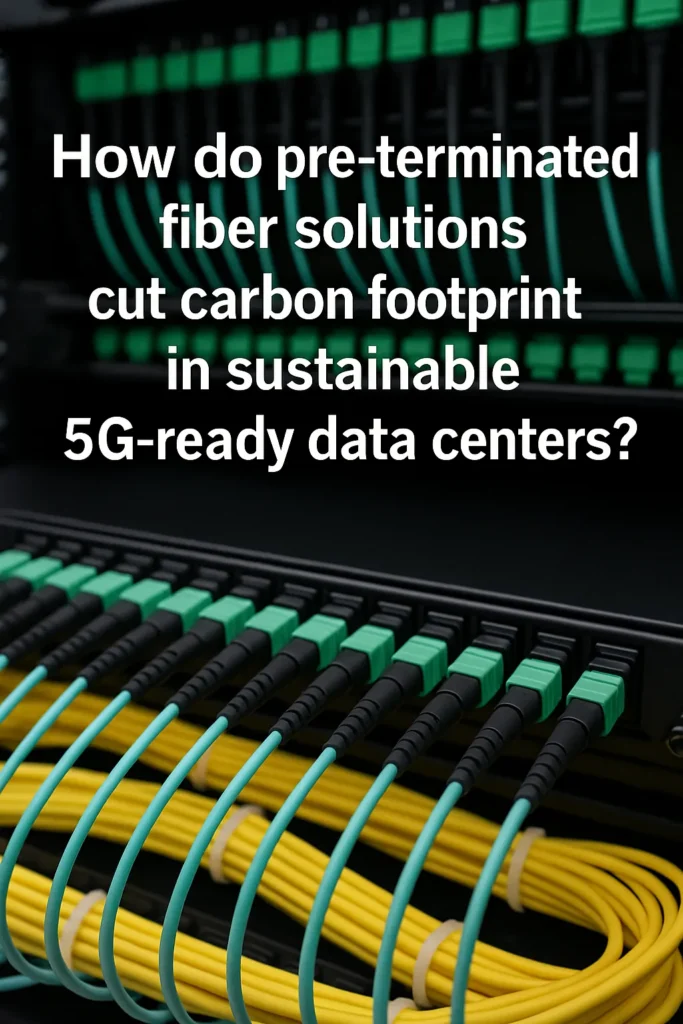
LEED/BREEAM do not certify a cable. They score projects for waste, materials, and commissioning outcomes. Position pre-terminated cabling as supporting evidence: low-waste installation plans, recyclable packaging declarations, and commissioning IL/RL reports. Keep claims conservative and trace everything to the PO.
LEED/BREEAM mapping (supportive, not guaranteed)
| Category | Relevant angle | What we provide | Reviewer cares about |
|---|---|---|---|
| LEED MR (Waste) | Less site scrap | Length-as-built + waste logs | Evidence of reduction |
| LEED MR (Materials) | Recyclable packaging | Material sheets + photos | Recyclability proof |
| LEED EA (Cx) | Faster, cleaner commissioning | IL/RL reports | Functional performance |
| BREEAM Man/Mat | Construction resource use | BOM + pack list | Responsible sourcing notes |
Credit support micro-checklist
- Use recyclable cartons or returnable drums where feasible.
- Provide packaging material declarations and photo proofs of recycling symbols.
- Include as-built length lists to justify low scrap.
- Attach batch IL/RL PDFs to commissioning records (Cx).
What procurement and QA documents prove ‘green by design’ for audits?
Auditors need simple, consistent evidence. Tie the purchase order to a documentation set: drawings, polarity maps, IL/RL targets, packaging materials, and serial traceability. Add waste-tracking templates and delivery photos. With that, your sustainability claims are traceable from factory build to rack installation.
Attach a green BOM, as-built length list, IL/RL batch reports, packaging material declarations, and serial logs. Include waste-tracking templates and delivery photos. Set pass/fail for IL/RL and AQL re-tests. This creates an audit trail that is easy to read and aligns with EU tender requirements.
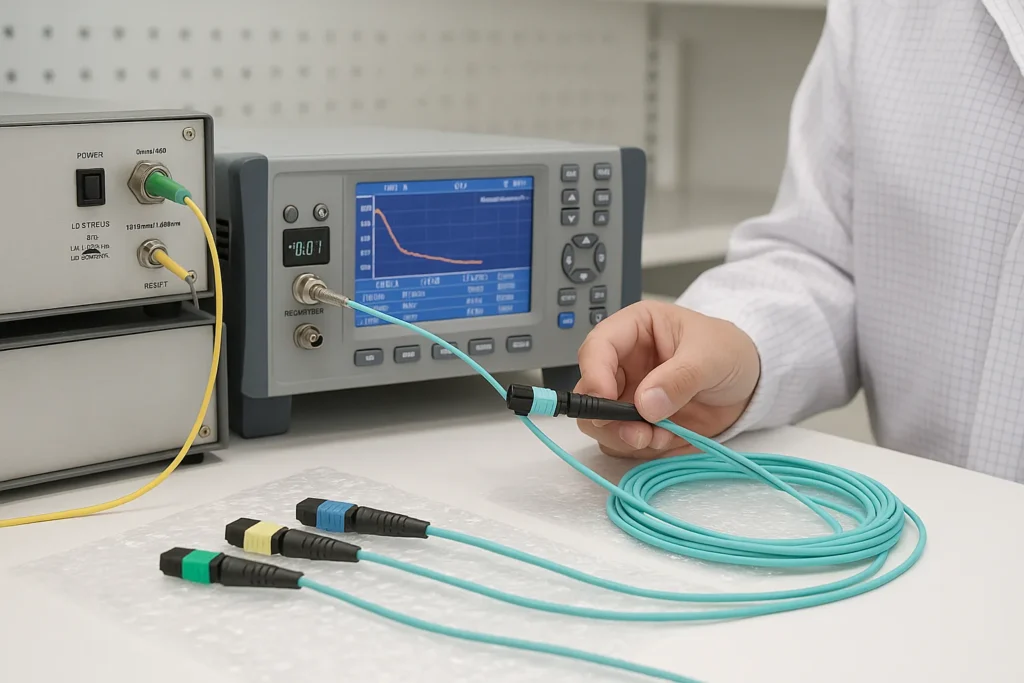
Audit pack — table of contents
| Item | Spec to confirm | Doc required | Lead time | Incoterm |
|---|---|---|---|---|
| Trunks (MTP/MPO) | Count/jacket/bend class | Test report + CoC | 2–4 wks | EXW/FCA/CIF |
| Cassettes | Port/polarity | Module IL sheet | 2–3 wks | EXW/CIF |
| Patch cords | Length/IL/RL | COA sample | 1–2 wks | EXW |
| Packaging | Recyclable/returnable | Material datasheet | — | — |
| Traceability | Serial map | Packing list + photos | — | — |
Serialisation binds each trunk, cassette, and patch cord to batch IL/RL data. We print serial-to-rack maps and include a CSV export so your audit team can spot-check by ID. If you need a green BOM template or waste log, email me at sophie@aimifiber.com and I’ll tailor them to your tender.
Acceptance & waste tracking
| Step | Metric | Target | Record |
|---|---|---|---|
| Goods-in QA | First-pass yield | ≥97% | IL/RL sheets |
| Install | Scrap per 100 links | ≤4 m | Waste log + photos |
| Commissioning | Rework rate | ≤3% | NCR + fix actions |
Conclusion
Pre-terminated cabling lets me give Andy’s EU projects a practical path to greener builds: less scrap, fewer retouches, and faster commissioning backed by clean documents. When we cut to length, factory-test IL/RL, and ship recyclable packaging, we trim embodied carbon and install energy without risking 100/400/800G performance.
If you want the audit-ready bundle (green BOM, packaging declaration, IL/RL pack, waste log template), email sophie@aimifiber.com. For EU tenders, I can also provide a serial-to-rack CSV and a one-page LEED/BREEAM support note to include in your submission.