FTTH Drop Cable Indoor vs. Outdoor: Which Structure, Specs & Applications Should I Choose?

I learned the indoor-versus-outdoor lesson the hard way. In rainy Shenzhen, a contractor used LSZH drops on an exterior wall. After a typhoon, water wicked down the jacket and drove return loss above −35 dB on fifteen links. The client was angry. I changed my process that day.
Pick the cable for the environment. Indoor needs low smoke and safe materials. Outdoor needs UV resistance, water blocking, and sometimes armor. When you match jacket, armor, and approvals to the job, you avoid micro-bends, moisture, and red tags from inspectors.
That is why I wrote this guide. I want project managers, site engineers, and buyers at a fiber cable manufacturer to have one clear playbook. Follow it and you will pass audits, cut repair visits, and keep hand-over dates.
What Are the Core Construction Differences Between Indoor and Outdoor FTTH Drops?
Indoor and outdoor drop cables can look similar. The small details decide if a build passes inspection and survives weather. Indoors, safety comes first. Outdoors, the environment wins.
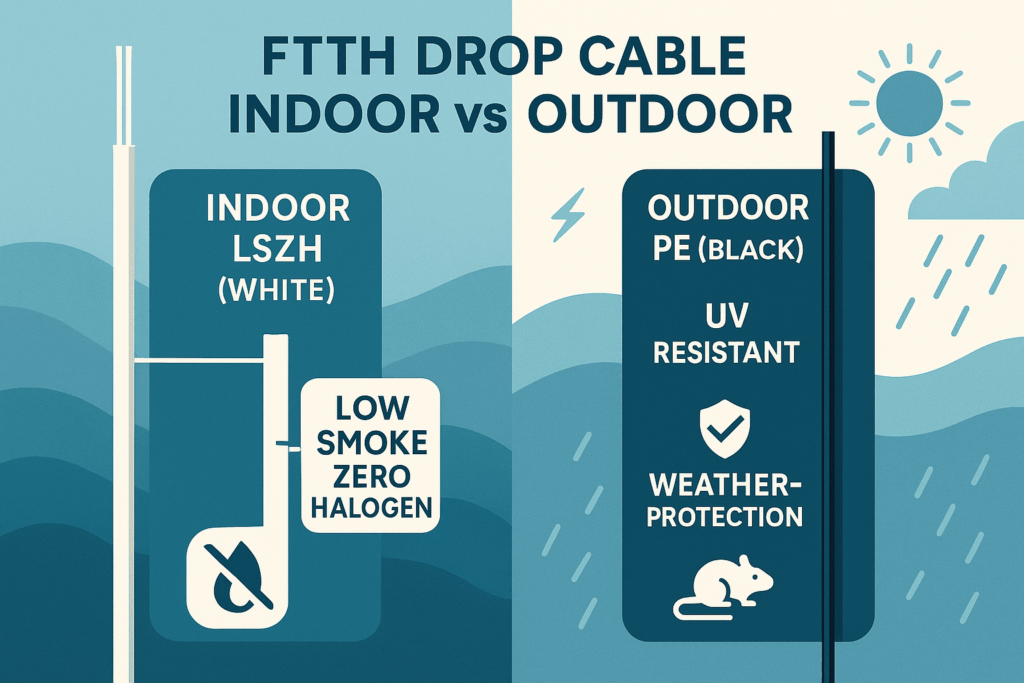
Indoor LSZH jackets protect people during a fire. Outdoor PE jackets protect glass from sun, water, and rodents. Outdoor designs often add steel, gel, or dry-swell powder. This stops UV cracking and water ingress that raise loss and kill links.

Construction at a Glance
| Feature | Indoor Drop Cable (LSZH Jacket) | Outdoor Drop Cable (PE or PVC Jacket) |
|---|---|---|
| Jacket Material | LSZH — low smoke, halogen-free | UV-stable PE or PVC with water-blocking yarn |
| Armoring | None, or aramid yarn for pull strength | Optional stainless-steel spiral or corrugated steel |
| Water Block | Not required in dry areas | Dry water-swell powder or gel tape along buffer |
| Temperature | 0 °C → +60 °C | −40 °C → +70 °C |
| Flame Rating | IEC 60332-1, UL 1666 | CPR Dca → Cca (EU); often no LSZH |
| Typical Use | Riser shafts, in-wall, furniture raceways | Aerial span, façade clip, duct, or direct burial |
Jacket & Armor Choices
| Spec | Indoor LSZH Cable | Outdoor PE/PVC Cable |
|---|---|---|
| Smoke Emission | Very low, safe for escape | N/A |
| Halogen Content | Zero | PVC can release HCl if burned |
| Rodent Protection | None | Steel spiral stops chewing |
| Water-Blocking | Not required | Dry-swell yarn expands in ~30 s |
| UV Resistance | Not needed indoors | Carbon-black additive ≥ 2 % by weight |
I always ask the fiber optic manufacturer for the compounding batch sheet that shows carbon-black percentage. If it is missing, I reject the lot.
How Do Performance Characteristics Compare Indoors vs Outdoors?
Outdoor routes face sun, water, wind, and impact. Indoor routes face code, bends behind furniture, and tight spaces. Both use the same optical core in most FTTH jobs: G.657.A2 bend-insensitive single-mode fiber.
Bend radius and crush strength are where designs diverge most. Indoor LSZH is flexible and safe, but outdoor PE is tougher, with higher tension and crush ratings.
Quick-Look Spec Map
| Parameter | Indoor Cable | Outdoor Cable |
|---|---|---|
| Fiber Type | G.657.A2 SM | G.657.A2 SM |
| Attenuation @ 1310 nm | ≤ 0.35 dB/km | ≤ 0.35 dB/km |
| Min. Bend Radius | 7.5 mm | 15 mm (looser jacket) |
| Short-Term Tension | 50 N | 150 N |
| Crush Resistance | 500 N/10 cm | 1 000 N/10 cm |
| Water-Blocking | No | Yes (dry powder) |
| UV-Stable | Not necessary | Yes |
Where Should I Use Each Cable Type?
I sort projects into four buckets: residential, MDU, curb-to-building, and aerial/overhead. Then I match jacket and armor to each bucket.
Indoor risers and units need LSZH and correct flame class. Outdoor façades and spans need PE, UV stability, and water blocking. For rodents or birds, I add steel spiral armor.
!cover image for h2
Use Case Matrix
| Scenario | Cable Type | Key Checkpoint |
|---|---|---|
| Apartment unit (indoor) | 2-core LSZH drop | Fire code, wall penetration seal |
| High-rise MDU riser | 12-core LSZH flat | Riser rating, pull force < 30 N |
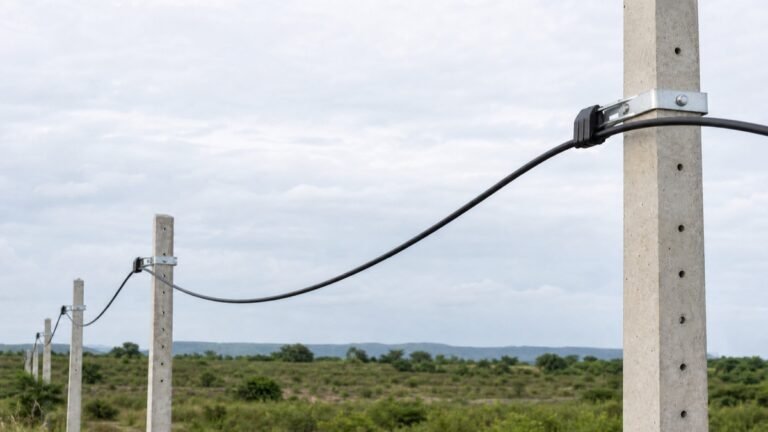
| Curb cabinet → building wall | 4-core PE drop | Water ingress at conduit mouth |
| Overhead span 50 m | Armored PE round | Sag < 3 %, rodent shield |
| Façade clip route 10 m | PE flat armored | UV test ISO 4892-2, impact IK08 |
My note: In São Paulo I installed an armored drop on a mosaic façade. Local birds tried to nest. The extra 0.4 mm steel tape saved the glass fiber from beak damage.
Which Standards and Approvals Should I Verify by Region?
Approvals stop disputes before they start. I keep a simple table and check boxes before I ship. If a mark is older than 24 months, I ask for a fresh doc.
Regulatory Framework by Region
| Region | Indoor Standard | Outdoor Standard / Note |
|---|---|---|
| United States | UL 1666 (riser) / NFPA 262 (plenum) | No indoor fire rating outdoors; NEC Article 830 applies |
| Canada | CSA C22.2 No.232 | Raceways allowed if FT4/metre marking present |
| EU | CPR EN 50575 — Eca → Cca | Dca or Cca for façade; UV aging EN 50289-4-17 |
| Brazil | ANATEL Resolution 527 | INMETRO seal for in-building runs |
| China | GB/T 3048 & CCC | PE drops need GB/T 2423-10 humid-heat test |
| Mexico | NOM-012-SCFI-2014 | Same spec often covers both indoor and outdoor cabling |
Which Termination Method Should I Choose for Each Route?
Inside, I prefer pre-terminated assemblies to save time and reduce dust. Outside, I put splices in sealed closures. For quick fixes, mechanical splices can work, but I treat them as temporary.
Termination Options
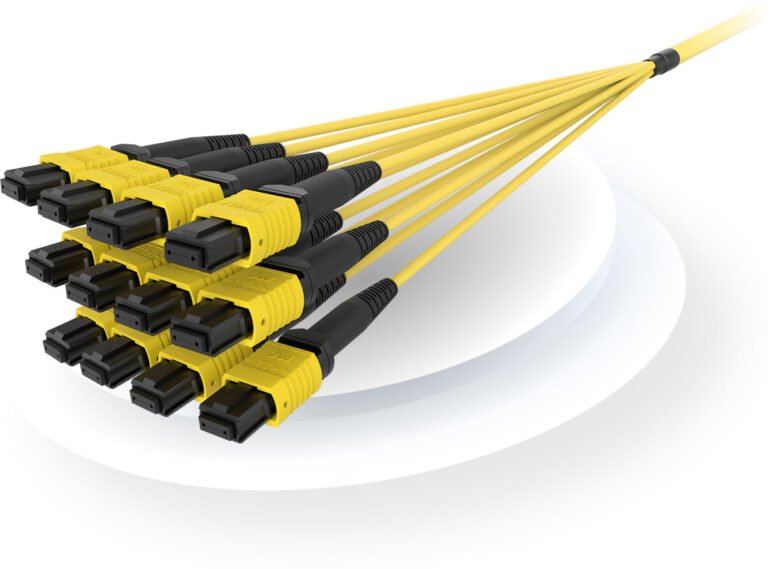
Pre-Terminated Assemblies (Plug-and-Play)
- Factory-crimped LC/SC/APC; IL < 0.3 dB
- Shipped with pulling sock and measurement report
- Cut install time by ~70% on my last Bangkok hotel retrofit
Fusion Splice (Tried & True)
- Use 60 mm heat-shrink sleeve
- Outdoor: place inside gel-sealed closure
- Indoor: park in a 24-slot tray
Method Choice Table
| Method | Pros | Cons | Indoor? | Outdoor? |
|---|---|---|---|---|
| Pre-terminated LC | Fast, low risk | Watch bend radius while pulling | ✔ | ✔ (in closure) |
| Fusion splice | Strong, low reflection | Needs power and splicer | ✔ | ✔ |
| Mechanical splice | No power, quick | IL ≈ 0.5 dB typical | ✔ | △ (temporary) |
What Installation Workflow Helps Me Avoid Re-Work?
A repeatable checklist saves projects. I laminate mine and keep copies in every tool kit. It turns chaos into simple steps.
My 8-Step Checklist
- Confirm drawing — match run length to reel tag
- Inspect jacket — check batch code, CPR class
- Prep route — vacuum duct, install nylon pull rope
- Attach sock — slide mesh over connector side, tape smooth
- Pull & guide — keep bend radius > 20 × OD in corners
- Seal entry — at indoor–outdoor transition, add fire-stop foam
- Label both ends — port number + date + installer initials
- Test & record — OLTS, OTDR, VFL, then photograph results
How Does Water-Blocking Actually Work?
Water seeks the path of least resistance. Good designs stop capillary action early. I prefer dry solutions for weight and cleanup.
Water-Blocking Technology
| Type | Principle | Activation Time | Re-usability | Indoor Use | Outdoor Use |
|---|---|---|---|---|---|
| Dry Swell Powder | Super-absorbing polymer | 10–30 s | One-time | ✘ | ✔ |
| Gel Tape | Hydro-blocked PET tape | Immediate | Sticky mess | ✘ | ✔ |
| Flooded Gel | Viscous filling | Always active | Hard cleanup | ✘ | ✔ (legacy) |
I ask our fiber optic assembly line to maintain ≥ 5 g/m of SAP for outdoor drops.
How Do Mechanical and Environmental Loads Compare?
Outdoor cables must handle higher tension and crush loads. Aerial spans add wind and ice. Indoors, furniture and tight bends do the damage.
Load Cases
| Load Case | Indoor LSZH Flat | Outdoor PE Round Armored |
|---|---|---|
| Short-Term Tension | 50 N @ 60 s | 300 N @ 60 s |
| Long-Term Tension | 30 N | 100 N |
| Crush Floor Load | 500 N/10 cm | 1 000 N/10 cm |
| Impact (IK Rating) | IK05 | IK08 |
| Rodent Test | N/A | Pass > 500 cycles ASTM F2136 |
How Do I Maintain and Troubleshoot Indoor vs Outdoor Runs?
Outdoor failures spike after heavy rain or heat waves. Indoor failures spike after renovations. I run OTDR baselines and store .sor files in SharePoint so help-desk teams can compare years later.
Fast Diagnosis Map
| Issue | Likely Cause (Indoor) | Likely Cause (Outdoor) | Fast Remedy |
|---|---|---|---|
| High insertion loss | Bend behind furniture | Water in splice closure | Reroute bend / re-seal closure |
| No signal | Mis-patched ONT port | Cable cut by backhoe | Check patch map / OTDR break locate |
| Connector failure | Dust on LC ferrule | Corrosion on SC APC pin | Clean with IPA / replace pigtail |
| Jacket abrasion | Sharp drywall hole | Cable rubbing on pole | Add grommet / install spiral guard |
What Drives Cost and Lifetime TCO?
Do not buy on reel price alone. Outdoors costs more up front but can save thousands in repairs. I price risk, not just cable.
Cost Comparison (Illustrative)
| Cost Element | Indoor LSZH (USD/km) | Outdoor PE Armored (USD/km) |
|---|---|---|
| Raw Cable Ex-Works | $180 | $280 |
| Shipping (40′ HQ) | $0.09/m | $0.12/m |
| Install Labor | $0.30/m | $0.45/m (heavier, slower) |
| Testing & Docs | $0.05/m | $0.05/m |
| Lifetime TCO (10 y) | $6 200 | $7 900 |
A single water-damage repair can cost $4 000. PE + water blocking is cheap insurance for façades and ducts.
What Should My Procurement Checklist Include?
I do not send a PO until I check these boxes. It protects my schedule and keeps inspectors happy.
Buyer’s Pre-PO Checks
- CPR / UL / ANATEL certificate copy dated < 24 months
- Third-party CPR lab report with test ID
- Jacket print sample photo
- Fiber geometry stats: core/clad 9.25 ± 0.5 µm
- Reel marking: length, batch, arrow direction
- Factory IL/ORL report, PDF + CSV (machine-readable for ERP)
- Warranty statement, signed & stamped
Ask your patch cable supplier to attach IL data as CSV to speed acceptance.
Which Trends Will Change FTTH Drop Selection Next?
I watch three threads: safer jackets, small-cell hybrids, and smart pulling tools. These shift specs and install habits over the next two years.
What’s Coming
Nano-Composite Jackets
Lab tests show nano-clay LSZH raises flame barrier by ~30%. I expect first data-center orders soon.
5G xPON Hybrid Drops
Carriers in Korea are trialing hybrid 12-fiber + 2-power conductor drops to small cells. AIMIFIBER is prototyping a flex jacket that meets CPR and IEC 60502.
AI-Driven Pull-Force Monitoring
I put a BLE load cell on my last duct pull. The phone app flagged spikes over 200 N. We changed route and saved the glass.
What Are the Quick Answers I Give on Site?
FAQ
| Question | Short Answer |
|---|---|
| Do I need LSZH outdoors? | No. UV-stable PE beats LSZH in weather and sun. |
| Can I bury LSZH in conduit? | Only if conduit is watertight and code allows. |
| How long can connectors hang outside? | Cap within 30 min or ferrule can pit. |
| Is PVC jacket legal in EU outdoors? | Yes, but CPR rating must be displayed. |
| What is CPR Dca? | Fire growth ≤ 1.5 MJ within 600 s in the SBI test. |
Conclusion
Choosing FTTH drop cable is not guesswork. Indoor LSZH protects people in a fire. Outdoor PE and armored drops protect glass from rain, sun, and animals. The wrong pick raises loss, invites re-work, and hurts your reputation. My rule set is simple:
- Match environment first — smoke vs sun
- Verify certificates — UL, CPR, ANATEL
- Plan termination — pre-term inside, fusion outside
- Test and log — IL, ORL, OTDR on day one
Need a custom hybrid, an odd CPR class, or a pre-terminated 500 m trunk? Email me, Sophie Wang at sophie@aimifiber.com , or visit AIMIFIBER. I will reply within 24 hours with loss data and a drawing. We support OEM/ODM and ship to the US, Spain, Brazil, Mexico, France, and across Africa and the Middle East.
Summary
I compare indoor LSZH and outdoor PE FTTH drop cables by construction, performance, and approvals. Indoors needs low smoke and strict flame classes. Outdoors needs UV stability, water blocking, and sometimes armor. I map use cases, give regional standards, and list install steps. I show water-blocking types, load ratings, maintenance tips, and a TCO view. I end with a buyer checklist and near-term trends. With the right match and a clean process, you avoid re-work, pass audits, and deliver stable links.