Can Pre-Terminated Fiber Optic Solutions Really Fix 5G Deployment Delays?
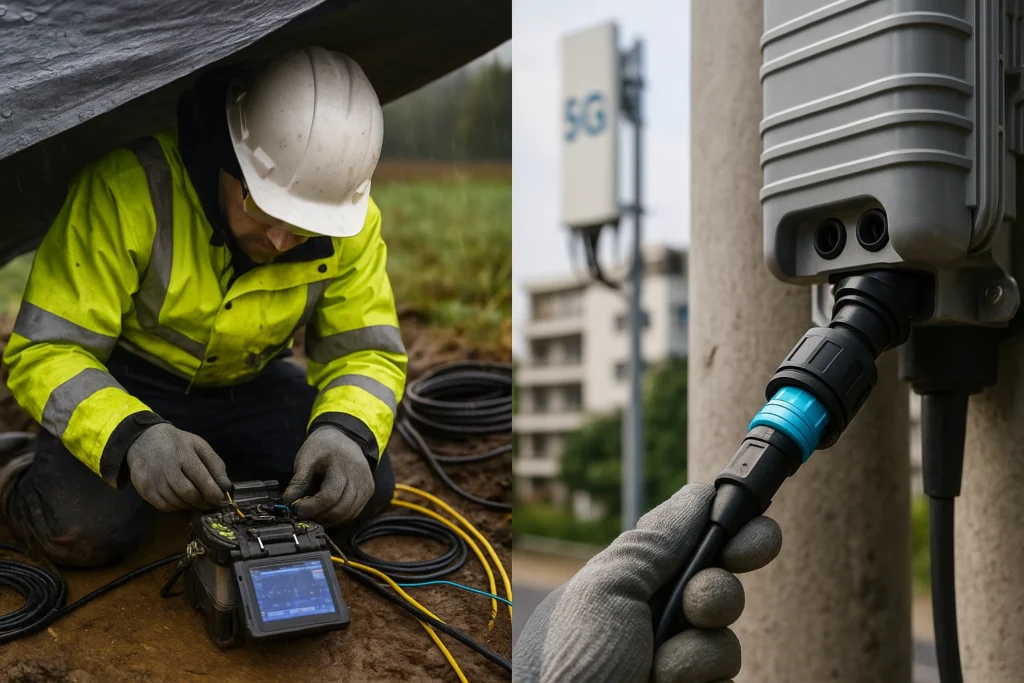
You are racing to build 5G. Manual splicing slows every site and burns budget. Competitors move faster. I switch to pre-terminated links so crews plug, verify, and go live. That change turns chaos into a short, repeatable checklist.
Yes. Pre-terminated solutions replace slow, on-site splicing with factory-built, tested cables. Connectors arrive attached, labeled, and certified, so teams make quick, consistent mates with basic tools. This “plug-and-play” approach shortens deployment windows and improves reliability across clusters and regions.
A European PM told me his build was weeks late. The pattern was familiar: not enough splicers, too many fixes. We moved to factory-terminated trunks and hardened drops, matched polarity in advance, and shipped labeled harnesses. Site work fell to cleaning, mating, and validation. The schedule recovered in one rollout cycle.
What Exactly Are Pre-Terminated Fiber Optic Solutions?
The idea is simple. We perform delicate termination and testing in a clean factory, not on a windy site. Then we ship a kit that matches your route and device map. At the node, the crew follows a short script instead of building links from scratch.
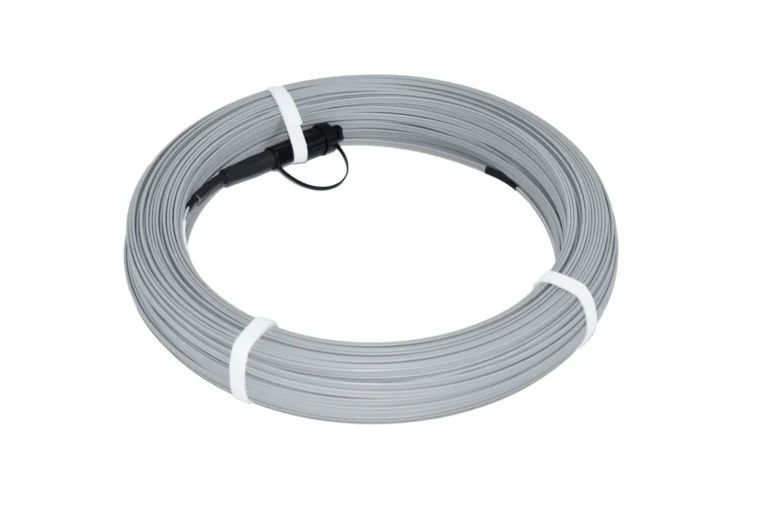
Pre-terminated solutions are factory-assembled fiber cables with connectors installed, inspected, and certified. They arrive ready to plug in, so field splicing is minimal or zero. This reduces time on site, lowers error rates, and delivers predictable IL/RL results for every leg.
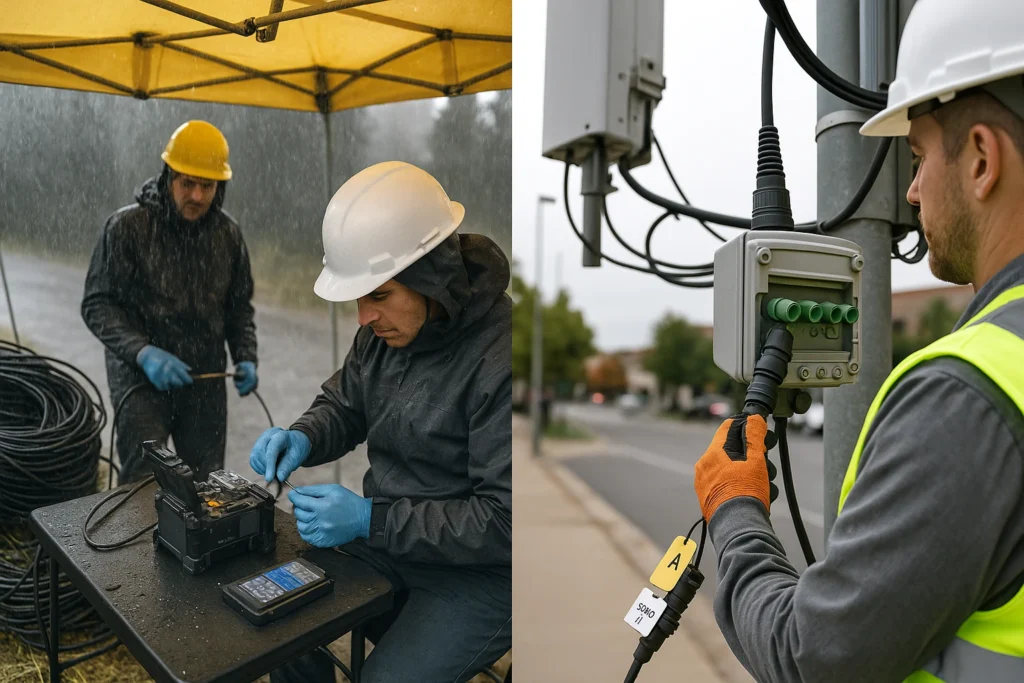
What comes in the kit?
| Component | Purpose | Typical Options | Notes |
|---|---|---|---|
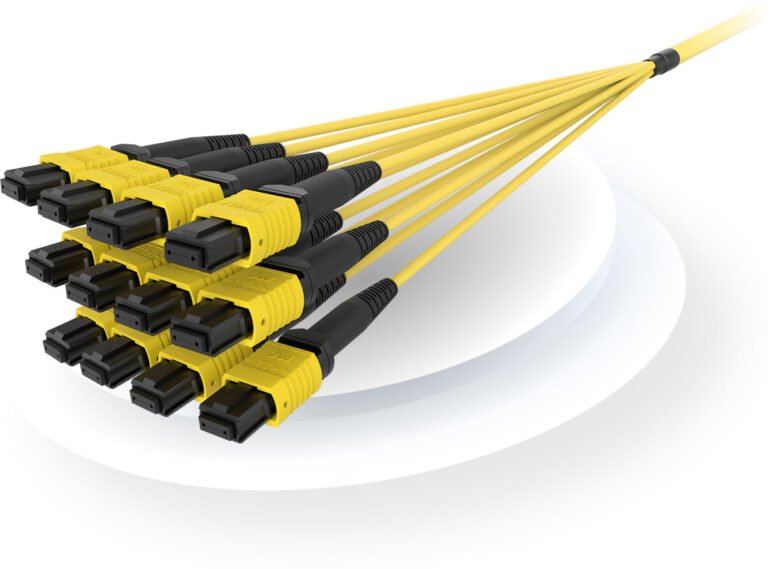
| Trunk cable | Backbone hub↔terminal | OS2/OM4; 8F/12F/24F; MTP/MPO | Pulling eye optional |
| Hardened drop | Terminal↔RRU/small cell | OptiTap / FullAXS / ODVA / NSN / PDLC | IP67-class shells |
| Panel/Cassette | Breakout & organize | MTP-LC/CS; HD 1U/2U/4U | Polarity A/B/C |
| Harness | Radio/BBU jumpers | LC/APC, LC/UPC; armored | Pre-labels for ports |
| QA pack | Proof & traceability | IL/RL sheets; label map | Barcodes/QR codes |
Reference: Corning on pre-terminated “plug-and-play” concepts: "Ready, steady, go".
Data-center cassettes and trunks (AIMIFIBER): pre-terminated cabling.
Factory QA that de-risks turn-up
| Test | Typical Pass Guide | Why it matters |
|---|---|---|
| Insertion loss (IL) | LC ≤0.35 dB; MPO ≤0.35 dB (≤0.20 dB low-loss) | Power budget margin |
| Return loss (RL) | LC/UPC ≥50 dB; LC/APC ≥60 dB; MPO SM ≥26 dB | Reflection control |
| Endface | IEC 61300-3-35 pass | Clean, repeatable mates |
| Polarity | Scheme A/B/C as ordered | Tx→Rx integrity |
Traditional splicing vs pre-terminated assembly
| Feature | Field Splicing | Pre-Terminated Assemblies |
|---|---|---|
| Time per site | Long (days) | Short (hours) |
| Reliability | Varies by skill/weather | Factory-tested, consistent |
| Labor profile | High-skill splicers | Crew with basic training |
| Rework risk | Higher | Low, documented |
| Scaling | Disruptive | Modular, “plug-and-play” |
Why Is Traditional 5G Deployment So Challenging?
Opening paragraph for h2. (45–60 words)
5G performance depends on fiber. The slow part is not the tower; it is precision work at every node. Splicing needs skill, space, and time. Weather and fatigue add risk. Multiply that by hundreds of sites, and schedules slip.
Snippet paragraph for h2 (40–60 words)
Manual, on-site splicing is slow and error-prone. It needs certified technicians who are scarce, and it often happens in cramped, dirty spaces. Each bad splice adds loss, retests, and truck rolls. These factors create the bottlenecks that delay 5G builds.
Where does the time go?
| Task | Field Splice Build | Pre-Terminated |
|---|---|---|
| Fiber prep & fusion | 60–180 min | 0 |
| Clean & inspect | 20–30 min | 20–30 min |
| Route & secure | 30–60 min | 30–60 min |
| Test & record | 20–40 min | 15–30 min |
| Total typical/site | 130–310 min | 65–120 min |
The cost of human error
- A single poor splice can push IL beyond budget.
- Troubleshooting needs scopes, OLTS/OTDR, and time.
- Rework pushes activation and burns crew hours.
The skills gap
- Certified splicers are limited in many regions.
- Training cycles are long.
- Pre-terminated kits let general crews close sites with a simple checklist.
Where Do Pre-Terminated Links Deliver the Biggest Gains?
Not every path needs a cassette, but many benefit from pre-built links. I focus them where speed, weather, or density demand it. That usually means towers, small cells, and busy rooms that must change fast with little downtime.
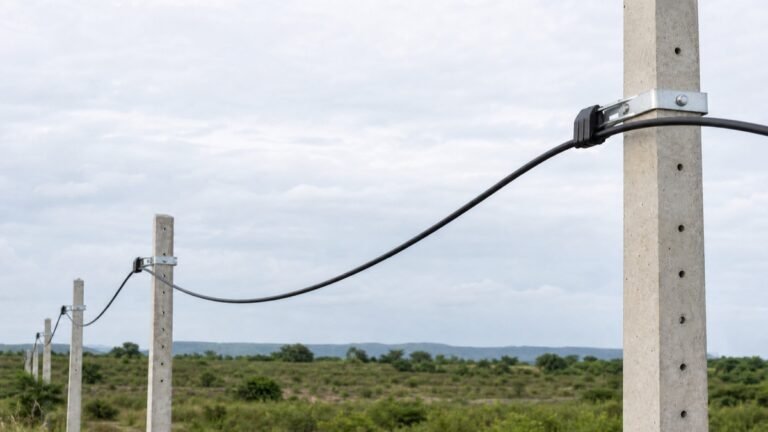
Use pre-terminated kits in FTTA towers and small cells, dense data-center rows, and high-volume FTTH drops. Hardened shells protect outdoor mates. MTP trunks speed backbone changes. Pre-connectorized drops cut home-pass install time. These choices free your best techs for truly critical work.
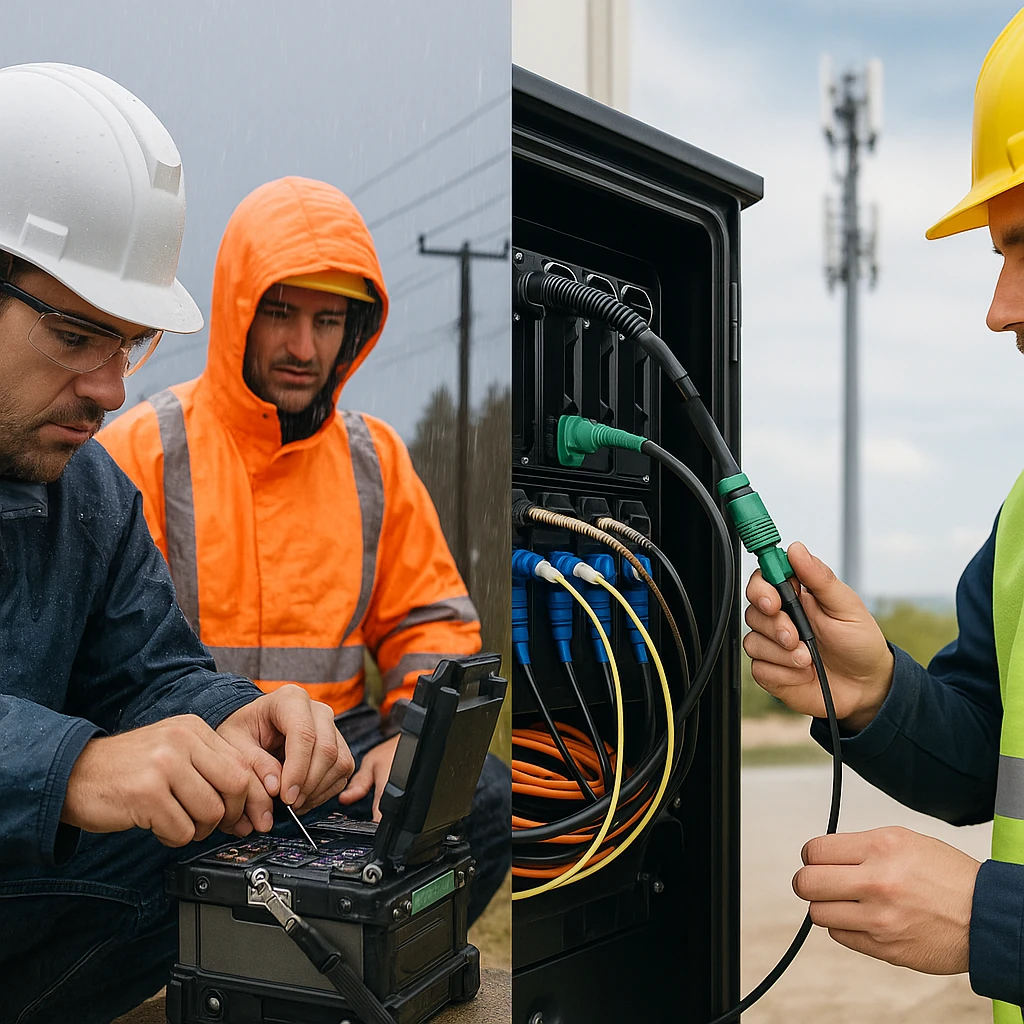
Use-case matrix
| Scenario | Recommended Path | Why it works |
|---|---|---|
| FTTA tower | OSP trunk → terminal → hardened drop to RRU | Weather-proof, fast swaps |
| Small cell | Mini trunk → sealed drop | Minimal street-side time |
| Data center | MTP trunk → pass-through or cassette | Low loss, quick MACs |
| FTTH | Factory drop with SC/APC | Faster home connects |
Quick procurement checklist (copy/paste)
| Item | Spec to confirm | Doc to request | Lead-time guide |
|---|---|---|---|
| Fiber & counts | OS2/OM4; 8F/12F/24F | Serial IL/RL sheets | 2–4 weeks |
| Connectors | MPO pinning; LC/APC or LC/UPC; hardened type | BOM + drawings | |
| Polarity | A/B/C | Route/label map | |
| Jackets | OSP PE / LSZH / armored | Material list | |
| Pulling | Eyes/grips | Install note | |
| Labels | Port map, QR | Label sample |
Conclusion
Pre-terminated links move fragile work off the street and into the lab. I get tested trunks, sealed drops, and clear labels that crews can install fast and repeat. That cuts hours per site, reduces rework, and keeps launches on schedule. If your 5G plan depends on speed and predictable QA, this is the most direct path to hit targets.