In the realm of optical fiber manufacturing, precise control of fiber tension and bobbin take-up is essential for delivering consistent product quality. Fiber tension affects the integrity of the optical fiber, its mechanical performance, and its optical properties, while bobbin take-up systems help ensure smooth operations during spooling and packaging. Telecom project managers, ISP procurement teams, factory investors, and engineers all play pivotal roles in ensuring these systems run efficiently for large-scale productions. This guide delves into the basics and advanced methodologies of fiber tension control, explores innovations in bobbin take-up technology, and addresses common challenges in maintaining stability during high-speed production. Each chapter offers actionable insights, from integrating real-time monitoring tools to leveraging automation for superior performance. By the end, you’ll gain a cohesive understanding of how to optimize these critical processes for maximum efficiency and quality outcomes.
Mastering Fiber Tension: The Backbone of Optical Fiber Processing
In the intricate world of optical fiber production, controlling fiber tension is a vital cog in the machinery. From drawing the fiber to winding it onto spools, every stage demands precise tension management to ensure product quality and avoid costly manufacturing errors. Understanding the fundamentals of fiber tension control not only improves production efficiency but also extends the lifespan and performance of the fiber itself.
The Role of Tension in Optical Fiber Processing
Fiber tension is more than just a mechanical parameter—it defines the structural integrity and optical performance of the fiber. Optical fibers are delicate materials, prone to micro-cracking, deformation, or even failure if exposed to inappropriate stress levels. Maintaining an equilibrium in tension ensures that the fiber remains uniform in diameter and retains its ideal refractive index profile, both of which are critical for effective signal transmission. The slightest deviation can lead to signal loss, attenuation, or even manufacturing defects.
At the same time, tension needs to be actively regulated as the fiber transitions through various stages of production, including drawing, coating, curing, and spooling. Each stage introduces specific variables—such as heat, speed, and structural loads—that can alter the fiber’s tension. Failure to address these variations could lead to irregularities that compromise the fiber’s durability and efficiency.
Principles of Tension Control Systems
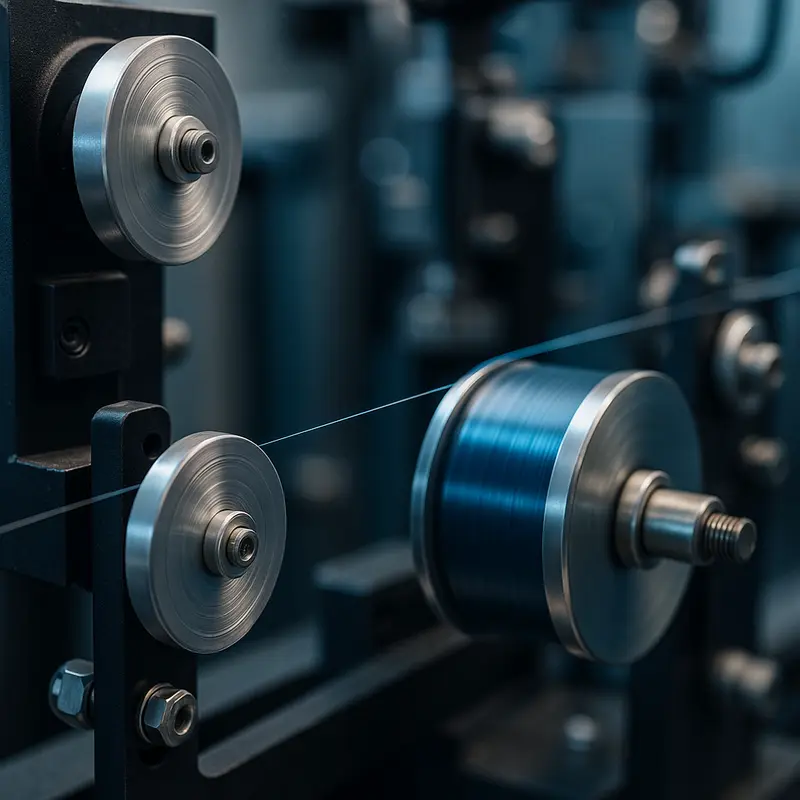
Modern fiber tension control systems rely heavily on advanced technologies to provide consistent regulation throughout production. At the heart of these systems are closed-loop feedback mechanisms. These mechanisms integrate sensors that continually monitor fiber tension and microprocessors that make real-time adjustments to production parameters, such as motor speeds and braking forces.
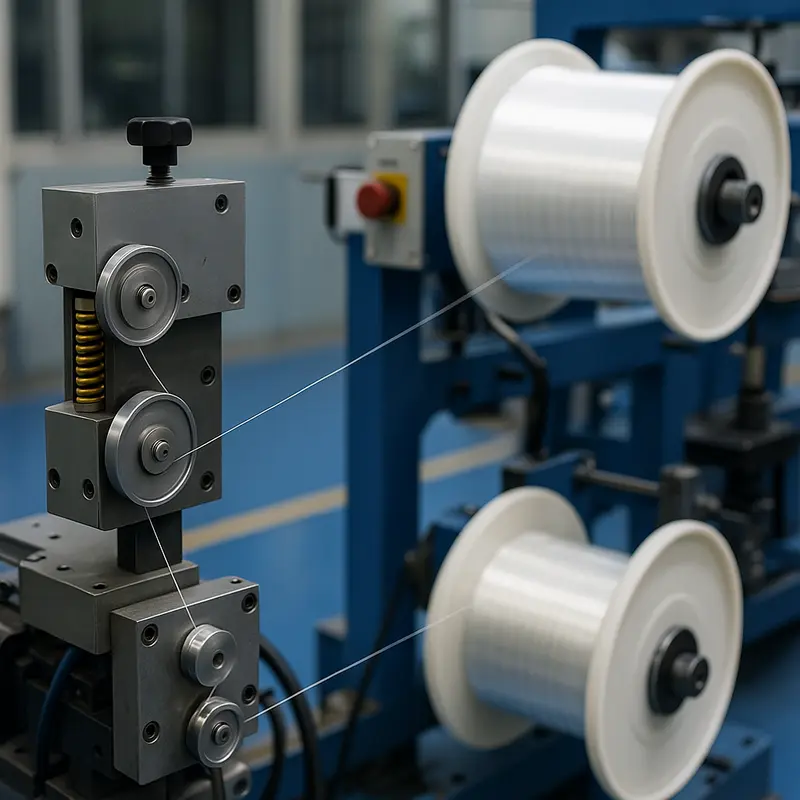
Another key technology is the tension dancer system, which consists of a movable roller or pulley that adjusts to maintain constant tension. As the fiber moves through the production line, the dancer absorbs any fluctuations caused by changes in speed or load, ensuring that tension remains stable. Sophisticated versions of these systems include electronic controls that predict and adapt to future deviations, adding an extra layer of precision.
The Human Element and Maintenance
While the machines perform the bulk of the work, human expertise remains indispensable in fine-tuning system settings. Operators must understand how environmental factors, like temperature and humidity, affect tension control and adapt their parameters accordingly. Equally important are routine checks and maintenance of tension control units. Worn-out components, such as rollers or sensors, can lead to lapses in accuracy, compromising the entire production line.
To delve deeper into additional hardware and automation methods used in optical fiber systems, check out optical fiber coloring and rewinding.
Bridging to the Next Phase
Mastery of fiber tension control sets the stage for optimizing bobbin take-up systems, the next critical step in ensuring continuous, fault-free production. By understanding how tension feeds into the precision winding of fiber onto spools, manufacturers can achieve unparalleled consistency and efficiency in producing optical fiber for diverse applications.
Precision Mechanisms in Advanced Bobbin Take-Up Systems for Optical Fiber Optimization
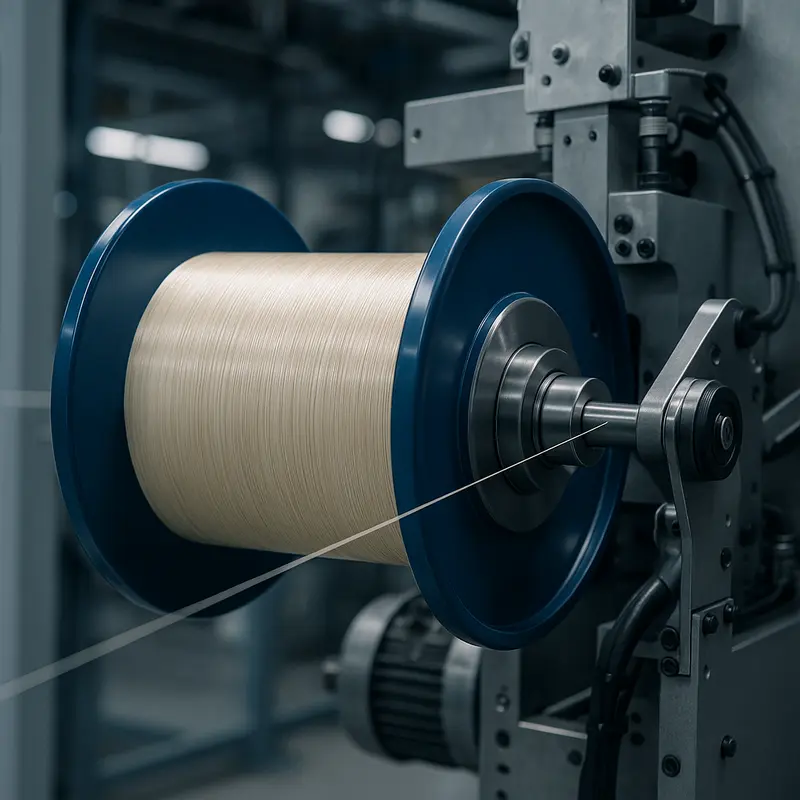
In the realm of optical fiber manufacturing, achieving precision and consistency is paramount. This is particularly true for the bobbin take-up systems that play a critical role in winding optical fibers without compromising their delicate tension or structural integrity. These advanced mechanisms are far more than mere spools; they are a cornerstone of manufacturing technology that affects the fiber's final performance, quality, and long-term reliability.
The Functionality Behind Advanced Bobbin Take-Up Systems
Efficient bobbin take-up systems are engineered to address two primary challenges inherent in the optical fiber production process: maintaining consistent tension and ensuring accurate winding. Both factors are crucial for minimizing microbending losses and preserving the ideal geometry of the fiber.
First, consider the importance of tension. Fibers exiting high-speed drawing towers experience a delicate balance of forces. Too much tension can stretch or damage the fiber, while insufficient tension risks creating slack, which can lead to internal microbends when the fiber is finally installed. Advanced bobbin take-up systems utilize sophisticated servo drives and tension control mechanisms to dynamically adjust winding speeds and ensure a uniform tensile force along the fiber’s length. These adjustments are typically guided by real-time sensors and intelligent control algorithms, making the process both automated and remarkably precise.
Second, the winding process itself is no less important. The geometry of the wound fiber on the spool has significant downstream implications. Uneven winding can cause entanglements and stress points during unwinding, particularly during further coating or cabling steps. To prevent this, modern bobbin systems rely on traversing mechanisms that guide the fiber across the spool with millimeter-level precision. This ensures that each layer overlaps neatly without gaps or crossovers. Coupled with programmable controls that sync with the draw tower’s output speed, such systems maximize both efficiency and product integrity.
Innovations Propelling Bobbin Technology Forward
The ongoing evolution in bobbin take-up systems revolves around tighter integration with smart manufacturing ecosystems. Many of these systems now come equipped with predictive analytics and diagnostics tools. These features utilize data collected during the winding process—such as tension inconsistencies or operational stress points—to predict maintenance needs and minimize downtime. Furthermore, the inclusion of modular designs allows manufacturers to adapt the system for different fiber types and production scales, enhancing overall flexibility.
Energy efficiency is another area where advancements are notable. By optimizing servo motors and introducing energy recovery systems that leverage inertia during winding, manufacturers are not only improving precision but also reducing the environmental footprint of fiber production.
Connecting Advanced Bobbin Systems to the Broader Manufacturing Process
While sophisticated in their operation, bobbin take-up systems don’t function in isolation. They are intimately connected to upstream processes such as fiber drawing, secondary coating, and even payoff systems. This interconnectedness underscores the need for holistic optimization; for instance, a high-precision bobbin system can only perform at its best if tension control is consistent from the start of the production line.
To explore how rewinding and payoff systems support these operations, as well as their role in fiber quality assurance, visit this comprehensive guide.
Advanced bobbin take-up systems are, without a doubt, an integral part of the optical fiber manufacturing ecosystem. By combining precision engineering with smart technologies, they directly contribute to producing better fibers with higher performance standards. Their role may be specific, but their impact resonates across every stage of fiber processing.
Harnessing Real-Time Monitoring for Precision in Fiber Processing
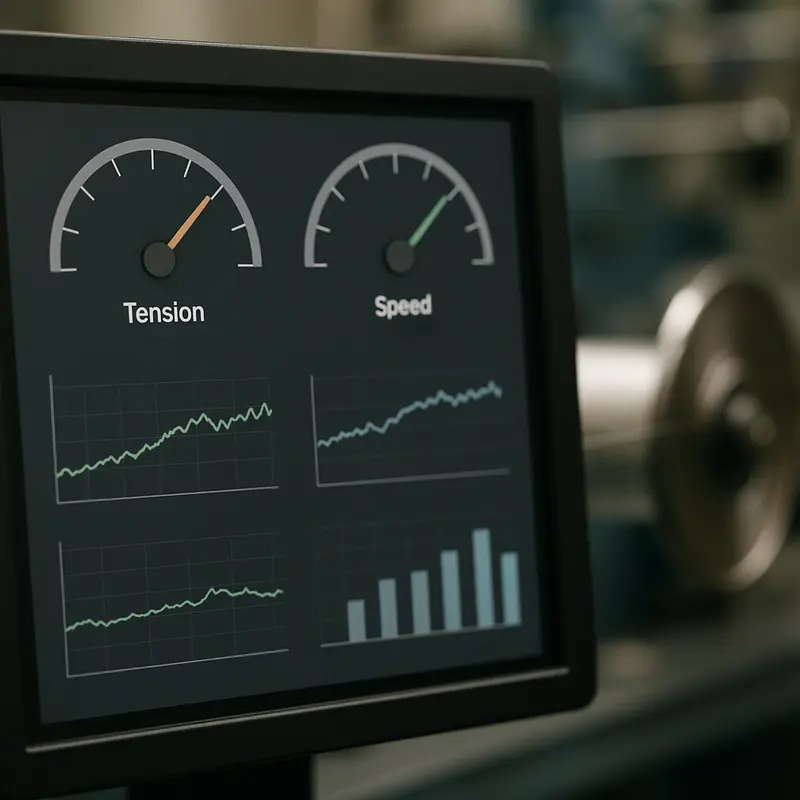
In the complex world of optical fiber processing, maintaining optimal fiber tension and bobbin take-up requires a meticulous balance of precision and adaptability. To achieve this, integrating real-time monitoring systems has become a critical innovation, transforming how manufacturers manage production variables and safeguard product quality. By leveraging continuous feedback mechanisms and advanced analytics, industries are now equipped to tackle the dynamic challenges inherent in high-speed fiber production.
Real-time monitoring systems act as the nerve center for tension and take-up management. These systems deploy sensors that track tension fluctuations across the fiber line, sending instantaneous data to control units. This seamless exchange allows adjustments to be made automatically, ensuring tension remains within predefined thresholds. At the same time, monitoring the bobbin take-up rate prevents inconsistencies such as uneven winding, slack spots, or overloading—all of which can compromise the structural integrity of the optical fiber.
One of the core advantages of real-time solutions is their ability to detect anomalies before they escalate. For example, if tension across the fiber deviates due to mechanical disturbances or material variations, the monitoring system identifies the exact point of disparity. Immediate corrective measures, such as modulating motor speeds or recalibrating control settings, can then be executed. These proactive adjustments significantly reduce downtime while minimizing waste and production inefficiencies.
Moreover, these systems bolster precision by enabling fine-grained control of bobbin take-up mechanisms. Automated spool alignment paired with dynamically responsive motor settings ensures that each segment of the fiber is wound uniformly. This consistency is vital for downstream processes, including fiber coloring, rewinding, and extrusion, where irregular tension or winding can introduce defects.
The integration of real-time data offers benefits beyond technical adjustments. It also enhances operational oversight and process optimization. Real-time dashboards and analytics provide actionable insights, allowing operators to refine settings for specific fiber types or production speeds. As a result, manufacturers can adapt to evolving market demands, including thinner fiber designs or enhanced durability specifications, with unparalleled precision.
Adopting automation with real-time monitoring systems has also paved the way for smarter, interconnected manufacturing setups. These solutions feed directly into broader Internet of Things (IoT) frameworks, where predictive modeling can forecast wear-and-tear on machinery or plan maintenance schedules based on usage patterns. By centralizing both live data and historical trends, manufacturers gain a comprehensive view of their operations, enabling scalability and long-term improvements.
Ultimately, integrating real-time monitoring for tension and take-up adjustments is not merely a technological upgrade—it is a leap toward a more resilient and efficient manufacturing ecosystem. As industries face increasing pressure to maintain quality while scaling production, harnessing the power of real-time systems ensures that the critical balance of tension and take-up is consistently achieved. In the broader context of optical fiber processing, this innovation serves as a cornerstone for producing fibers that meet the exacting standards of today’s global market.
For those interested in exploring how real-time innovation complements fiber industry practices, advanced fiber coloring and rewinding systems offer additional insights into precision and adaptability across interconnected processes.
Navigating the Complexities of Achieving Uniform Fiber Tension in High-Speed Optical Manufacturing
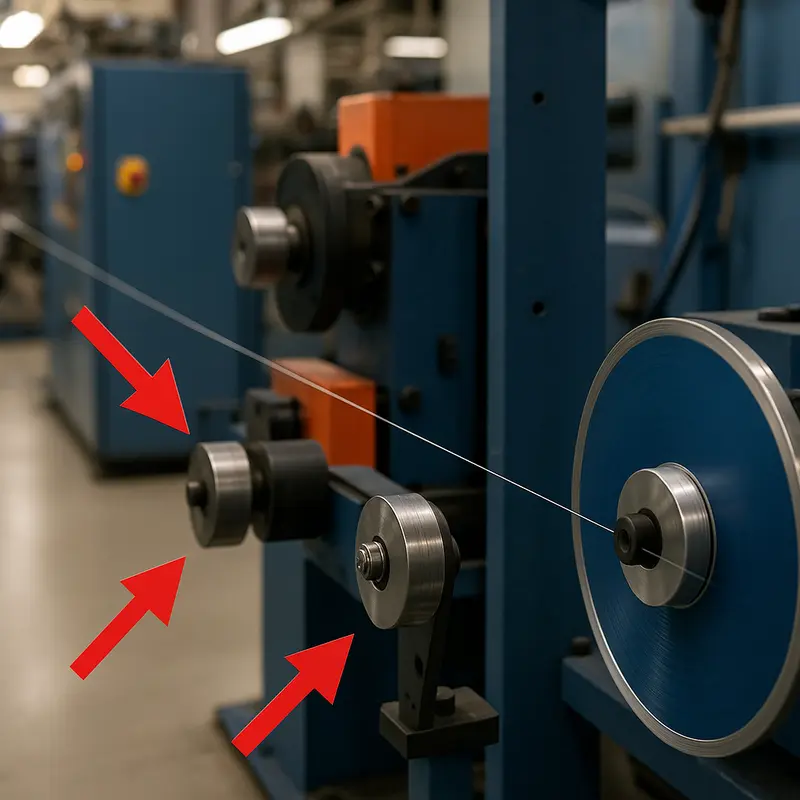
Maintaining consistent fiber tension during high-speed optical fiber processing is a cornerstone of quality manufacturing. Small deviations can lead to defects such as microbending, uneven coating thickness, or even fiber breakage, all of which compromise the optical performance and longevity of the fiber. The pursuit of uniform fiber tension is thus critical, yet it presents challenges influenced by mechanical, environmental, and operational factors.
One primary challenge lies in the speed at which modern processing lines operate. Optical fiber drawing processes often occur at speeds exceeding 1,000 meters per minute. These extreme rates magnify the sensitivity of fiber tension to minute variations in system parameters. For example, slight misalignments in the payoff or take-up spools can create instability, leading to oscillations that ripple through the entire system. Similarly, abrupt transitions in line speed can disrupt the delicate equilibrium required to maintain uniform tension.
Mechanical components such as tension control rollers, capstan drives, and brake systems play pivotal roles in mitigating these fluctuations. However, these mechanisms are not immune to wear and tear. Over time, mechanical degradation introduces variability, which can hinder precise tension control. Regular calibration and maintenance of these components are therefore essential, but they require downtime—an operational cost that must be weighed against the risks of tension-related defects.
Environmental factors further complicate the equation. Variations in temperature and humidity can subtly affect the fiber’s mechanical properties, including its elasticity. As a result, tension setpoints that work well under one set of conditions may not achieve the same results in another. This is especially critical in processing environments without robust climate control.
Another key challenge stems from the integration of real-time monitoring systems, which, while indispensable, are not foolproof. Load cells and tension sensors, critical for providing feedback to control systems, can experience calibration drift over time. Inaccurate data compromises the system’s ability to make precise adjustments. Moreover, the implementation of such monitoring solutions often demands high upfront costs and infrastructure modifications, which can be prohibitive for smaller manufacturers.
Despite these challenges, there are promising strategies to achieve more consistent tension control. Advanced automation systems equipped with predictive algorithms can continually adapt to changing conditions. For instance, machine learning models may analyze historical data to predict the onset of tension anomalies, enabling proactive interventions. Additionally, innovations in non-contact tension measurement techniques offer the potential to reduce wear and maintain accuracy over extended periods.
Collaborative solutions that combine these approaches are proving particularly effective. For instance, upgrading mechanical systems with smart sensors and integrating them into centralized control software can provide operators with a comprehensive view of tension dynamics. Such systems empower manufacturers to identify and address issues before they escalate, thereby reducing downtime and waste.
To delve deeper into related advancements, consider exploring this guide to improved fiber cable production lines. It provides insights into how modern facilities are overcoming these challenges to maintain efficiency and quality.
In summary, achieving uniform fiber tension in high-speed processing requires a multifaceted approach that blends mechanical innovation, real-time monitoring, and predictive analytics. While the process remains complex, continued advancements in technology and best practices offer a pathway toward more reliable and efficient manufacturing outcomes.
Revolutionizing Optical Fiber Manufacturing Through Automated Bobbin Take-Up Systems

In the intricate world of optical fiber manufacturing, achieving flawless production depends on precise control over every aspect of the process. Among these critical components, the bobbin take-up system plays a pivotal role, especially in ensuring that the delicate fibers are coiled with uniform tension and alignment. The advent of automated bobbin take-up systems has spearheaded advancements in this area, addressing challenges of accuracy, consistency, and efficiency in an unprecedented manner.
Automated bobbin take-up mechanisms are designed to seamlessly gather continuous fibers from the production line, winding them onto bobbins while maintaining optimal tension. This process eliminates inconsistencies caused by manual handling, which could lead to fiber misalignments, tangling, or even breakage. Traditional systems often required manual intervention to maintain proper alignment, increasing the likelihood of human error and limiting overall productivity. But automation has significantly reduced these risks by introducing systems that can adapt dynamically to varying production speeds and fiber characteristics.
A core feature of modern take-up systems is their integration with real-time feedback controls. Sensors monitor critical parameters such as tension, speed, and winding patterns, ensuring that the fiber is deposited evenly onto the spool. If any irregularities are detected, the system automatically makes adjustments to compensate, reducing waste and preserving the integrity of the optical fiber. Such precision not only ensures the high quality of the end product but also minimizes production downtime caused by spool defects or misaligned coils.
Another transformative innovation in automated systems is the inclusion of programmable winding patterns. Different applications of optical fiber—ranging from telecommunications cables to medical fibers—require specific winding configurations. By pre-setting these patterns, manufacturers can use the same system across various production lines, making it both versatile and highly scalable. This flexibility streamlines operations, enabling manufacturers to meet diverse customer demands without investing in separate equipment for each unique requirement.
Furthermore, automated bobbin take-up technologies leverage predictive maintenance algorithms. These systems use historical data to forecast potential issues, such as motor wear or sensor failures, and alert technicians before a breakdown occurs. Predictive maintenance not only extends the life of the machinery but also ensures uninterrupted production. Investing in such smart systems has proven to be cost-effective over the long term, as it eliminates the hidden costs associated with sudden disruptions, scrap material, and unplanned repairs.
For manufacturers looking to enhance their optical fiber production capabilities, embracing automation in bobbin take-up systems is no longer optional; it is essential. These systems provide the optimal balance between efficiency, precision, and scalability. With continued advancements in automation technologies, the path to achieving consistently high-quality optical fiber production is becoming increasingly accessible.
For a deeper exploration into the importance of maintaining consistent quality in fiber spooling and other production innovations, you can refer to this guide on fiber coloring and rewinding systems.
Final thoughts
Precision in fiber tension control and bobbin take-up is at the heart of efficient optical fiber production. By understanding the fundamentals, embracing advanced technologies, and addressing challenges head-on, production managers and engineers can ensure superior product consistency while optimizing time and costs. Innovations in automation and real-time monitoring also open new possibilities for scaling operations without compromising on quality. These strategies collectively equip telecom managers, factory investors, and engineers with the tools to maintain competitive and high-performing operations in the fiber optic industry.
Enhance your optical fiber production with AIMIFIBER. Get FTTH cables, patch cords, and pre-terminated assemblies tailored to your needs.
Learn more: https://aimifiber.com/contact-us/
About us
AIMIFIBER provides high-quality pre-terminated fiber optic solutions, including FTTH drop cables, patch cords, pigtails, FTTA products, and customized fiber assemblies tailored for telecom and data center applications. With expertise in OEM/ODM services, AIMIFIBER ensures products meet the strictest industry standards while delivering performance and reliability for high-volume or specialized projects.