Fiber optic cables are the backbone of modern telecommunications, connecting networks across industries globally. As demand for high-speed data transmission grows, the need for efficient production of specialized cables like distribution and breakout fiber cables has never been more critical. This article explores the essential steps to build a production line for these cables, catering to telecom project managers, ISP procurement teams, factory investors, production managers, and fiber optic engineers. We'll unravel detailed technical protocols, cost assessments, infrastructure requirements, quality control measures, and cutting-edge innovations to ensure businesses deliver top-tier products while maintaining efficiency. Each chapter integrates actionable insights to help you plan, execute, and optimize your cable production endeavors effectively.
Mastering the Technical Blueprint: Building a Distribution and Breakout Fiber Cable Production Line
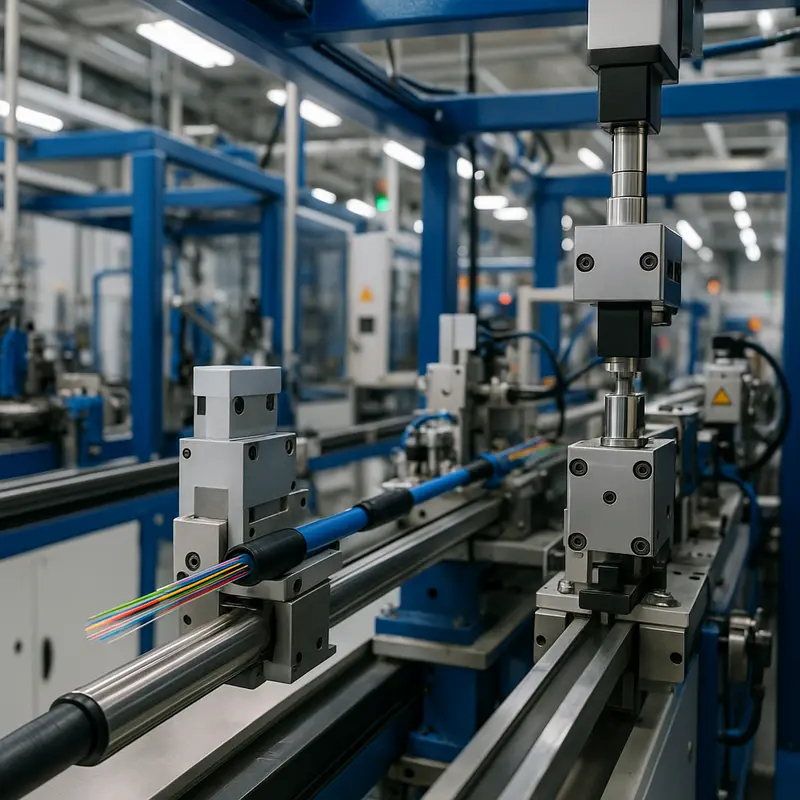
To establish a successful distribution and breakout fiber cable production line, it is essential to meticulously plan each technical step involved. This process underscores the importance of balancing precision and efficiency to manage both quality and scalability. From machinery setup to operational processes, the technical framework serves as the backbone of the production line.
Facility Preparation and Layout
The foundation of any efficient fiber cable production line begins with selecting an optimal facility layout. A well-designed production layout prioritizes logical workflow and minimized material handling. For instance, the layout should streamline the sequence from raw material storage to extrusion, buffering, jacketing, assembly, and finally, quality checks. It is vital to ensure sufficient workspace, proper ventilation systems, and adherence to safety protocols. Designing a facility that can accommodate future expansions is particularly advantageous for scalability.
For additional guidance, consider reference material in articles such as fiber-optic workshop layout, which offers insights into efficient workspace arrangement.
Machinery and Equipment Installation
High-quality equipment tailored to fiber cable production is critical to avoid operational bottlenecks. Start by selecting specialized machines, such as fiber optic jacketing extruders, coating and coloring units, stranding machines, and cable sheathing units. Each piece of equipment has dedicated roles, all integral to producing compliant cables with minimal defects.
Accurate calibration of machinery is vital to ensure uniformity during operations. Machines should align with international standards, such as ITU-T recommendations for optical fiber properties. In particular, the extrusion line is pivotal; it involves coating optical fibers, applying tight or loose buffers, and adding protective elements for durability.
Process Workflow and Automation
A systematic workflow is essential for consistency and efficiency. Begin with pre-production stages like fiber spooling and buffering. This involves covering the optical fibers with a buffer layer—either tight (for breakout cables) or loose (for distribution cables). Modern production lines benefit from automation systems to synchronize processes and maintain uniformity. Automation also reduces error, production downtime, and material waste while optimizing output.
Automation-driven quality assurance systems are particularly helpful to maintain precision in critical tasks, such as tension control during stranding or sheath application. Advanced monitoring systems can detect any inconsistencies in real-time, preventing costly errors down the production line.
Testing and Compliance
The final stages of production involve rigorous testing to ensure the cables meet performance and durability benchmarks. Cables should be examined for tensile strength, optical attenuation, environmental resilience, and compliance with standards like ISO 9001 for quality management. Investing in cutting-edge testing equipment enhances reliability and customer satisfaction.
By meticulously following these steps, manufacturers can build a robust and efficient production framework tailored to distribution and breakout fiber cables—allowing for high-quality output while scaling their operations as needed.
Assessing Investments for Building a Distribution and Breakout Fiber Cable Production Line

When considering the development of a distribution and breakout fiber cable production line, one critical factor stands out above all others: the economic viability of the investment. This involves not only a careful evaluation of the upfront costs but also an intricate analysis of long-term return on investment (ROI) and operational sustainability.
Building such a production line requires significant capital expenditure. The initial costs encompass machinery, specialized equipment, factory infrastructure, and workforce training. For example, machinery like sheath extrusion lines and tight-buffered fiber extrusion systems are foundational technologies that drive production efficiency. According to industry experts, balancing quality and cost is critical when selecting these systems. Fortunately, modern solutions allow for scalable implementation, which means manufacturers can start with modest setups and expand capacity as market demand grows.
Another major economic consideration lies in utility expenses and operational overhead. Fiber cable production lines often require temperature-controlled environments and uninterrupted power supplies to maintain optimal functionality. Many operations also depend on automated workflows, which can reduce manual labor costs but entail heightened energy requirements. A detailed cost analysis of plant utilities can shed light on sustainable practices, allowing manufacturers to mitigate excessive expenditure. More on factor-specific utilities can be found here.
Supply chain logistics form another essential piece of the economic puzzle. Investing in raw material procurement is a major initial expenditure, especially with fluctuating global prices of optical fibers. For example, G657A2 and G652D optical fibers, widely used in fiber cables, have shown notable price volatility over recent years. Manufacturers must therefore adopt strategies that ensure a reliable supply chain without overcommitment to potentially fluctuating costs.
Profitability also hinges on understanding market demand, especially for highly specialized production like distribution and breakout fiber cables. The growth in Fiber-to-the-Home (FTTH) installations and modern fiber networks underscores the importance of aligning production capabilities with market trends. Consideration of current price trends for cables, as well as projections for future demands, adds valuable context to the investment decision.
One effective approach to mitigating risk is making informed decisions about factory scalability. By investing in modular setups, manufacturers retain the flexibility to accommodate evolving technologies and increased demand. For instance, scalable fiber facilities ensure that production lines can adapt to unforeseen market shifts without requiring complete overhauls.
Finally, evaluating the expertise required to operate and maintain these lines is crucial. An undertrained workforce could lead to inefficiencies or quality issues, undermining the entire investment. Therefore, allocating sufficient budget toward training programs ensures both technical excellence and operational reliability.
In essence, an investment in a distribution and breakout fiber cable production line is about striking a balance—between cost-efficiency, quality, sustainability, and market alignment. By carefully analyzing these parameters, manufacturers can position themselves for long-term success in an increasingly competitive industry.
Laying the Groundwork: Essential Infrastructure for Fiber Cable Production
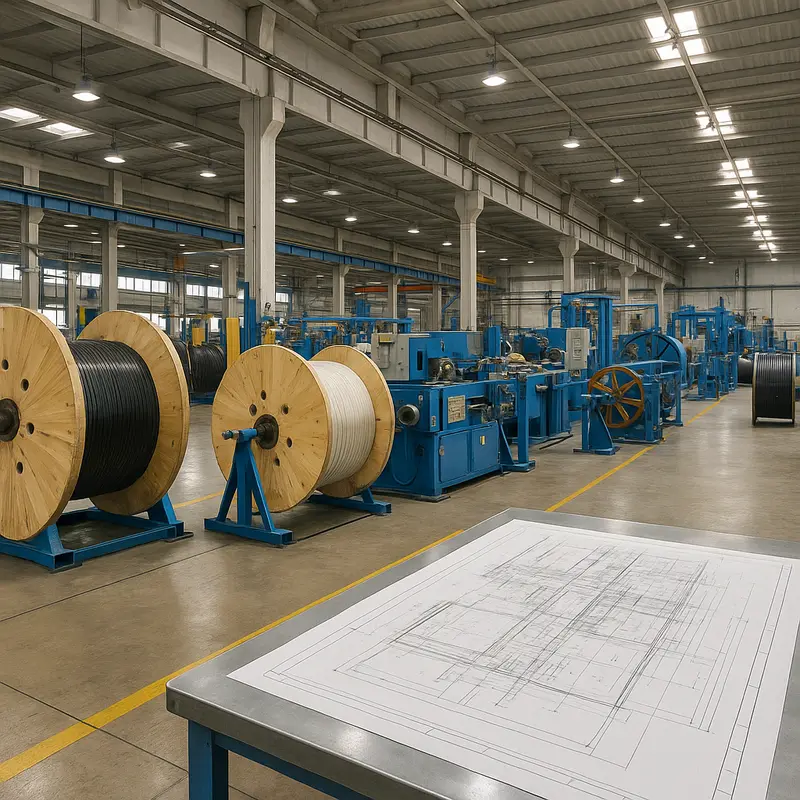
Building the Right Foundation
The production of distribution and breakout fiber cables hinges on well-planned infrastructure. A robust and efficient production line does not solely rely on skilled labor or advanced machinery—it thrives on a carefully designed environment tailored to the intricate demands of fiber cable manufacturing. Ignoring infrastructure requirements can lead to bottlenecks and setbacks that compromise output and quality.
Facility Layout and Space Allocation
The physical layout of a production facility is a cornerstone of efficiency. At its core, it must accommodate machines for extrusion, buffering, and sheathing while ensuring clear workflows. Spaces dedicated to raw material storage, assembly zones, and testing laboratories must be strategically positioned for smooth operations. A modular workshop layout often proves ideal, as it allows for flexibility in scaling operations as demand grows. Planning a fiber optic workshop layout can eliminate unnecessary movement or delays between production stages, ensuring a streamlined process.
Beyond operational zones, strategic attention to pathways for personnel is critical. Workers must move freely between areas without interfering with ongoing processes. Overloading production floors or failing to demarcate zones can result in operational inefficiencies, increasing risks of damage to delicate components like optical fibers.
Electrical and Environmental Control Systems
Fiber cable manufacturing requires precise environmental controls. For example, buffering and extrusion stages need stable temperatures and humidity levels to ensure material consistency. HVAC systems equipped with humidity regulation reduce the risk of defects in manufactured cables, particularly during the coating and sheathing processes.
On the electrical front, power distribution systems must be calculated meticulously to support the heavy energy demands of modern machinery. Backup generators safeguard production during power outages, while surge protectors protect sensitive equipment from fluctuations. A dedicated system for monitoring electrical load ensures uninterrupted operations, aligning with the facility’s overall production goals.
Specialized Utility Systems
Fiber cable production involves unique resource requirements. Water-cooled systems, for instance, are often employed during extrusion processes to solidify coatings. These systems necessitate efficient water circulation and cooling infrastructure to prevent delays. Equally critical are vacuum systems for cleaning and drying optical fibers before assembly, ensuring no contaminants compromise efficiency.
Safety and Compliance Measures
No infrastructure plan is complete without considering worker safety and regulatory compliance. Fiber production involves handling chemicals during cable sheathing, necessitating proper ventilation systems and storage solutions for hazardous materials. Complying with local environmental and safety regulations is non-negotiable, as violations can halt operations and damage the company’s reputation.
The synergy between infrastructure design and operational goals is crucial. Each component, from space allocation to environmental controls, forms a piece of the puzzle that enables productivity and innovation, setting the stage for world-class fiber cable manufacturing.
Ensuring Precision: Quality Control in Fiber Cable Manufacturing
Quality control in the manufacturing of distribution and breakout fiber cables is not merely a process—it is the backbone of producing reliable and durable products that can withstand the demands of modern telecommunications networks. The consistent adherence to rigorous quality standards ensures that every strand of fiber meets the performance criteria vital for the global connectivity landscape.
Achieving exceptional quality begins with the evaluation of raw materials. Fiber optic cables rely on ultra-pure silica for their core, and any impurities or defects at this stage can compromise signal transmission. Manufacturers must source materials from verified suppliers and conduct thorough material testing to ensure alignment with required specifications. Beyond the raw fibers, elements like clads, coatings, and reinforcements are inspected for strength and compatibility with targeted applications. Proper handling and storage of these materials are equally critical to prevent contamination or damage before production begins.
During the production phase, precision is paramount. Fiber cables are constructed through intricate processes such as extrusion, sheathing, and buffering—all of which require strict monitoring. Advanced machinery coupled with automated systems helps maintain dimensional accuracy and uniformity, ensuring each cable meets specified tolerances. Real-time monitoring systems detect deviations instantly, allowing manufacturers to address issues before they snowball into costly defects or recalls. Operators play a significant role by regularly calibrating equipment and performing visual inspections to catch irregularities machines may overlook.
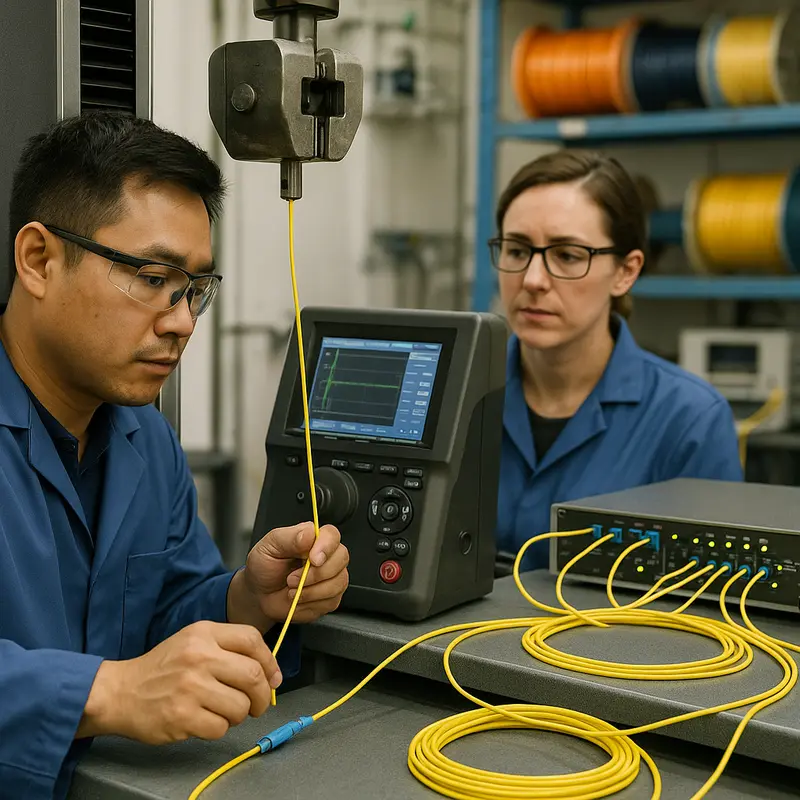
Testing forms the cornerstone of quality assurance in fiber cable manufacturing. Cables undergo a range of diagnostic checks designed to simulate real-world conditions. The testing protocols often include tensile strength evaluations, bending radius trials, temperature fluctuation resistance, and signal attenuation measurement. High-performance cables must demonstrate resilience under extreme environments, including resistance to moisture, UV exposure, and electromagnetic interference. These stringent evaluations ensure that fiber cables maintain stability and signal integrity across a range of applications, from urban installations to rugged outdoor setups.
Quality control doesn’t just happen in the lab; it's embedded across the workflow in manufacturing plants. For optimal results, manufacturers implement ISO-certified Quality Management Systems (QMS), which provide structured pathways for continuous improvement. Regular audits and internal assessments verify compliance with industry norms, such as ITU-T standards for fiber optic technology. A robust feedback loop between production teams and quality assurance specialists fosters adaptability, allowing swift adjustments in design or process specifications when necessary.
Ultimately, the commitment to exhaustive quality control protocols allows fiber cable manufacturers to deliver products that meet and exceed customer expectations while minimizing operational risks. For more context on establishing a reliable fiber cable production line, see Scalable Fiber Optic Factories.
Revolutionizing Cable Manufacturing: The Role of Technological Innovations
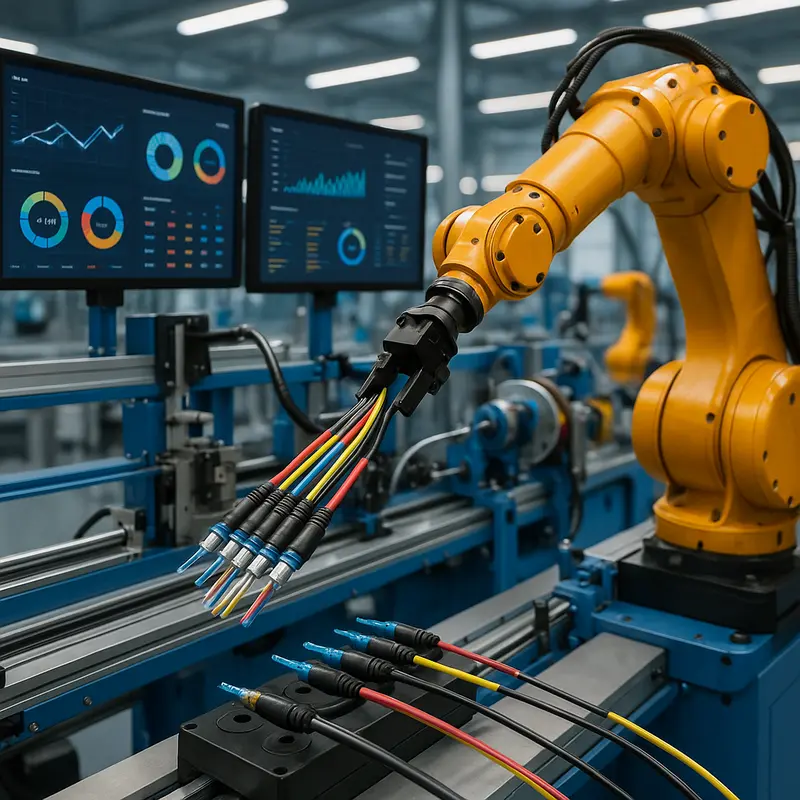
The production of distribution and breakout fiber cables has evolved significantly in recent years, catalyzed by technological advancements that redefine both efficiency and precision. These innovations not only enhance operational output but also improve the reliability of the final products—qualities essential in today’s high-speed, fiber-optic-driven world. This chapter delves into how cutting-edge technologies are shaping modern production lines and what manufacturers should consider when adopting these systems.
One of the most transformative innovations in this sector is automation. Automated production lines now play a central role in manufacturing, minimizing human intervention while maximizing precision and throughput. Robotic arms, computer-controlled extrusion processes, and advanced sensors work harmoniously to ensure consistent quality across batches. Unlike traditional setups that rely heavily on manual adjustments, automated lines offer real-time monitoring and self-correction, reducing the likelihood of defects. Moreover, automation lends itself to scalability, enabling manufacturers to increase production with minimal downtime while maintaining stringent quality standards.
Material innovation is another critical area shaping the industry. Modern fiber cables incorporate optimized materials that bolster durability, flexibility, and resistance to environmental stressors. For instance, enhanced polymer technology used in cable sheathing significantly increases resistance to heat and moisture, ensuring optimal performance even in challenging conditions. These advancements necessitate specialized extrusion equipment capable of handling these materials with precision, from melting points to thickness uniformity. To get an in-depth understanding of how extrusion processes integrate into modern production lines, explore this comprehensive guide.
In addition to automation and material technology, the integration of smart manufacturing tools—often referred to as Industry 4.0 technologies—has elevated the fiber cable production sector to new heights. Manufacturers now employ interconnected systems that gather real-time data across the entire production line, employing analytics to optimize efficiency and anticipate maintenance needs. Predictive maintenance, for instance, allows machinery to remain operational for longer periods by addressing potential failures before they occur. Meanwhile, digital twins, or virtual replicas of production equipment, enable testing and fine-tuning of operations without physical intervention, significantly reducing trial-and-error time and waste.
These advancements influence not only the machinery itself but also how facilities are designed and maintained. Modern factories prioritize layouts that maximize efficiency by minimizing unnecessary movement of materials or personnel. Additionally, energy-efficient equipment and renewable energy integration are becoming vital considerations, aligning operational goals with broader sustainability objectives.
Ultimately, the technological transformations in distribution and breakout fiber cable production represent more than just enhanced equipment; they symbolize a paradigm shift. Manufacturers are no longer merely producing cables—they are creating robust systems with reliability, cost-efficiency, and environmental responsibility at their core. Staying ahead necessitates not only understanding these innovations but also strategically implementing them into production lines. With technology continually advancing, the journey toward the future of fiber cable manufacturing is both exciting and transformative.
Final thoughts
Building a distribution and breakout fiber cable production line requires synchronized efforts between technology, infrastructure, quality control, and economic foresight. By adhering to these critical guidelines, businesses can establish robust facilities that meet industry demands effectively. Fiber optic engineers, telecom project managers, and factory investors can leverage this roadmap to reduce costs, optimize processes, and deliver superior products. Staying ahead with innovative solutions ensures your production line remains future-proof and competitive in this demanding market.
Contact AIMIFIBER for FTTH cable, patch cord, and pre-terminated fiber optic solutions, OEM/ODM services, and expert product advice.
Learn more: https://aimifiber.com/contact-us/
About us
AIMIFIBER provides pre-terminated fiber optic solutions, FTTH drop cables, patch cords, pigtails, FTTA products, and customized fiber assemblies for telecom and data center projects. With comprehensive OEM/ODM services, AIMIFIBER ensures quality, reliability, and tailored solutions to meet industry-specific needs.