FTTR vs. Mesh Wi-Fi: The "Invisible" Revolution in Indoor Connectivity

For years, "Whole-Home Wi-Fi" meant buying expensive Mesh router kits. While they improved coverage, they had two fatal flaws: bandwidth loss through wireless backhaul and the struggle to find power outlets in hallways or ceilings.
The future of indoor connectivity is FTTR (Fiber-to-the-Room).
As bandwidth demands hit 2000Mbps+, traditional copper and wireless solutions are choking. AimiFiber, a pioneer in optical infrastructure, introduces a complete FTTR Indoor Ecosystem. We solve the two biggest hurdles of residential fiber deployment: Aesthetics and Power Supply.
Challenge 1: "I Don't Want Ugly Cables on My Walls"
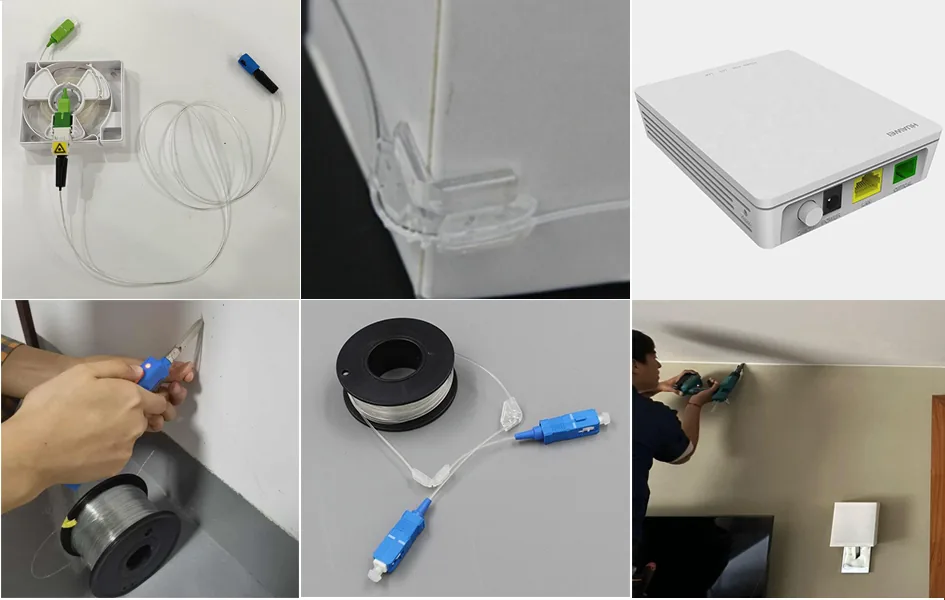
The Solution: 1.2mm Invisible Fiber
Homeowners often reject fiber retrofits because they fear ugly trunking or damaged renovations. AimiFiber’s solution is virtually undetectable.
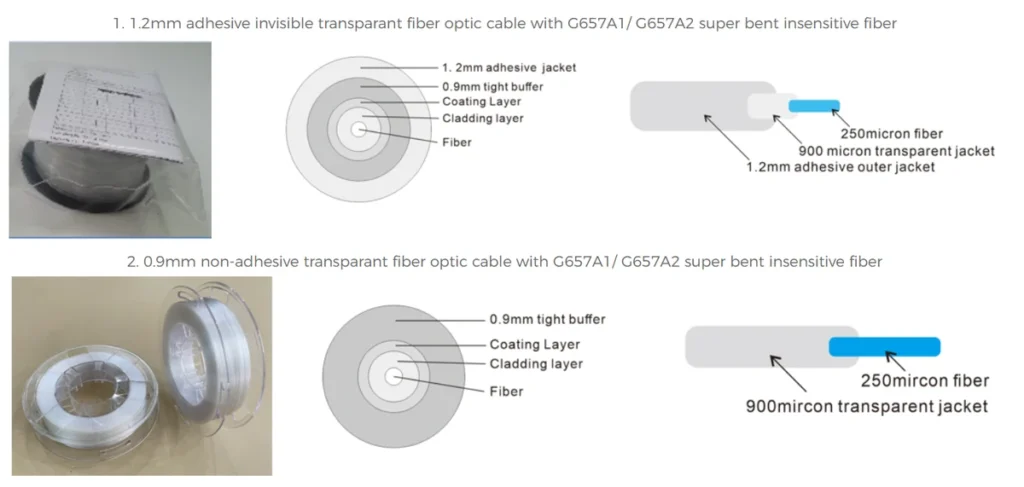
- Transparent Design: Our Indoor Invisible Fiber Optic Cable features a 1.2mm transparent nylon jacket that reflects the wall color, blending seamlessly into baseboards and corners.
- Extreme Flexibility: Powered by G.657B3 fiber, it supports a minimum bending radius of just 5mm, allowing it to hug door frames and 90° corners without signal loss.
- Installation: Designed for use with our Invisible Fiber Access Box (ATB), ensuring a clean, zero-damage termination point.
Challenge 2: "There's No Power Outlet in the Ceiling"
The Solution: Photoelectric Composite Cable (PoF)
To achieve full coverage, Edge ONUs (slave units) often need to be placed in hallways or on ceilings—places where AC power outlets rarely exist.
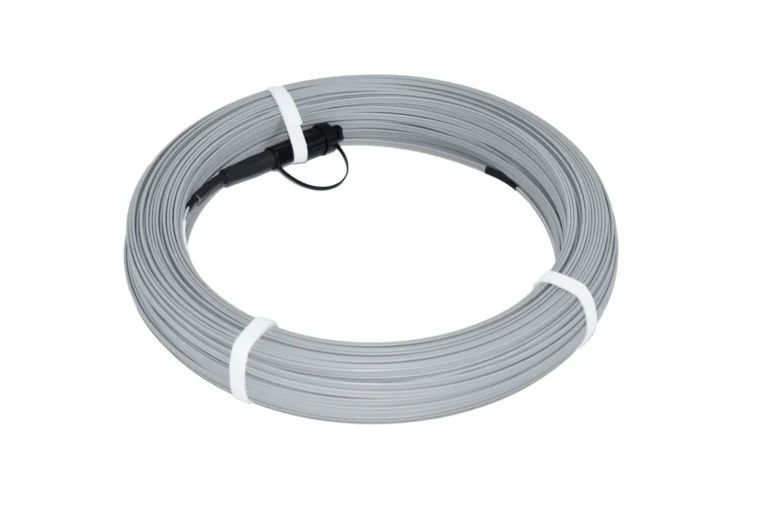
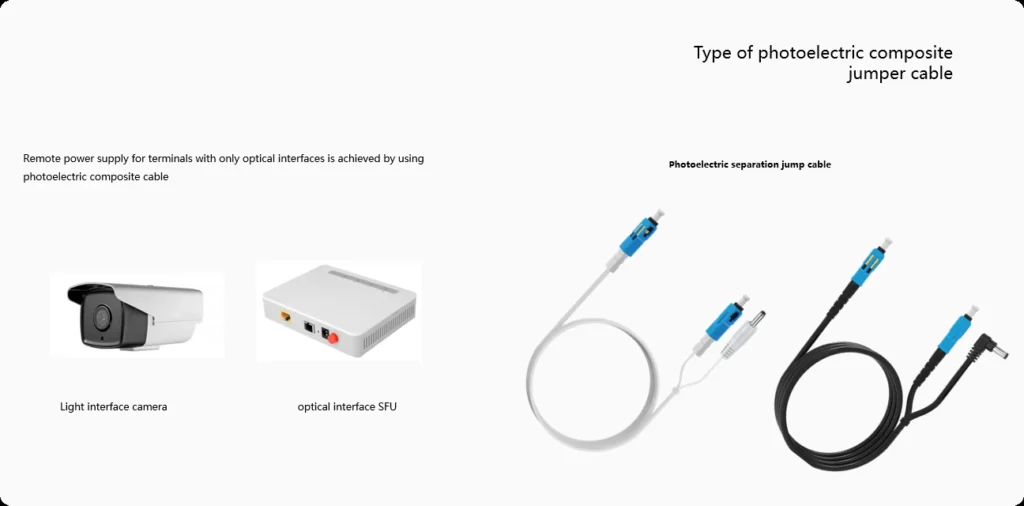
- Power over Fiber (PoF): AimiFiber’s Hybrid Optical-Electrical Composite Cable solves this. It combines 1 core of G.657A2 fiber for data and 2 copper conductors for remote power in a single cable.
- Remote Powering: This enables the Main Gateway to transmit DC power to the Edge ONU (up to 300 meters away), eliminating the need for local electrical work.
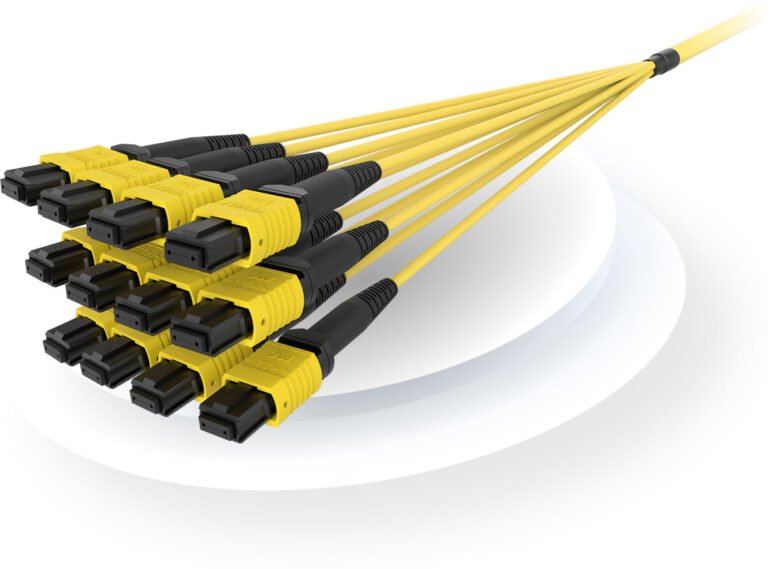
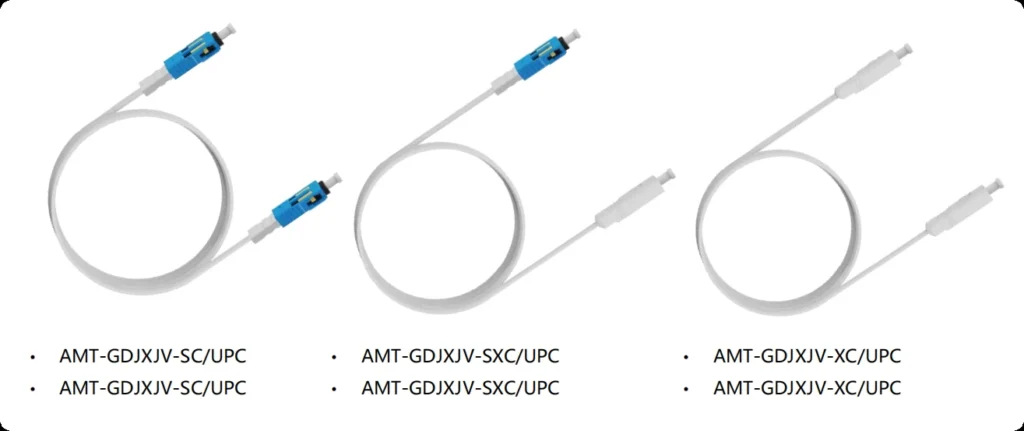
- Specialized Connectivity: We utilize the XC/UPC Photoelectric Adapter to safely connect both optical and electrical channels in a single click.
The Topology: "Daisy Chain" Efficiency
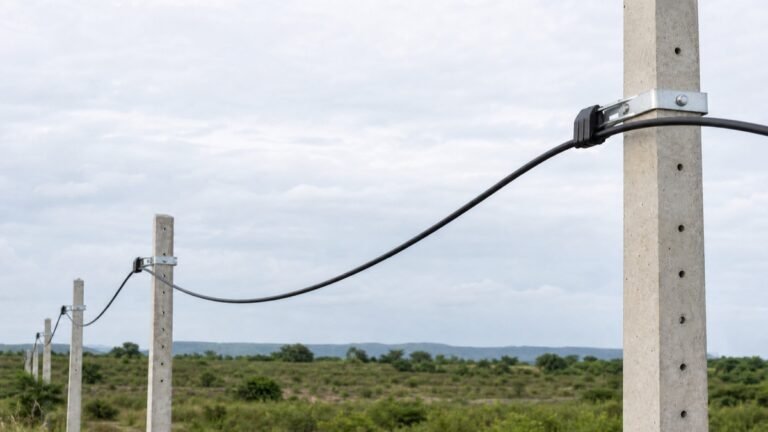
Unlike traditional "Star" wiring where every cable runs back to the central box, AimiFiber supports the "Hand-in-Hand" (Daisy Chain) architecture.
By using our Active Optical Splitter & Router, the fiber link can jump from Room A to Room B to Room C. This "1+N" architecture saves up to 40% on cabling materials compared to traditional methods.
Comparison: FTTR vs. Traditional Mesh Wi-Fi
| Feature | Traditional Mesh Wi-Fi | AimiFiber FTTR Solution |
|---|---|---|
| Backhaul Technology | Wireless (Unstable) | Optical Fiber (True Gigabit) |
| Latency | High (>10ms) | Ultra-Low (<1ms) |
| Power Requirement | Requires Outlet at every node | PoF (Remote Powering) |
| Aesthetics | Visible Routers & Cords | Invisible Cabling |
| Lifespan | 3-5 Years | 20+ Years (Fiber Infra) |
Technical FAQ
Q: What is the difference between Invisible Fiber and Hybrid Cable?
A: Invisible Fiber is a transparent, pure optical cable (data only) focused on aesthetics. Hybrid Cable (PoF) contains both fiber and copper wires, allowing the main device to power the edge device remotely.
Q: Can I use standard SC connectors with Hybrid Cables?
A: For the optical part, yes. However, to utilize the power transmission feature, you must use XC/UPC Photoelectric Adapters which connect both the fiber ferrule and the copper contacts simultaneously.
Q: How do I install the Invisible Fiber?
A: It is typically installed using a hot-melt glue gun or specialized micro-clips along baseboards. The G.657B3 fiber ensures the signal remains strong even when bent around tight corners.
Ready to upgrade your indoor network infrastructure?
👉 View Full FTTR Product Series
Contact AimiFiber Engineering Team today for OEM Kits and Bulk Pricing.