Why are global fiber prices rising again in 2026, and what should FTTH buyers do?
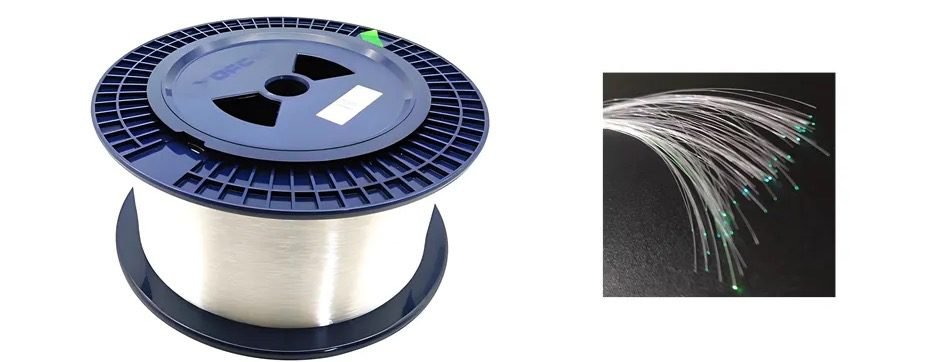
Fast FTTH and backbone rollouts look great on PowerPoint—until your “locked” budget meets a revised fiber offer that is 50–90% higher than last year. I’ve watched good projects in Europe and LatAm scramble, not because the design was wrong, but because the price baseline was outdated.
In the last 1–2 months, mainstream G.652D / G.657 fiber has moved off the bottom as AI data centers, F5G fixed networks, FTTH, and new uses (like fiber-tethered drones) absorb capacity. Preform expansions lag demand, so prices and lead times are more volatile. For buyers, that means shorter quote validity and more realistic budgeting, not panic.
I’m Sophie Wang at AIMIFIBER. Working with operators and integrators in Spain, France, Brazil and beyond, I’ve seen one pattern: teams that update their assumptions early still close projects on time. Teams that insist on “old world” prices end up in re-tenders and late-night calls. Let me walk you through what I’m seeing and how we’re adjusting our own quotation policy.
What has really happened to G.652D / G.657 fiber prices over the last 12–18 months?
If you follow only your own historic POs, the market may look random. But when I compare supplier talks, tender feedback, and public reports, one picture is clear: the long down-cycle is over, and prices have climbed back to a more sustainable level.
After several years at historic lows, standard G.652D / G.657 fiber pricing has rebounded roughly 50–90% from its bottom into early 2026. More important than the exact number is the pattern: spot availability is tighter, long-term deals absorb more capacity, and last-minute bargaining space is smaller than it used to be.

Price trend snapshot (illustrative)
We don’t publish exact price points, but we can describe the shape of the curve. Think of it this way: 2024 was the floor, mid-2025 was the turning point, and 2026 is a tighter, more disciplined market.
Indicative G.652D / G.657 price movement*
| Period | Market situation | Indicative price level trend* | Comment |
|---|---|---|---|
| 2024 (full year) | Oversupply, price war | Near historic lows | Heavy capacity overhang |
| H1-2025 | Bottoming out | Slight uptick | Inventory digestion; fewer “fire sales” |
| H2-2025 | Clear rebound | ~+15–20% vs. bottom | Demand from multiple segments |
| Early 2026 | Tight & more volatile | Elevated, fluctuating | More LTAs, less flexible spot volumes |
*For direction only. Always check current quotes for your region and spec.
Why “cheap fiber forever” was never realistic
When fiber prices sit below a sustainable level for too long, you often pay the difference in other ways:
- Weaker QC or poor documentation at some suppliers
- Capacity shut-downs that suddenly shorten your options
- Hidden delays when low-price promises cannot be honored at PO stage
A healthier price level is not good news for short-term budgets, but it’s better for long-term project stability. For FTTH and ODN, predictable quality and lead time usually save more money than another 2–3% unit price discount.
Which demand drivers are pushing fiber prices up?
The current up-cycle is not a “FTTH bubble” like some people suggest. It is several waves landing on the same beach at once: AI data centers, 400G/800G backbones, national broadband pushes, and some new niche applications that quietly consume a lot of glass.
AI and cloud data centers, F5G fixed networks, ongoing FTTH rollouts, submarine and long-haul projects, plus new uses like fiber-tethered drones and distributed sensing are all drawing from the same preform and fiber capacity pool. No single segment explains the shift, but together they lift the market off the bottom and keep it there.
AI and cloud data centers
Every time I visit a data center customer, I can feel the scale difference. A single AI training cluster can use more optical links than an entire small city access network.
Data center vs. FTTH demand (qualitative)
| Segment | Typical use of fiber | Demand trend 2025–2026 | Notes |
|---|---|---|---|
| AI / cloud data center | Intra-DC + campus/metro links | Strong uptrend | 400G/800G, high fiber counts per rack |
| FTTH / FTTP | Access + distribution | Steady to strong | Many countries still expanding households |
| Submarine / long-haul | Ultra long-distance connections | Cyclical, now rising | Big, lumpy projects; soak up core capacity |
Inside the DC, short-reach links may use DAC/AOC, but the metro and backbone out of the site still rely on large fiber counts. Once these contracts are signed, they reserve capacity for years, not just months.
FTTH, F5G and national broadband pushes
On the access side, the story is more familiar:
- Mature markets (Western Europe, parts of Asia) are on “fill-in” and upgrade mode: overbuild VDSL, increase take-rates, push fiber deeper.
- Emerging markets are still in their first big FTTH wave, sometimes backed by state programs.
- F5G-style projects add fiber-rich backhaul and fronthaul on top of classic FTTH.
None of these by itself is “new”, but the timelines overlap. That creates temporary surges where several countries are drawing hard on the same supply base.
New applications: fiber-tethered drones and sensing
A quieter driver is what I call “edge innovation”:
Emerging fiber-hungry niches
| Application | How fiber is used | Impact on demand |
|---|---|---|
| Tethered / FPV drones | Fiber tethers for control and HD video | Uses high-strength, bend-tolerant fibers |
| Underwater vehicles (ROVs) | Tethers and hybrid electro-optical umbilicals | Specialty fiber, harsh environment designs |
| Distributed sensing (DAS) | Long fiber runs as the sensing medium (strain, sound) | Adds continuous length demand beyond FTTH |
These segments are still much smaller than FTTH or data centers in volume, but they concentrate demand on higher-value fiber types and specialty cables, which tightens certain parts of the supply chain and influences overall pricing behavior.
Why can’t supply expand fast enough to push prices back down?
When prices rise, people often ask: “Won’t new factories just open and bring the price down again?” With optical fiber, the answer is: not quickly, and not without risk. The bottleneck is not the cabling line; it’s the preform and drawing capacity behind it.
New preform and fiber capacity usually takes 18–24 months or more to build, qualify, and fill. After the last over-expansion cycle, major producers are more cautious. At the same time, a bigger share of capacity goes into higher-margin products or long-term contracts, leaving less ‘free’ G.652D / G.657 for opportunistic spot deals.
Preform as the real bottleneck
Cabling factories like ours can add shifts and optimize process flow relatively quickly. But without enough preform and drawn fiber, extra cabling machines sit idle.
Supply-side constraints (simplified)
| Stage | Typical lead time | Capex barrier | Comment |
|---|---|---|---|
| Preform | 18–24+ months | Very high | Process know-how, IP, environmental permits |
| Fiber drawing | 6–12 months | Medium | Limited by preform supply |
| Cable making | 3–9 months | Medium | Easier to add, but ultimately fiber-constrained |
Because preform is capital-intensive and highly specialized, most producers prefer steady, sustainable pricing to another boom-and-bust cycle. That shapes how much incremental volume they are willing to add at today’s margins.
Mix shift to higher-margin products
Another subtle factor: not all fibers are equal in the eyes of the producer. When capacity is tight, many will:
- Prioritize premium fibers (e.g. G.654E, submarine grades, specialty designs)
- Honor long-term agreements with strategic customers first
- Allocate less to “anonymous” spot G.652D / G.657 buyers
For smaller FTTH and ODN projects, that means you may still get supply—but you will feel it in higher, more volatile price offers and tighter validity windows.
What does this mean for FTTH / ODN / data center procurement in practice?
For procurement teams, this is the uncomfortable part. The spreadsheet templates built on 2023 prices no longer work. You need new assumptions on unit cost, validity period, and risk sharing with suppliers.
In practice, the new reality is: old low points cannot be used as current benchmarks, quotation validity windows for fiber-heavy BOMs shrink to 3–7 days, and delivery schedules depend more on upstream capacity than on cabling speed. Teams that acknowledge this early can still optimize cost; teams that ignore it face re-pricing and delays.
Budgeting and tenders: updating the “base case”
Old vs. new assumptions
| Topic | “Old world” assumption | “New reality” in 2025–2026 |
|---|---|---|
| Budget unit price | Use last cycle low | Use refreshed benchmarks, add buffer |
| Validity | 30–60 days | 3–7 days for fiber-intensive items |
| Re-tender risk | Low | Higher if budgets ignore price shifts |
| Supplier options | Many similar offers | Fewer truly competitive + reliable mixes |
A tender that assumes “fiber will be as cheap as last time” is like a PON budget that ignores splitter loss—it looks fine on paper but fails in the field.
Contracting and risk allocation
You don’t have to accept all the risk yourself. What I see working well with our more mature customers:
- Framework agreements with quarterly or semi-annual price reviews
- Clear indexation or adjustment mechanisms tied to agreed triggers
- Volume planning by quarter so we can reserve capacity upstream
If you want a quick feel for who actually dominates cable capacity globally, my earlier article is a useful reference:
20 Largest Fiber Optic Cable Companies in the World.
Understanding that landscape helps when you compare offers and brand positions in your own market.
Why is AIMIFIBER shortening fiber cable quotation validity to 3–5 days?
This is the part I also have to explain carefully to my own long-term partners. On the surface, a shorter validity window looks unfriendly. In reality, it is the fairest way to keep promises we can actually honor.
At AIMIFIBER, we now set fiber-intensive quotations to a 3–5 business day validity by default. It’s not a sales trick; it reflects how often upstream prices can move. Locking a low number for 30 days may look nice in your inbox, but it usually explodes at PO stage. A short, honest window lets both sides manage risk and move faster.
Our quotation policy from 2026 onward (illustrative)
Example quotation terms (AIMIFIBER)
| Item | Typical term | Note |
|---|---|---|
| Validity (fiber cables) | 3–5 business days | For fiber-heavy FTTH / ODN / backbone items |
| Validity (accessories) | 7–15 days | For connectors, panels, small passive parts |
| Framework agreements | Quarterly / semi-annual review | For recurring roll-out programs |
| Currency / Incoterm | USD / EUR; EXW/FOB/CIF/DDP | Agreed per project and destination |
We can still discuss longer-term frameworks, but we separate them from spot offers. That keeps communication transparent when the market moves.
How we still help you plan long term
To keep your internal planning realistic, we usually propose:
- Splitting a 12-month plan into quarterly call-offs
- Discussing preferred price corridors instead of a single fixed number
- Sharing a simple volume forecast so upstream partners can reserve capacity
In one recent LatAm FTTH project, a customer moved from “one big annual negotiation” to a quarterly framework with 3–5 day spot validity on each release. The final result: fewer surprises, higher on-time delivery, and a cleaner audit trail for internal finance.
Conclusion
The short version is simple: fiber is no longer “cheap forever”, and that is unlikely to change in the immediate future. AI data centers, backbone upgrades, national FTTH pushes, and new use cases are all pulling on the same capacity, while preform expansions stay cautious.
For FTTH, ODN, and data center buyers, the smart response is not to panic—it is to update your price assumptions, shorten quotation validity expectations, and work with suppliers who are honest about constraints. That includes building more flexible frameworks instead of relying on one rigid annual number.
At AIMIFIBER, we will follow the market on pricing, but our position on quality, test documentation, and delivery discipline does not change. If you want to review your 2026–2027 fiber strategy or pressure-test a current tender, you can email me at sophie@aimifiber.com with your target region and project type. I’m happy to walk through your BOM and see where we can still find efficiency without betting on “fantasy fiber” prices.