Are pre-terminated fiber systems the fastest, lowest-risk way to build modern data centers?
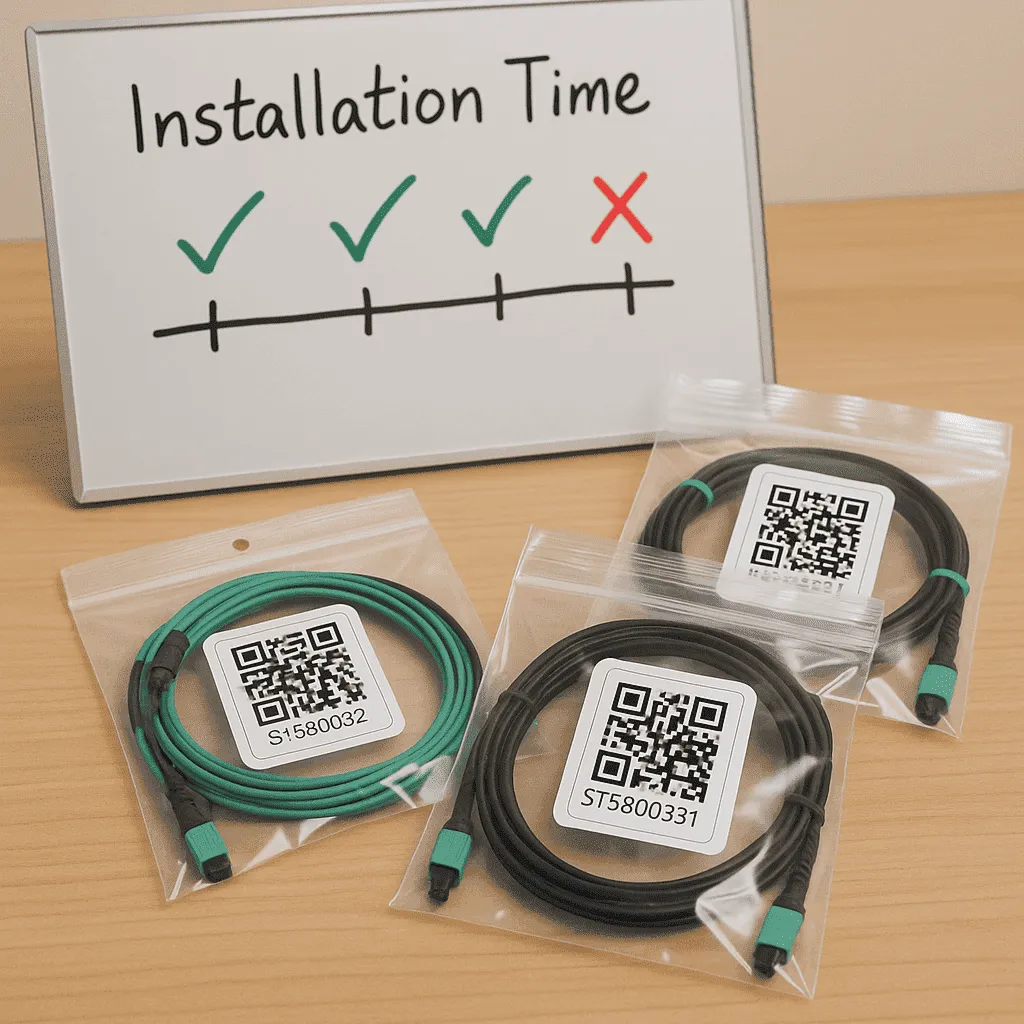
Field terminations slow projects and invite rework. Dust, overtime, and scarce senior techs turn small mistakes into blown SLAs. I shift fragile steps into the factory with pre-terminated fiber for data centers so crews route, plug, validate—and go live on schedule.
Yes. Factory-built, 100%-tested assemblies—MPO trunks & cassettes, harnesses, and patch cords—replace variable on-site termination with plug-and-play links. Teams report 50–80% faster installs, tighter loss budgets, fewer tickets, and lower TCO (see how plug-and-play simplifies deployments).
A Brazil build was weeks behind. We swapped their field terminations for MPO trunking + cassettes and standardized labels. Weekend windows started finishing by Sunday noon. In Spain, Fernando’s tenders win on predictable performance; in the US, Bayan’s cutovers stopped chasing intermittent faults.
What’s pushing data centers away from field termination?
The scale of spine-leaf fabrics and AI clusters means thousands of ends under tight windows. Every splice adds variance, consumables, and risk. Construction sites aren’t cleanrooms; repeatability suffers when deadlines compress.
Drivers are speed, repeatability, and scalability. Field work is slow and skill-heavy; pre-terminated shifts complexity to the factory, delivering uniform IL/RL and clean documentation that accelerates QA and handover.
For a balanced primer, share this with stakeholders: Field vs. pre-terminated comparison.

Hidden costs of field work (why it snowballs)
- Overtime for certified splicers; night/weekend windows.
- Consumables (polish films/epoxy), scrap lengths, redo work.
- Inconsistent IL/RL → extended OTDR hunts after “go-live”. See installation errors to avoid.
Side-by-side (typical)
| Factor | Field termination | Pre-terminated |
|---|---|---|
| Installation speed | Slow, multi-step | Up to 50–80% faster |
| Skill/tooling | High / splicer + scope | Low / plug-and-play |
| Performance | Tech-dependent | Factory-guaranteed |
| Waste | Offcuts + consumables | Minimal |
| Project risk | High (rework) | Low |
What exactly is a pre-terminated fiber system—and how does it fit 40/100/400/800G?
Think modular building blocks: trunks land in cassettes; cassettes present LC/CS fronts; short patching completes ports. We mirror your rack plan in labels and polarity (A/B/C) so port maps just work.
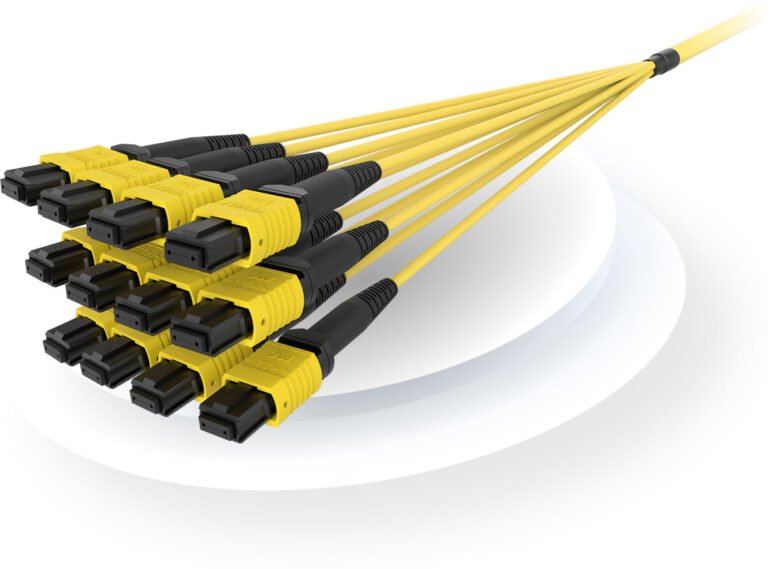
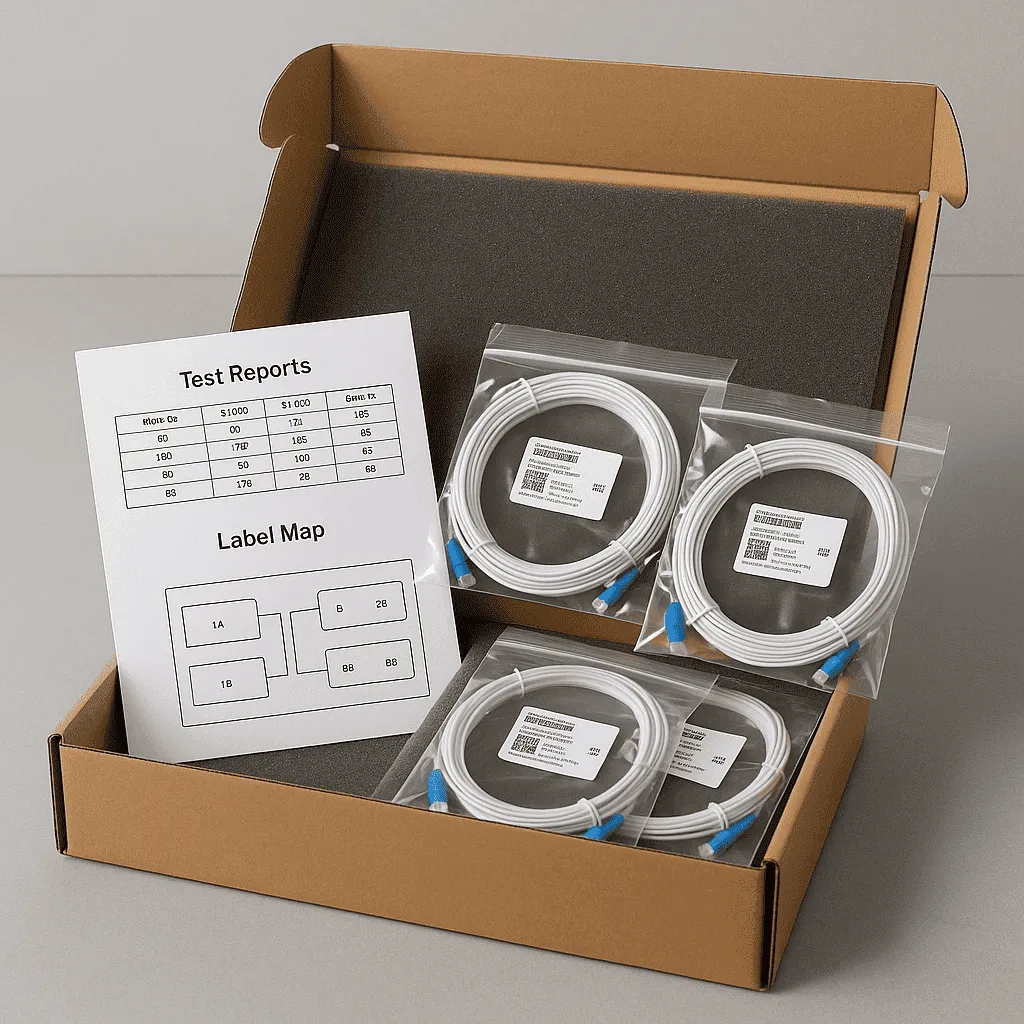
It’s a factory-made kit—MPO/MTP trunks & cassettes, MPO→LC/CS harnesses, and patch cords—cut to length, machine-polished, 100% IL/RL tested with reports. Crews route, seat, and validate.
Internal explainer: Data-center cabling with pre-terminated components
Spec matrix (typical values)
| Parameter | MPO Trunk | MPO→LC/CS Harness | Notes |
|---|---|---|---|
| Fiber | OS2 / OM3-OM5 | OS2 / OM4-OM5 | Per design |
| Insertion loss | ≤0.35 dB (std) / ≤0.20 dB (low-loss) | ≤0.30 dB | Connector grade drives range |
| Return loss | ≥50 dB (SM) / ≥30 dB (MM) | ≥55 dB LC/APC | Typical |
| Polarity | A / B / C | — | Match optics & panel plan |
| Docs | 100% IL/RL report (PDF/CSV) | 100% IL/RL report | Per-serial traces |
IL/RL budget refresher for your team: FOA — Loss budget basics.
MPO polarity fundamentals: FOA — Multipin/MPO overview.
MPO/MTP compatibility quick-guide
| Port/Rack Scenario | Trunk | Cassette/Module | Notes |
|---|---|---|---|
| 10G ToR (LC) | 12F MPO | MPO→LC cassette | Keep path loss ≤1.5 dB |
| 40G SR4 | 8/12F MPO | SR4 module or direct | Ensure polarity & pinning |
| 100G DR/FR | 2×12F / 16F | MPO→LC/CS | Check DR8 breakouts |
| 400G SR8/DR8 | 16F MPO | MPO→CS/LC | Fiber map discipline |
Why plug-and-play wins during turn-ups: Corning — Preterminated solutions: ready, steady, go.
How much time, waste, and cost does pre-term actually save?
Field builds spend time on stripping, cleaving, polishing, inspection, and repeated cleanup. Pre-term compresses the critical path to route-label-plug-test.
On like-for-like scopes, we typically remove 50–80% of install time and most consumables. Less overtime and fewer redo cycles translate into lower TCO and faster revenue/compute turn-up.
Want the maintenance angle too? See how to maintain pre-terminated links.

Where the minutes go (per rack row, indicative)
| Task | Field splice build | Pre-terminated |
|---|---|---|
| Terminate ends | 90–180 min | 0 |
| Clean & inspect | 20–30 min | 15–25 min |
| Route & secure | 40–60 min | 40–60 min |
| Validate & record | 20–40 min | 15–30 min |
| Total | 170–310 min | 70–115 min |
Waste sources eliminated
- Offcuts from over-pull/retreat.
- Epoxy/film/loose connectors.
- Failed ends cut-back and redo.
Sustainability note: precise-length builds support green KPIs (fewer consumables, less landfill).
What should procurement lock before PO to avoid rework and delays?
Downtime drops when the kit matches the drawing the first time. Lock the optics plan, polarity, and labeling early; require serialized reports and label maps in the handover pack.
Freeze fiber counts, lengths, jackets, connector shells, pinning, polarity, labels, and pulling aids. Require 100% IL/RL (PDF/CSV), endface to IEC 61300-3-35, and a port-map label schema aligned to your DCIM.
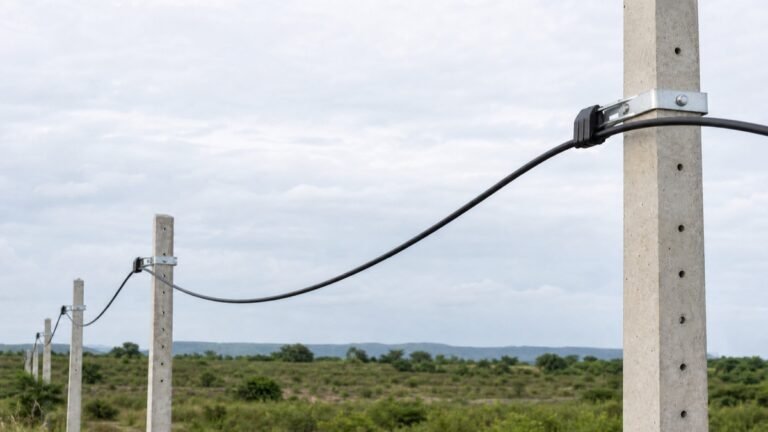
Need patching? Browse fiber patch cords (LC/UPC, LC/APC). Rugged outdoor runs? See FTTA solutions.
Procurement checklist (copy/paste)
| Item | Spec to confirm | Doc required | Lead time | Incoterm |
|---|---|---|---|---|
| MPO trunks | Fiber count, polarity (A/B/C), pinning | IL/RL report per serial | 2–3 wks | EXW/CIF |
| Cassettes | MPO→LC/CS type, density | Label map + drawings | 1–2 wks | EXW/CIF |
| Harnesses | Lengths, boot type | Test sheets | 1–2 wks | EXW/CIF |
| Patch cords | LC/UPC or LC/APC | RoHS/CE + test | 1 wk | EXW |
| Panels | 1U/2U/4U HD | Layout drawing | Stock | — |
Acceptance tests (fast closeout)
| Test | Pass criteria | Tool |
|---|---|---|
| Endface | IEC 61300-3-35 pass | Inspection scope — Fluke guide |
| IL/RL | Within budget | OLTS (+ spot OTDR) — FOA loss math |
| Polarity | Tx→Rx verified | Visual tracer / VFL |
Conclusion
Pre-terminated fiber turns your cabling scope into a controlled, documented process. That shift shortens windows, stabilizes loss budgets, and removes weak points that cause downtime. If your roadmap includes AI clusters, HPC, or high-density spine-leaf, standardize on AIMIFIBER pre-terminated systems—MPO trunks & cassettes, harnesses, and patching—backed by 100% test reports and label maps for smooth audits and faster revenue/compute turn-up.
Need sample kits or a label map mock-up?
Email sophie@aimifiber.com · WhatsApp +86 159 8671 2587 · Contact AIMIFIBER