How Can Pre-Terminated Fiber Optic Solutions Simplify Complex Installations, Cut Link Loss, and Boost Network Scalability?
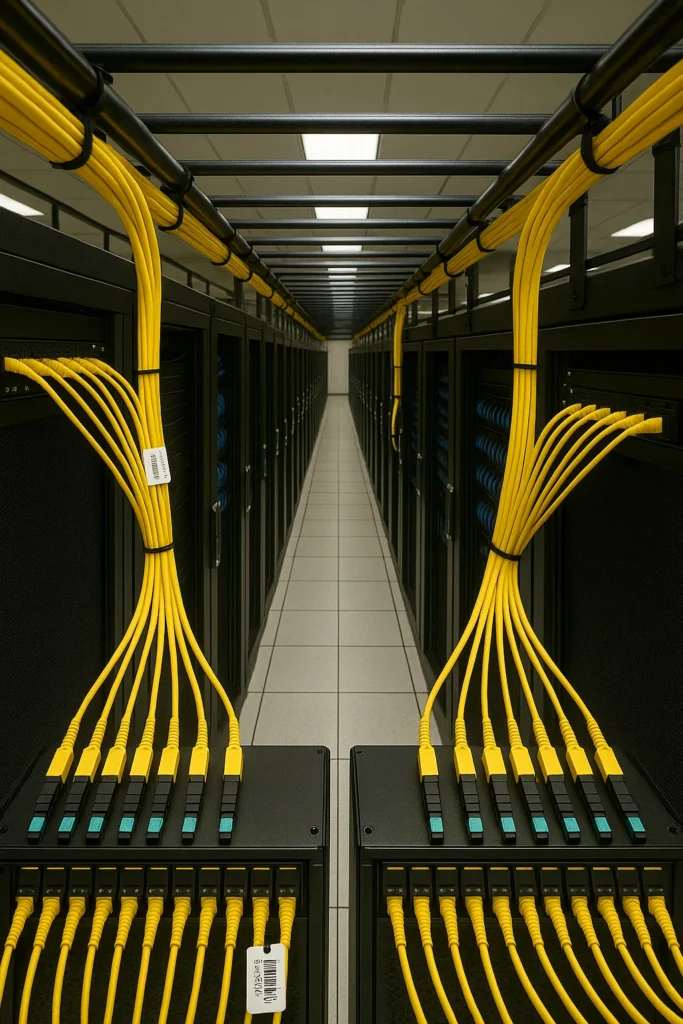
My network is denser and my deadlines are tighter. Field terminations slow builds and create random failures. I need speed and predictability. Pre-terminated fiber gives me both with factory-built, plug-and-play assemblies that land on site ready to route, label, and connect.
Pre-terminated assemblies arrive cut to length, with connectors installed, cleaned, and tested. I skip on-site stripping, polishing, and most troubleshooting. This modular approach typically cuts installation time by 40–80%, reduces human error, and delivers consistent, low-loss performance from day one1.
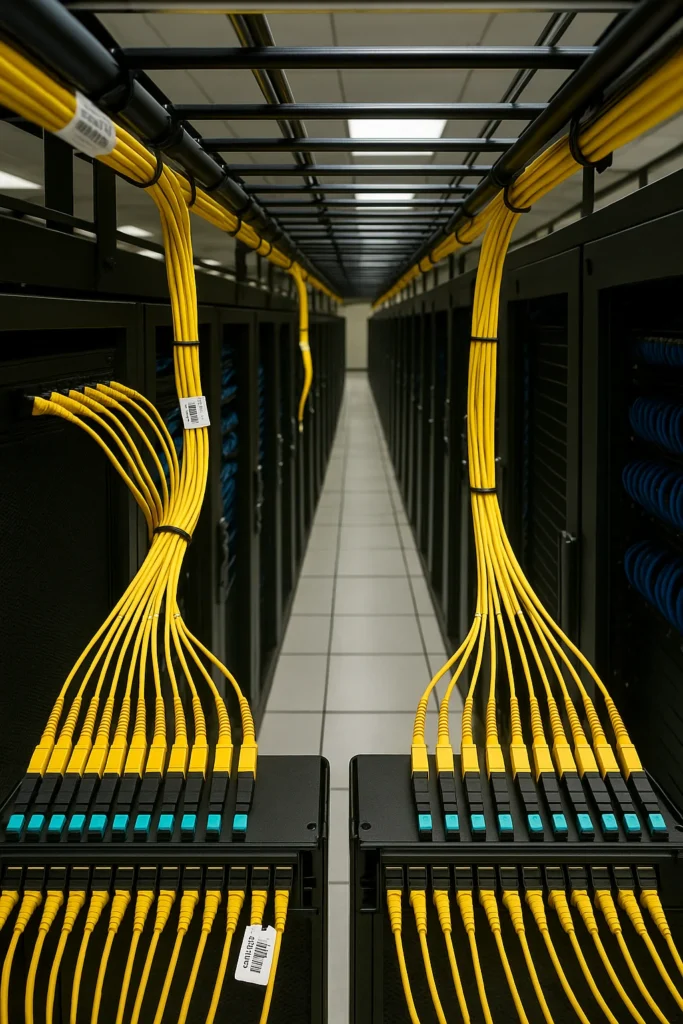
A few years ago in a U.S. data center, field terminations kept failing. We swapped to pre-terminated trunks and labeled harnesses. We routed, plugged, verified IL/RL, and closed the row in a single shift. That job set my new standard.
What Makes Pre-Terminated Fiber Fundamentally Different?
Field termination happens on a job site with dust, wind, and time pressure. Pre-termination happens in a cleanroom with controlled polishing, inspection, and 100% testing. The difference shows up in uniform geometry, clean end-faces, and predictable link budgets2.
A pre-terminated assembly is a finished cable—trunk, harness, cassette, or pre-populated panel—certified before it ships. I route, protect bend radius, and plug. No surprises.
Factory vs. Field Termination — Where Quality and Time Diverge
Environment & Process
| Feature | Field Termination (On-Site) | Factory Pre-Termination |
|---|---|---|
| Environment | Dust, variable lighting | Cleanroom, controlled |
| Tools | Hand kits, cleavers | Automated polish & test |
| Skill Dependence | High, varies by tech | Standardized processes |
| Quality Consistency | Connector-to-connector varies | Uniform, repeatable |
| On-Site Time | Hours or days | Minutes to plug in |
Common Pre-Terminated Options
- MPO/MTP Trunk Cables: High-density backbones between zones or rows
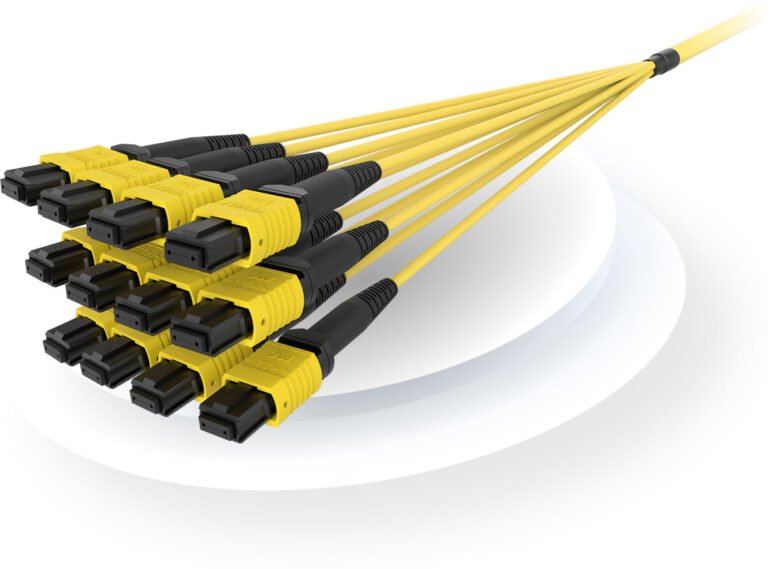
- Harness/Breakout Cables: MPO/MTP to multiple LC/SC drops
- Pre-Terminated Cassettes & Panels: Snap-in modules for clean, labeled patching points
How Does a Modular Structure Simplify Cabling and Scale Faster?
Modularity turns cabling into building blocks. I mix trunks, cassettes, and harnesses to match leaf-spine, modular pods, or compact edge rooms. Moves, Adds, and Changes (MACs) become small, low-risk tasks.

Building a Future-Proof Plant
Scalability Benefits
| Benefit | What It Means in Practice |
|---|---|
| Easy Expansion | Add a cassette or trunk without touching live paths |
| Error Reduction | Factory labels and color codes guide fast patching |
| Fast MACs | Repeatable kits per row or pod |
| Future Upgrades | Swap cassettes/optics to move from 10G → 40/100/400G |
Field Story
On a Telefónica program in South America, we standardized pod kits with trunks and cassettes. Andy’s team added 500 links in one weekend with zero downtime—and won the next bid for consistency and speed.
Why Do Pre-Terminated Solutions Improve Reliability and Lower Link Loss?
Every manual step adds risk. Every splice or mated pair adds loss. Pre-terminated designs remove many manual steps and hold tighter tolerances on end-face quality, ferrule geometry, and cleanliness3.
Link Loss 101 (Why It Matters)
Major Sources of Loss
| Source of Loss | Description | Why It Happens |
|---|---|---|
| Connectors | Removable joints | Misalignment, dirt, poor polish |
| Splices | Permanent joints | Fusion variability, contamination |
| Bends | Tight routing | Macrobending leakage |
| Field Work | On-site termination | Human error, weather, dust |
A single bad splice can stall activation, miss SLAs, and hurt reputation. In finance or healthcare, downtime turns into real money and risk4.
Simple Loss-Budget Example (Illustrative)
| Element | Qty | Allowance (dB) | Subtotal |
|---|---|---|---|
| Fiber @1310 nm (0.35 dB/km) — 120 m | — | 0.042 | 0.042 |
| MTP mated pair (low-loss) | 2 | 0.35 | 0.70 |
| Splice | 0 | 0.10 | 0.00 |
| Total | 0.742 |
How Much Time and Cost Do I Actually Save?
Time drops because the longest, most variable tasks disappear on site. Labor, scrap, and retests fall. Documentation becomes simple.

Side-by-Side: Tasks and Hours (per 100 Links)
| Task | Field Termination | Pre-Terminated |
|---|---|---|
| Cable Pulling | 8 h | 8 h |
| Connector Termination | 40–50 h | 0 h |
| Testing & Verification | 10–15 h | 2 h |
| Rework/Troubleshooting | 5–10 h | 0–1 h |
| Total Time | 63–83 h | 10–11 h |
Labor & Equipment Snapshot
| Resource | Traditional Fiber | Pre-Terminated Fiber |
|---|---|---|
| Skilled Technicians | 2–3 per project | 0–1 per project |
| Specialized Tools | Required | Minimal |
| Field Test Equipment | High cost | Verification only |
How Do Factory Labels and Documentation Reduce Errors?
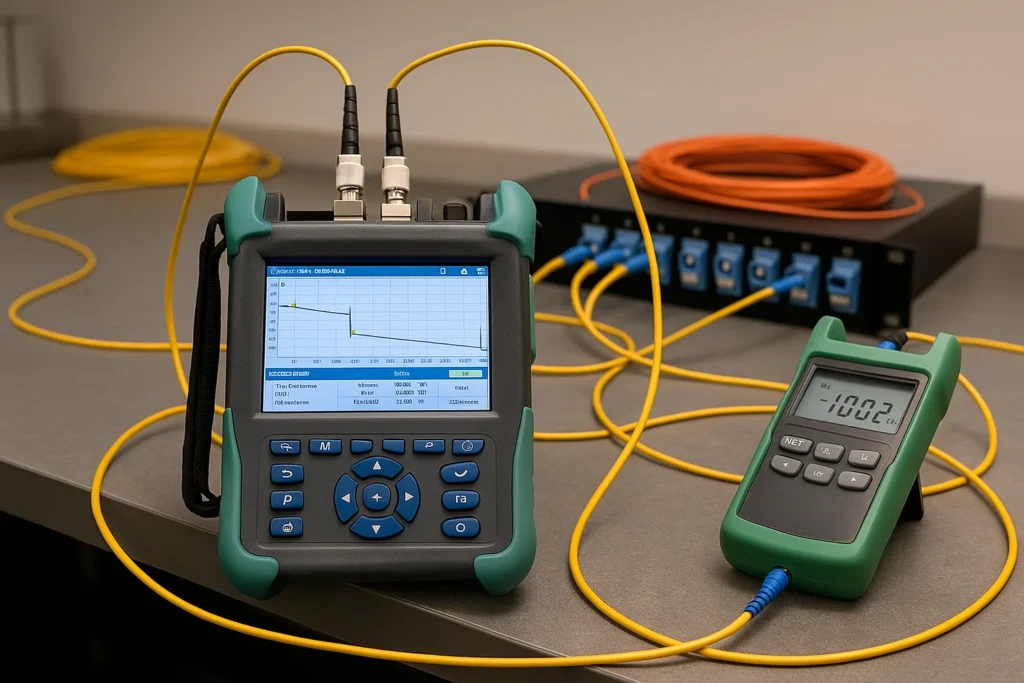
Manual labels and spreadsheets are slow and unreliable. Pre-terminated links arrive with durable, factory-applied labels and a CSV that maps every cable to your ports. Audits, moves, and troubleshooting all speed up.
From Manual Mess to Turnkey Records
Labeling Options
| Label Element | Description | Benefit |
|---|---|---|
| Serial Number | Unique cable ID | Traceability & warranty |
| Cable Length | Exact measured length | Accurate staging |
| Port Mapping | From/To port IDs | Plug-and-play accuracy |
| QR Code | Link to digital plan | Fast diagnostics |
| Fiber Type | OS2/OM4/etc. | Media check at a glance |
On Fernando’s FTTH rollout we defined a 2,000-piece label scheme. Install time dropped ~30% and labeling errors hit zero.
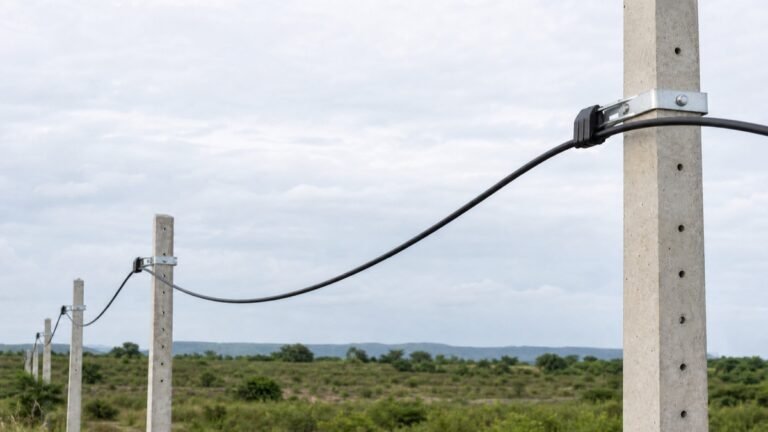
Which Forms Should I Choose for Data Centers and FTTA?
Different rooms and routes need different builds. I standardize kits by site type and density.
Form Factors & Uses (Quick Map)
| Form Factor | Typical Application |
|---|---|
| MTP/MPO Trunk Cables | High-density backbones between racks and data halls |
| Plug-and-Play Cassettes | Break MTP/MPO to LC/SC front ports |
| Harness/Breakout Cables | Connect high-speed switches to lower-speed servers |
| Pre-Terminated Patch Panels | Clean, organized cross-connect points |
What Is My Playbook to Deploy Without Surprises?
I keep a simple, repeatable flow. It works for pods, rows, and retrofits.
My 9-Step Turn-Up
- Verify drawings and polarity maps
- Stage reels; confirm labels match ports
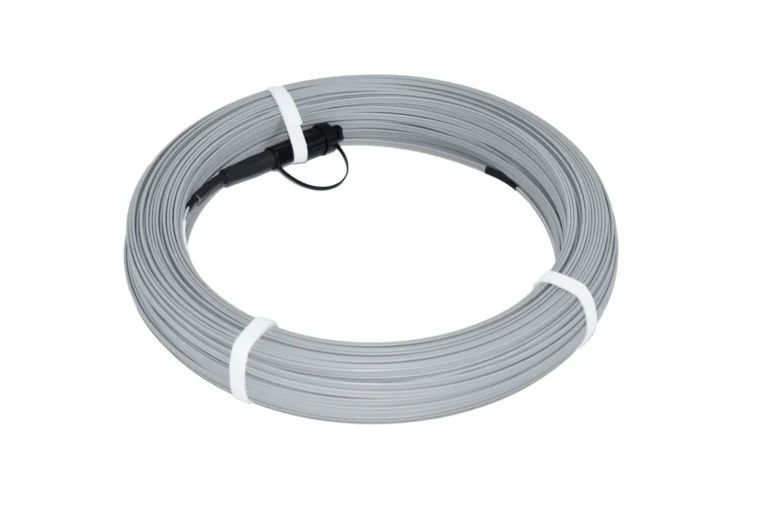
- Fit mesh pulling eyes; keep caps on until mating
- Respect bend radius ≥ 20× OD during pull; ≥ 10× at rest
- Land trunks and cassettes; dress patch cords
- Clean and inspect end-faces before mating
- OLTS each link; OTDR outliers; log results
- Import CSV to CMDB; attach panel photos
- Handover with IL/RL summary and as-built
Conclusion
Pre-terminated fiber replaces slow, risky field work with factory precision. I get faster builds, fewer errors, cleaner documentation, and tighter loss budgets. For dense data centers and FTTA sites, it is the simplest way to deliver predictable performance and scale for the next upgrade cycle.
Summary
I showed how pre-terminated cabling simplifies complex installs, improves reliability by removing manual steps, and scales with modular cassettes and trunks. I compared tasks and hours, mapped labeling options, and shared a short loss-budget example and a nine-step playbook. Use this to deploy faster, reduce rework, and keep your network ready for 40/100/400G.
Overview of field-terminated vs pre-terminated methods and trade-offs (Windy City Wire explainer). ↩
Definition and scope of pre-terminated fiber assemblies including trunks and MTP/MPO (CommScope knowledge page). ↩
Benefits of pre-terminated solutions, factory testing, and predictable day-one performance (AIMIFIBER resources). ↩
Practical advantages of fewer manual splices and lower link loss; project-level impacts on downtime and costs (trueCABLE explainer). ↩