G.657A2 / G.652D Optical Fiber Price Trends 2025–2026: What FTTH Buyers Must Know
See why G.657A2 and G.652D optical fiber prices are rising in 2025–2026, how FTTH cable budgets are affected, and what procurement teams in Europe, Latin America, Africa and the Middle East can do to manage risk.
Why are G.657A2 and G.652D optical fiber prices surging in 2025–2026, and how should FTTH buyers respond?

For a few years, single-mode optical fiber felt cheap and abundant. Now many of you tell me a different story: G.657A2 and G.652D prices are moving up, quote validity is shrinking, and lead times are harder to secure—just as FTTH projects and AI data centers accelerate.
In 2025–2026, G.657A2 and G.652D optical fiber prices are rising because demand from FTTH, national broadband, AI data centers and new applications is growing faster than structural supply. Buyers now face higher baseline pricing, shorter quotation validity (often 1–3 days), and tighter allocations, so budgets and procurement processes must be updated to match this new cycle.
I’m Sophie Wang from AIMIFIBER (Aimit Communication, Shenzhen). Every week I sit between upstream factories and FTTH/ODN buyers in Europe, Latin America, Africa and the Middle East. In this post, I’ll walk through what changed in the fiber market, how it shows up in your FTTH and ODN BOMs, and how we handle G.657A2 / G.652D quote validity and allocation so you can plan projects with fewer surprises.
What has changed in the global G.657A2 / G.652D optical fiber market since the last down-cycle?
In the last cycle, many of us got used to a “buyer’s market”: aggressive competition, expanded capacity, and soft demand in some regions kept G.652D and G.657A2 prices at historic lows. That period is ending.
Today, more demand is hitting roughly the same preform and drawing capacity. FTTH rollouts, AI data centers, 5G transport, long-haul backbones and even UAV-related systems all pull from the same G.657A2 / G.652D pool, so supply has tightened faster than new capacity can ramp.
The new demand mix for single-mode fiber
| Demand Segment | Typical Fiber Type | What changed since 2023 | Impact on fiber demand |
|---|---|---|---|
| FTTH / FTTB access | G.657A2, G.652D | New build waves in EU, LatAm, Africa, ME | Large, steady volumes for drop / distribution |
| ODN & metro rings | G.652D OS2 | More 5G transport & F5G upgrades | Sustained OS2 demand |
| AI & cloud data centers | G.652D / OM3 / OM4 | 100G/400G/800G spine & leaf expansions | High-quality OS2 and MM fiber usage |
| Long-haul / national backbone | G.652D (sometimes G.654) | New routes, redundancy, cross-border links | Baseline OS2 consumption remains strong |
| UAV / field systems | G.657A2 (tactical/drop) | Fiber-tethered drones, portable nodes | Smaller but incremental, global |
In Spain, Mexico, Brazil and several African countries, I now see FTTH and backbone projects overlapping with data center builds in the same timeframe. That convergence is very different from the “FTTH only” wave we saw a few years ago.
Supply-side reality: preform and drawing towers are the bottleneck
Preform production and fiber drawing lines are capital-intensive. Even when new investments are announced, they do not translate into reliable G.657A2 / G.652D availability overnight.
| Factor | What it means in practice |
|---|---|
| Preform capacity limits | You cannot instantly add tens of millions of km of fiber |
| Product mix optimization | Mills prioritize higher-margin or strategic product lines |
| Regional market reallocation | Priority shifts to certain regions; others see reduced slots |
| Technology upgrade (e.g. hollow-core, special fibers) | Capacity and R&D focus shift, tightening standard fibers temporarily |
The result is what many of you now experience: less room for last-minute bargaining, more “this price is valid for 1–3 days only” messages, especially on fiber-heavy items.
If you want a broader view of the vendor landscape, you can also check our summary of major players here:
👉 20 Largest Fiber Optic Cable Companies in the World
How do these price trends affect FTTH, ODN and data center buyers in real projects?
When optical fiber prices move, you feel it not as a graph, but as painful project decisions: tender bids that no longer fit, BOMs that need redesign, and approvals that expire before the PO.
Buyers now see shorter quotation validity (often 1–3 working days), higher starting prices on G.657A2 / G.652D based cables, more “subject to final confirmation at shipment” clauses, and less appetite from mills to sign long fixed-price annual contracts. Budget and tender assumptions built on the 2023 bottom are no longer safe.
What FTTH / ODN buyers are reporting to me
| Area | Previous “normal” | What we see in 2025–2026 |
|---|---|---|
| Quotation validity | 30–60 days common | 3–7 days common for fiber-heavy BOM items |
| Annual contracts | Fixed-price for 12 months sometimes possible | Many shortened, indexed, or not offered at all |
| Budget assumptions | Flat or slowly decreasing fiber price | Need +10–20% buffer vs. 2023 bottom |
| Lead time | 2–4 weeks typical for standard cables | More variation; some batches scheduled months out |
In one Spanish FTTH project, a client sent me a tender excel based on old G.657A2 drop cable prices. When we re-quoted after 6 months, the difference was big enough to break their margin. We ended up re-phasing the project with a staged procurement plan and realistic price assumptions instead of pretending the old numbers were still valid.
Where the pain is strongest in your BOM
The price impact is strongest where raw fiber content is high:
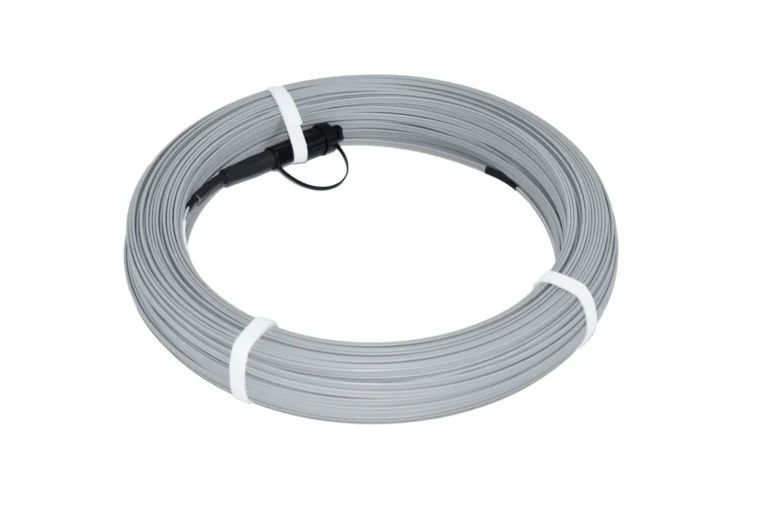
- FTTH drop cables (especially bend-insensitive G.657A2 used in buildings and last-mile)
- High-count outdoor ODN cables (e.g. 48F/96F/144F G.652D OS2)
- Long-haul OS2 for transport and backbone routes
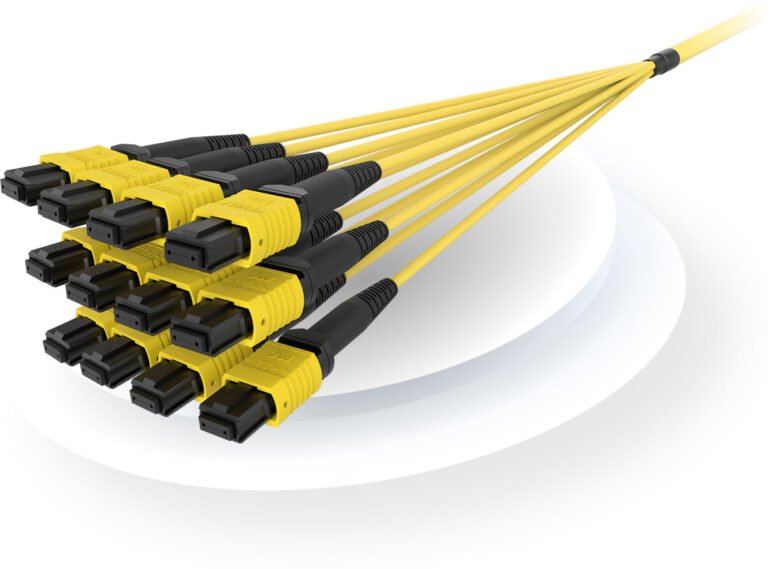
- Large volumes of pigtails / patch cords if pricing is not indexed to fiber trends
That’s why we now advise customers to separate fiber-intensive items from accessory items in both budgets and procurement flows.
If you want to compare FTTH drop cable structures and select the right type before you lock pricing, you can refer to this guide:
👉 Comparing FTTH Drop Cable Types: Armored, Dielectric, Bend-Insensitive
How is AIMIFIBER handling G.657A2 / G.652D quote validity and limited allocation?
As AIMIFIBER, we are not a preform or fiber mill. We are a cable and pre-terminated assembly supplier with long-term upstream relationships in Asia. That means we feel market changes from both sides: from the factory gate and from your project office.
Our way to stay honest is to keep short but realistic quote validity for fiber-intensive products (typically 3–5 business days) and to follow a transparent, first-paid-first-served allocation rule when upstream G.657A2 / G.652D slots are tight. We do not speculate on fiber; we focus on service and consistent quality.
Our current G.657A2 / G.652D policy at a glance
| Topic | AIMIFIBER Policy (2025–2026) |
|---|---|
| Scope | Cables and assemblies with high G.657A2 / G.652D content |
| Quote validity | 3–5 business days for optical-fiber-heavy lines |
| Pricing basis | Upstream mill reference + transparent service margin |
| Allocation rule | First-paid-first-served when upstream allocation is limited |
| Supported fiber types | G.657A2 (bend-insensitive) and G.652D (standard OS2) |
| Typical customers | FTTH operators, ISPs, ODN contractors, data center integrators |
We summarise the more formal part of this policy on a dedicated notice page, which you can treat as a reference during internal approvals.
What our allocation process looks like in real life
When an FTTH operator or contractor comes to us with a multi-month rollout (e.g. in Spain, Mexico or an African market):
We collect clear project data
– Fiber type (G.657A2 / G.652D)
– Volume (km) and monthly phasing
– Cable structure (e.g. figure-8, ADSS, micro cable) and delivery termsWe talk to upstream partners
– Check what allocation window is realistic
– Confirm earliest and latest shipment datesWe propose a price + validity window
– Typically 3–5 business days on fiber-heavy lines
– Explain the constraints, not hide themOnce payment is confirmed, upstream allocation is secured for that batch
– Future phases may be re-priced based on actual market at that time
This is the only way we can tell you, with a straight face, that the G.657A2 / G.652D prices in your PO are deliverable, not just “nice to see on paper”.
What can FTTH / ODN buyers do now to manage risk and protect project margins?
The good news is that you are not powerless. Once you treat G.657A2 / G.652D fiber price risk as a normal project variable instead of a surprise, you can design around it.
To manage risk, FTTH and ODN buyers should shorten internal decision cycles, separate fiber-intensive items in budgets, use phased orders instead of a single all-in commitment, and work with suppliers who are transparent about upstream constraints. Adding a reasonable price buffer for G.657A2 / G.652D helps protect margins in Europe, LatAm, Africa and the Middle East.
1. Update your internal process and assumptions
| Action | Why it helps in a volatile G.657A2 / G.652D market |
|---|---|
| Shorten internal PO approval loops | Matches 3–5 day quote validity windows |
| Add a “fiber price check” step | Prevents tenders from using outdated cost assumptions |
| Separate fiber-heavy lines in budgets | Allows different risk treatment vs. accessories and hardware |
| Add a realistic contingency (e.g. 10–20%) | Reduces the chance of negative margin when prices move upwards |
2. Prefer phased orders and frameworks over one big, fixed bet
| Approach | Pros | Cons |
|---|---|---|
| Single large PO | Simple on paper | High exposure to one price point |
| Framework + phases | Adjust to actual market moves; better cash flow | Requires more coordination |
For example, an ISP in Latin America recently moved from one annual FTTH cable PO to a framework + quarterly orders indexed to the latest G.657A2 / G.652D trend. They still had volume leverage but avoided betting everything on a single historic price.
When we discuss new rollouts with operators and integrators, we now include:
- Clear language on when a re-quote is needed (e.g. if project slips by X months)
- Options to use indexed pricing for longer horizons instead of artificial fixed numbers
- A shared understanding of upstream constraints so you can explain internally why “3–5 days validity” is not a sales trick, but a market reality
This kind of dialogue turns supplier relationships into joint risk management for optical fiber, rather than a one-off price contest.
If you are comparing suppliers or looking at big names for benchmarking, you can use this internal reference article as context:
👉 20 Largest Fiber Optic Cable Companies in the World
Conclusion
The global G.657A2 / G.652D optical fiber market in 2025–2026 is very different from the low-price environment of previous years. Demand from FTTH, long-haul transport, AI data centers and even UAV/field systems is pressing against real capacity limits, and prices have moved up from the bottom accordingly.
As an FTTH or ODN buyer in Europe, Latin America, Africa or the Middle East, the best way to protect your projects is to:
- Base budgets on current G.657A2 / G.652D price levels, not historic ones
- Accept shorter, honest quotation validity for fiber-intensive items (3–5 days is common)
- Use phased orders and realistic frameworks instead of forcing unrealistic fixed prices
- Work with suppliers who are transparent about allocation and upstream constraints, not those who over-promise
At AIMIFIBER, we will keep sharing what we see in the optical fiber market and how we structure G.657A2 / G.652D quotes and allocations. If you want to review your FTTH drop cable or ODN BOM against the current fiber price reality, you’re welcome to email me at sophie@aimifiber.com. I’m happy to walk through it with you and adjust the plan before the numbers become a problem.