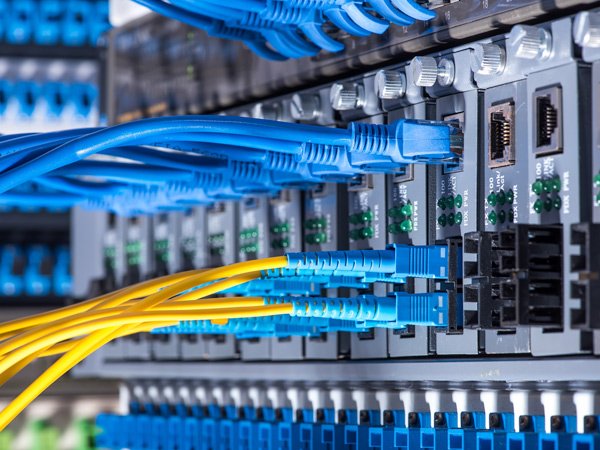
Understanding the differences between FTTH drop cables, tight buffered cables, and breakout cables is fundamental for telecom project managers, ISP procurement teams, factory investors, production managers, and fiber optic engineers. These cables play distinct roles in network infrastructure, influencing costs, performance, and applications. FTTH drop cables are tailored for last-mile connectivity, tight buffered cables serve specialized environments requiring rugged protection, and breakout cables simplify installation in multi-fiber settings. This article unpacks production processes, material choices, economic considerations, and design variations—all critical for making informed decisions in fiber optic manufacturing and deployment.
A Comparative Dive into FTTH Drop Cable Production Processes
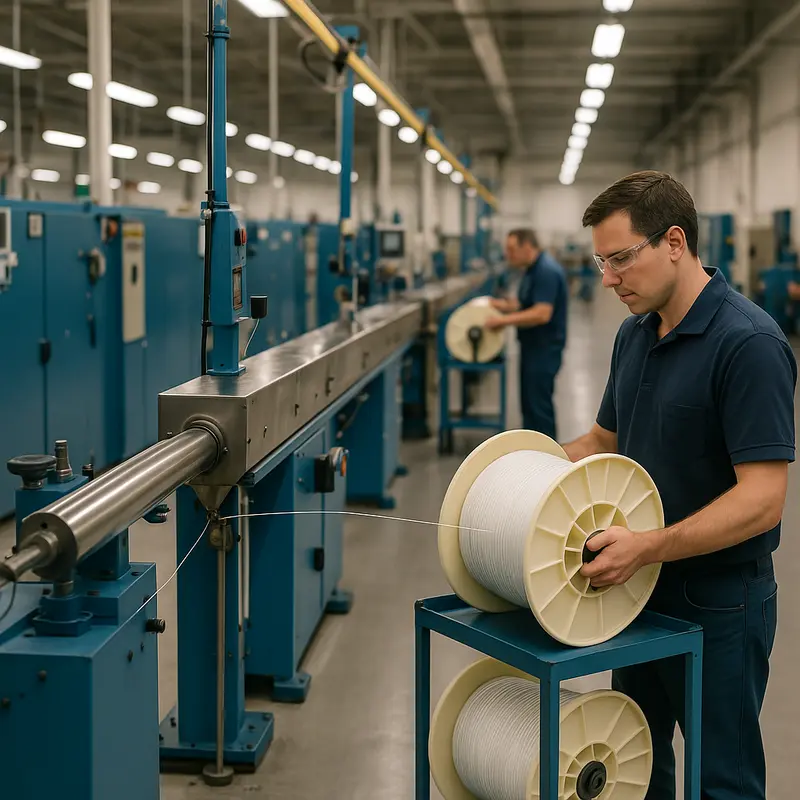
Fiber to the Home (FTTH) drop cables hold a distinguished place in the world of optical fiber technology, serving as the critical link between the service provider's network and the end-user's home. Their production process embodies a specialized approach, tailored to particular demands of flexibility, installation ease, and durability, characteristics that differentiate them significantly from other cable types such as tight buffered and breakout cables. Understanding this process reveals not only why these cables are indispensable in modern broadband deployment but also the meticulous engineering behind their creation.
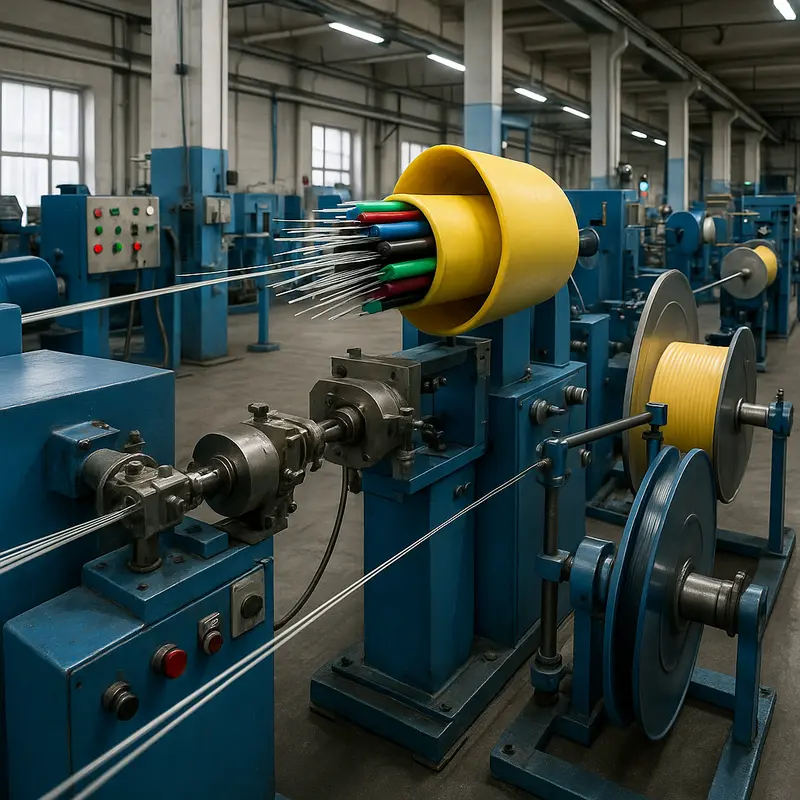
At its core, FTTH drop cable production is guided by the need for compactness and environmental toughness. These cables are inherently lightweight and designed to be inherently bend-insensitive, a critical trait given their functionality often involves navigating sharp building corners and tight installation spaces. The cables typically incorporate G.657 fibers, which enhance their ability to tolerate extensive bending without signal loss. The production lines for FTTH drop cables emphasize precise extrusion processes to create a robust protective sheath. This layer guards against mechanical stress, moisture, UV radiation, and temperature fluctuations, ensuring consistent performance in varying environments. For an insightful look at the machinery enabling these processes, you can explore details about FTTH drop cable extrusion here.
The selection of reinforcement materials is another unique aspect of FTTH drop cable production. Fiberglass rods or steel reinforcements are often integrated during the manufacturing stage. These additions serve two purposes: preventing physical strain on the fiber itself during installation and providing strength to the cable for long-term reliability. By contrast, tight buffered cables—a prominent alternative—would skip this reinforcement step since they prioritize indoor usage and flexibility over external resilience.
One standout feature during FTTH production is the focus on ease of deployment. Manufacturers prioritize jacket designs that allow fast installation by field technicians, often incorporating features like pre-installed connectors or self-supporting structures. This contrasts sharply with breakout cables, which are individually jacketed and require far more precision and labor during the installation phase. Breakout cables aim at scenarios where each fiber may need to connect to different endpoints in structured cabling systems—a requirement seldom necessary for residential FTTH applications.
An often-overlooked aspect of FTTH drop cable creation is cost control, without compromising quality. Manufacturers streamline their production lines to deliver high volumes quickly. Automation plays a critical role, minimizing human intervention and enhancing precision. Interestingly, such cost-effective measures do not play out in the same way for tight buffered or breakout cables, which are more labor-intensive to produce due to their specific applications and detailed configurations.
In summary, the production of FTTH drop cables is a refined process that aligns with the growing demand for high-speed, reliable, and easily deployable broadband solutions. The emphasis on durability, compact design, and streamlined installation distinguishes it from the methodologies driving the creation of other cable types, illustrating its indispensable role in shaping modern communication networks.
Contrasts in Design and Function: Tight Buffered Cable vs FTTH Drop Cable
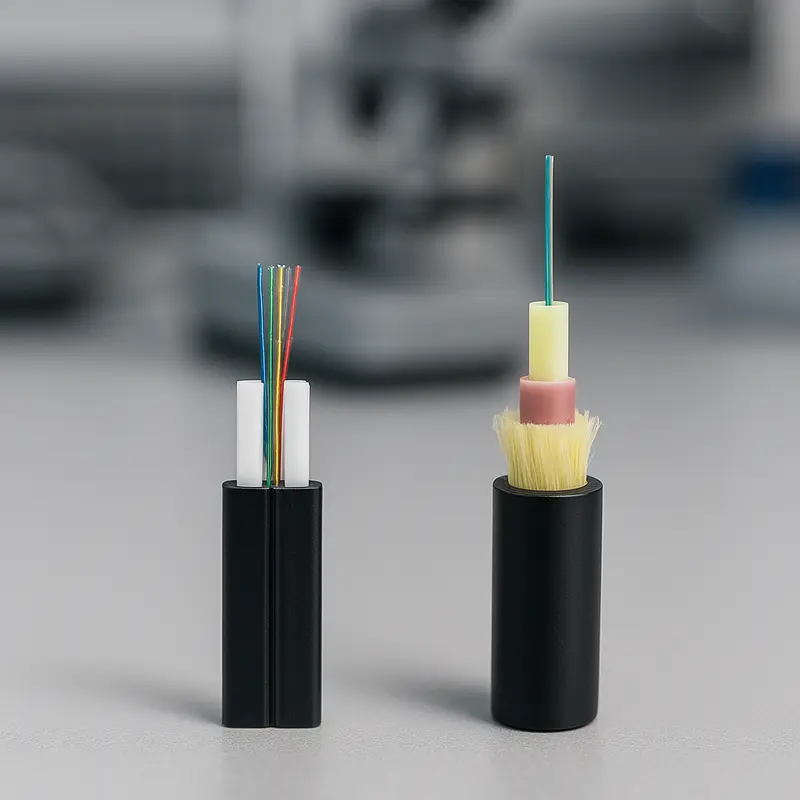
In the realm of fiber optic technology, both tight buffered cables and FTTH (Fiber to the Home) drop cables serve critical, albeit distinct, purposes. Their differences stem from unique design characteristics, intended applications, and the technical environments in which they are used. Understanding these distinctions not only aids in selecting the appropriate cable type but also enhances appreciation for the engineering complexities behind fiber optic communication.
Tight buffered cables are distinct in their structural design, which provides enhanced mechanical strength and flexibility. Each individual optical fiber within a tight buffered cable is coated with a protective buffer layer, typically 900 microns in diameter. This additional buffer allows these cables to withstand harsh conditions, such as frequent bending and pulling, without compromising the optical core. For this reason, they are often used in environments requiring rugged handling or where space constraints are a concern, such as in local area networks (LANs), patch cables, and data centers. Moreover, tight buffered cables feature robust resistance to environmental factors like temperature fluctuations and moisture, making them versatile for both indoor and outdoor installations.
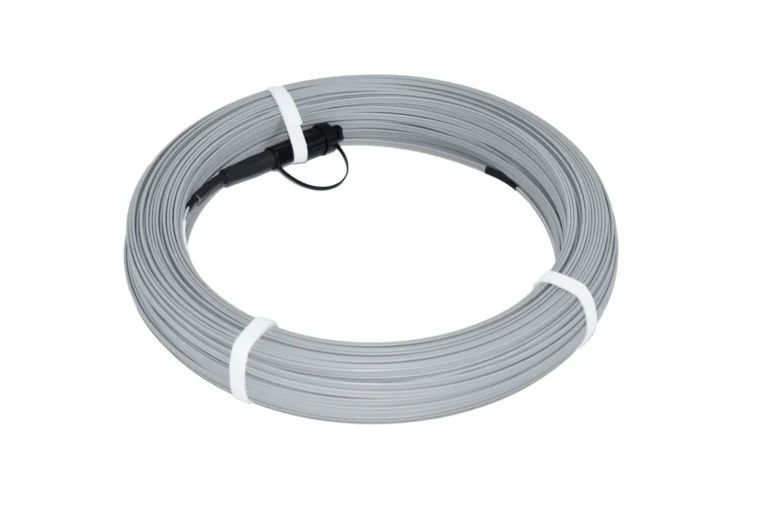
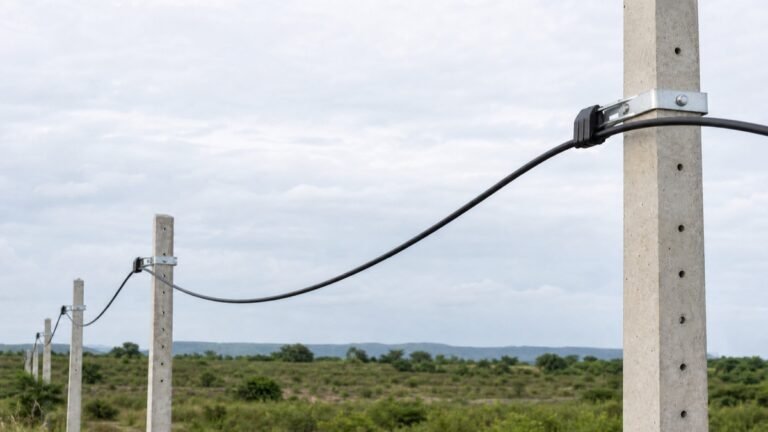
On the other hand, FTTH drop cables are specifically designed to connect homes and businesses to high-speed fiber optic networks. As their name suggests, these cables are integral to the "last mile" of fiber optic infrastructure, bridging the gap between a central distribution point and the end user's premises. FTTH drop cables usually consist of one to two fibers, encased in a lightweight and compact sheath. Unlike tight buffered cables, the emphasis here is on straightforward, aerial, or duct-based installation rather than durability against extreme mechanical stress.
A pivotal distinction lies in their structural cores. FTTH drop cables typically employ loose tube or ribbon-based designs where fibers are loosely packed, allowing for better thermal expansion but less direct protection for the fiber cores compared to the tightly buffered configuration. This design minimizes production costs and simplifies installation—a crucial factor for large-scale network rollouts. Tight buffered cables, however, cater to specific use cases where core accessibility and additional ruggedness are necessary, such as in long-term intra-building cabling.
Interestingly, these cables diverge not only in physical construction and use cases but also in production methodologies. The extrusion process for tight buffered cables involves a meticulous layering of the optical fibers with buffer materials, demanding precision for optimal flexibility and protection. Conversely, the production of FTTH drop cables tends to prioritize efficiency and speed to sustain the rapid global expansion of fiber-to-the-home infrastructure. For insights into the specialized equipment used in FTTH cable production, you can explore FTTH drop cable extrusion.
Ultimately, the choice between tight buffered and FTTH drop cables depends on specific application needs. Whether prioritizing the resilience of tight buffered cables or the deployment efficiency of FTTH drops, understanding their differences ensures optimal performance and network reliability.
Distinctive Production Characteristics of Breakout Cable vs FTTH Drop Cable
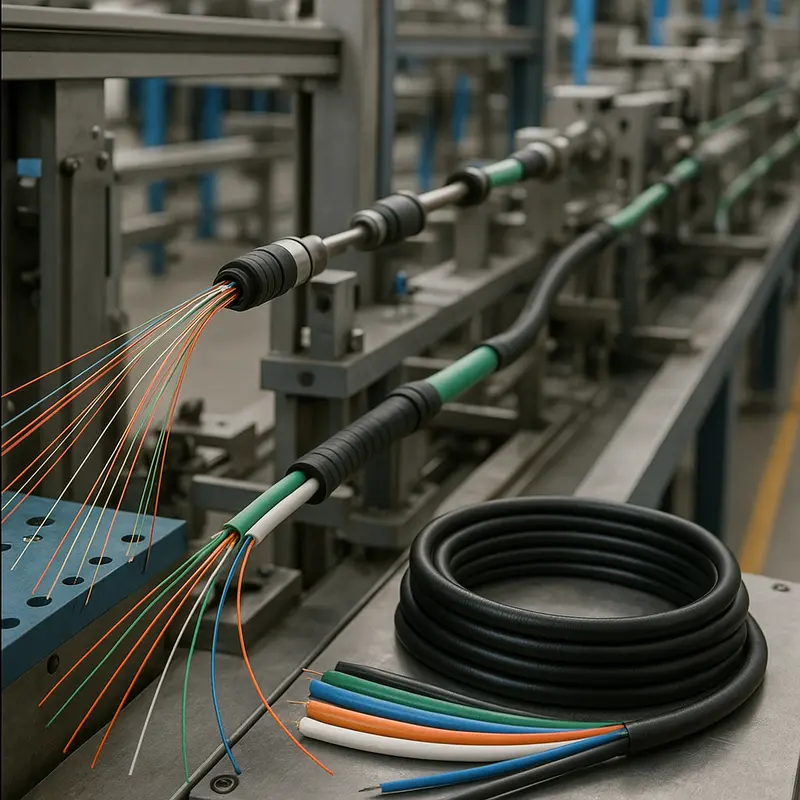
Breakout cables and FTTH (Fiber-to-the-Home) drop cables serve distinct roles in fiber optic networking, and their contrasting uses are mirrored in their manufacturing processes. To understand the production differences comprehensively, it’s important to explore their structural characteristics and respective application demands.
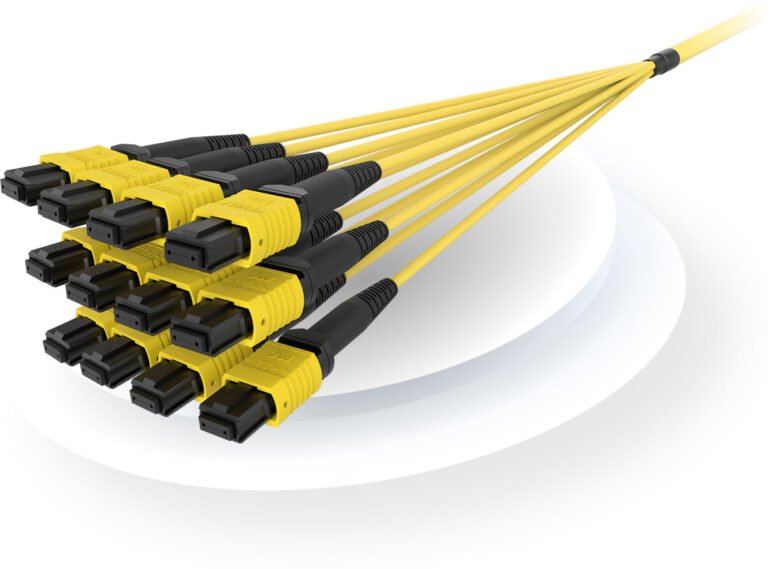
Breakout cables are designed for environments requiring rugged performance and easy handling during termination. Their primary structure comprises bundled tight-buffered fibers, each reinforced independently with strength members, enclosed within a robust external sheath. Individual buffering enables the fibers to be stripped and terminated separately, facilitating ease of installation in settings such as data centers and industrial sites. This specialized configuration impacts production lines significantly, necessitating machinery that can precisely apply tight buffers to individual fibers and incorporate protective strength materials. A relevant consideration here is the tight-buffered fiber extrusion process, described in greater detail here, which ensures the structural integrity of breakout cable fibers.
Conversely, FTTH drop cables cater to consumer-grade deployment scenarios, often within residential broadband networks. These cables are engineered for streamlined installation and cost-efficiency, prioritizing lightweight designs over rugged durability. Unlike breakout cables, FTTH drop cables usually incorporate fewer fibers, encapsulated in a loose tube or compact protective sheath. The production of these cables often includes unique extrusion configurations to achieve minimal diameters, enabling ease of routing around dwellings. Moreover, FTTH drop cable manufacturing lines focus heavily on scalability and cost control, reflecting the mass-market nature of their applications. The extrusion setup tailored to such cables can be explored here.
Another key distinction lies in the sheath application process. While breakout cables typically demand robust outer layers to protect against mechanical stress and environmental factors, FTTH drop cables emphasize lightweight sheathing suitable for aerial or conduit installations. This distinction drives variance in the materials fed through extrusion lines for sheathing, as well as the auxiliary equipment required to maintain dimensional consistency across the cable’s length.
Addition of fiberglass reinforcements, water-blocking agents, and other protective measures is another point of divergence. Breakout cables often integrate these features at a higher frequency due to their exposure to harsher conditions compared to the more controlled environment of FTTH deployments. These added production steps contribute to longer manufacturing times and higher costs for breakout cables, but are essential for ensuring longevity and reliability in critical infrastructure setups.
Ultimately, the key takeaway is that production differences reflect the cables’ targeted applications. While the manufacturing of breakout cables emphasizes precision, durability, and flexibility during installation, FTTH drop cable production prioritizes scalability, simplicity, and cost-efficiency to meet the demands of modern fiber-to-the-home networks.
Economic Considerations in FTTH Drop Cable, Tight Buffered Cable, and Breakout Cable Manufacturing
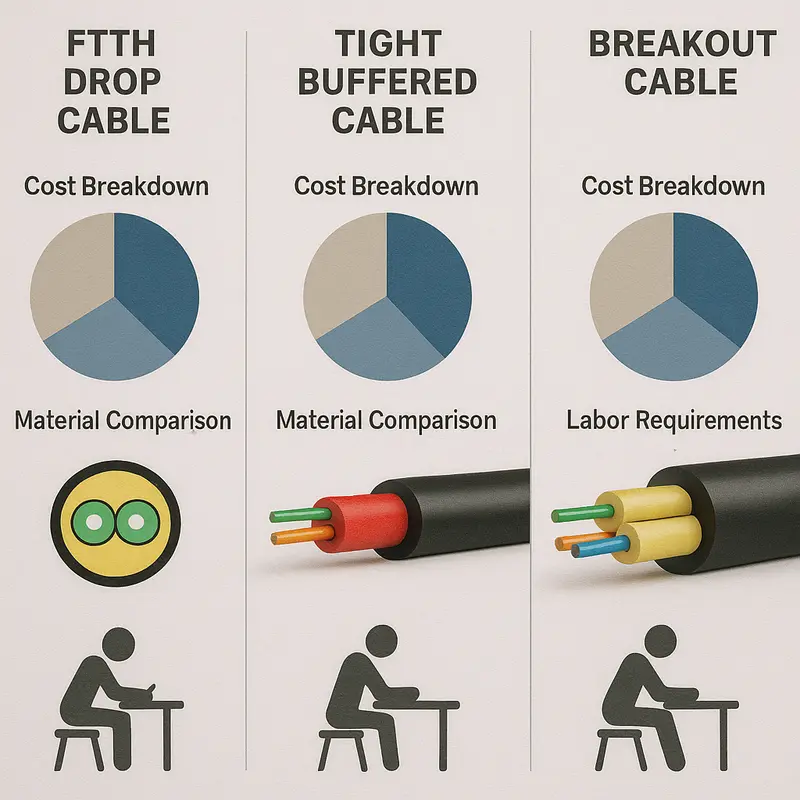
Producing fiber optic cables is not just a technical endeavor but a strategic balancing act influenced by a range of economic factors. When manufacturers evaluate FTTH drop cables, tight buffered cables, and breakout cables, economic considerations play a pivotal role in determining processes, cost efficiencies, and eventual market performance. Although these cables serve distinct purposes, the economic pressures during production share common themes that manufacturers must navigate deftly to remain competitive.
The first economic factor to examine is material cost. FTTH drop cables, known for their simplicity and widespread use in last-mile connections, require lightweight yet durable materials. This translates to a lower initial material cost per unit compared to more complex cables, such as tight buffered or breakout designs. Tight buffered cables, often used in environments where robustness is key, necessitate additional protective layers or coatings, increasing material expenses per meter. Breakout cables take this a step further; with their independent buffering and ability to partition into individual fiber strands, these cables demand a significantly more intricate assembly, driving material costs even higher. However, producers can mitigate these expenses by strategically sourcing inputs or negotiating with suppliers to lock in stable pricing, particularly in markets more susceptible to fluctuations in raw fiber costs.
Another core economic aspect is production scalability. Among the three cable types, FTTH drop cable production benefits from high-volume manufacturing, as these cables are typically produced en masse for deployment in modern broadband rollouts. Scaling up production for FTTH cables allows factories to amortize fixed costs like machinery and facility maintenance across larger output volumes, improving per-unit profitability. Conversely, tight buffered and breakout cables, often custom-made for specialized applications, may not reach the same economies of scale. Their production demands more customization, heavily manual processes, or lower-volume runs, which all contribute to elevated unit costs. Investing in flexible production lines, such as those outlined in this guide on fiber cable production lines, is a proven strategy for manufacturers looking to optimize costs across varied cable types.
Labor costs and operational efficiencies further distinguish the economics of these cable types. FTTH drop cables generally rely on standardized, automated extrusion processes that minimize human intervention. Tight buffered and breakout cables, with their intricate designs, often depend more on skilled labor, heightening manufacturing costs due to longer production times and increased quality control requirements. As such, manufacturers may consider automating specific steps in the tight-buffering or breakout-cable production process to strike a balance between precision and cost management.
Finally, energy consumption during production is an often overlooked but critical economic factor. Cables requiring heavier jacketing, like tight buffered and breakout variants, put more strain on machinery, consuming more energy and driving up operational costs. FTTH drop cable extrusion, by contrast, tends to be less resource-intensive due to the more straightforward structure of these cables. Implementing energy-efficient machinery and processes can significantly reduce expenditures and help manufacturers maintain tighter profit margins.
In conclusion, the economic factors shaping the production of FTTH drop cables, tight buffered cables, and breakout cables extend beyond mere material costs. A holistic view of the interplay between material sourcing, scalability, labor, and energy consumption reveals strategic areas where manufacturers can gain a competitive edge. As the demand for fiber optic cables accelerates, navigating these economic dynamics will be essential for firms aiming to capitalize on market growth while preserving profitability.
Unraveling the Structural and Material Differences in FTTH Drop, Tight Buffered, and Breakout Cables
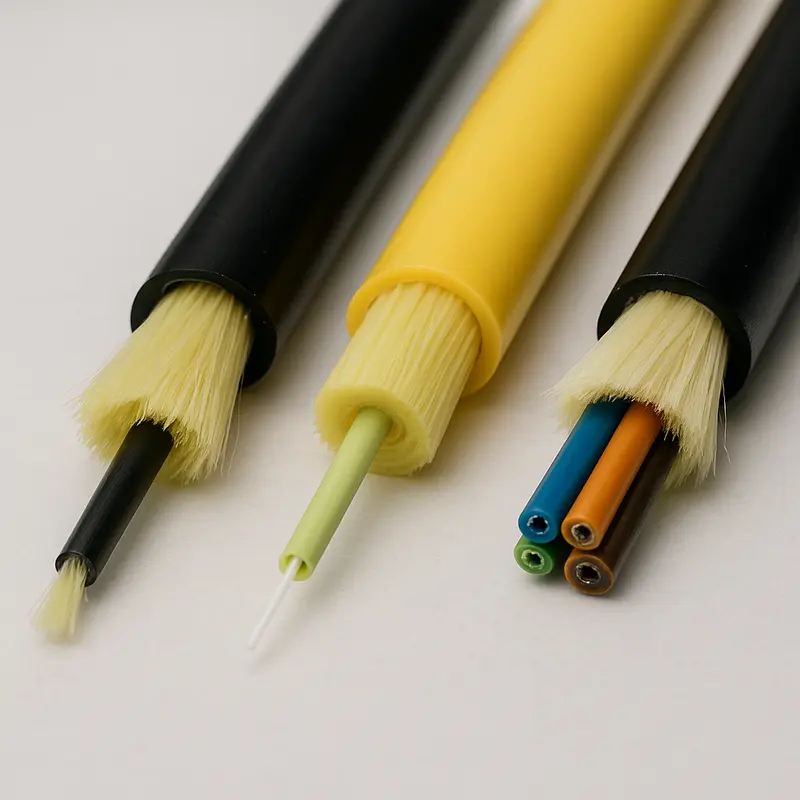
Fiber optic cables have revolutionized modern telecommunications, forming the backbone of countless internet and data transmission networks. Among the many types available, FTTH (Fiber-to-the-Home) drop cables, tight buffered cables, and breakout cables stand out as critical components for different applications. Understanding their material composition and design intricacies not only sheds light on their distinctiveness but also clarifies their suitability in specific contexts of manufacturing and deployment. Let us delve deeper into their comparative characteristics.
FTTH drop cables are engineered with a focus on seamless last-mile connectivity, directly linking telecommunications networks to residential or commercial buildings. Their lightweight construction typically features UV-resistant sheaths and often includes a single or multiple optical fibers protected by strength members, usually made of steel wires or aramid yarn. This configuration supports their installation in challenging outdoor environments, including overhead, conduit, or buried applications. The design prioritizes simplicity and cost-efficiency, enabling facile integration into existing infrastructures while reducing deployment expenses. It's worth noting that FTTH drop cable extrusion, as explored here, plays a pivotal role in achieving optimal durability and flexibility during production.
On the other hand, tight buffered cables exhibit a robust, multi-layered design geared for internal environments. These cables encase each optical fiber individually in a buffer layer, which provides enhanced protection from physical stress, temperature fluctuations, and mechanical abrasion. This structure makes tight buffered cables highly suitable for connections within buildings, data centers, and optical patch cords—where minimal flexibility and higher resilience are crucial. Their durability under internal conditions is complemented by jacket options ranging from flame-retardant to halogen-free materials, tailored to meet stringent safety standards. The extrusion process for such cables demands precision, as covered extensively in discussions around tight buffered fiber extrusion, underscoring the need for superior manufacturing setups.
Breakout cables, by comparison, are designed for environments requiring versatility and high performance under strenuous conditions. Their core trait lies in bundling multiple tight buffered fibers, each individually jacketed, within a secondary sheath. This attribute allows breakout cables to accommodate greater fiber counts while maintaining ease of termination and handling. Due to their rugged design, they often dominate applications in industrial settings, outdoor ruggedized environments, and backbone network deployments. The materials used in breakout cables emphasize shock-resistance and tensile strength, ensuring optimal performance even under extreme loads. Their production process reflects their structural complexity, demanding advanced machinery and meticulous fiber handling to maintain precision throughout manufacturing cycles.
Across these fiber optic cable types, material choices—whether metallic strength elements, buffer layers, or specialized sheaths—play a decisive role in tailoring their designs to specific uses. Meanwhile, design inquiries into jacket options, sheath adaptability, and secondary coatings highlight continuous advancements in fiber optic manufacturing technology. Ultimately, whether for demanding outdoor installations, flexible indoor setups, or mission-critical industrial networks, these nuanced differences illustrate how innovation meets application in the evolving landscape of fiber cables.
Final thoughts
FTTH drop cables, tight buffered cables, and breakout cables each serve unique roles in fiber optic networks, with distinct material and design choices affecting their applications. By understanding their production processes, technical differences, and economic implications, industry stakeholders can make smarter choices for deployment and investment. Examining these critical factors empowers telecom professionals to align product selection with infrastructure goals.
Contact AIMIFIBER for FTTH cable, patch cord, and pre-terminated fiber optic solution support, as well as OEM/ODM service and product advice.
Learn more: https://aimifiber.com/contact-us/
About us
AIMIFIBER provides pre-terminated fiber optic solutions, including FTTH drop cables, patch cords, pigtails, FTTA products, and customized fiber assemblies. We support telecom and data center projects with reliable manufacturing and innovative designs, offering OEM/ODM services tailored to your specifications.