How do I choose between GYTS, GYTA, and GYXTW outdoor fiber cables?
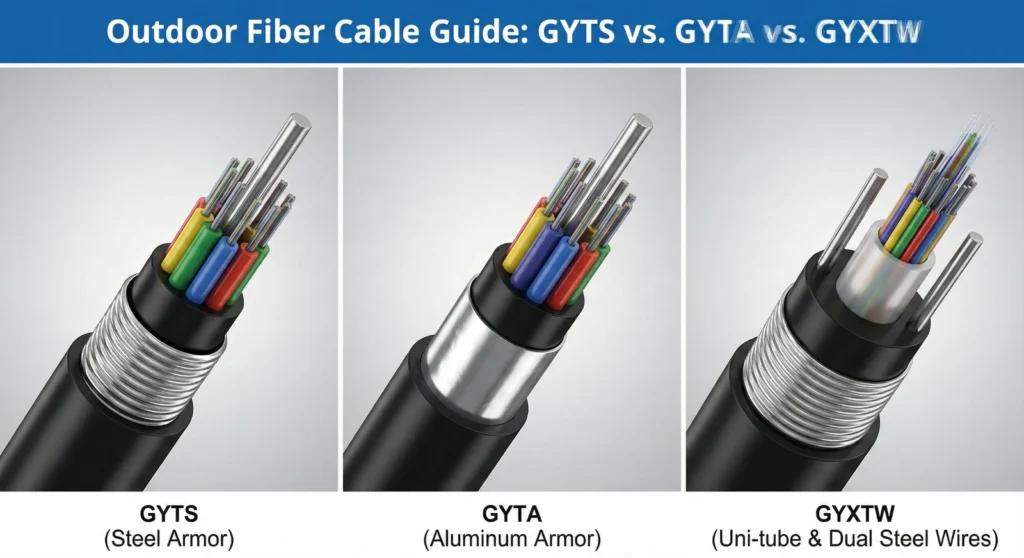
In my 9 years at Aimit, the most common confusion I see in BOMs is between GYTS and GYTA. They look identical from the outside, but choosing the wrong armor material can lead to rusted cables or rodent damage within months.
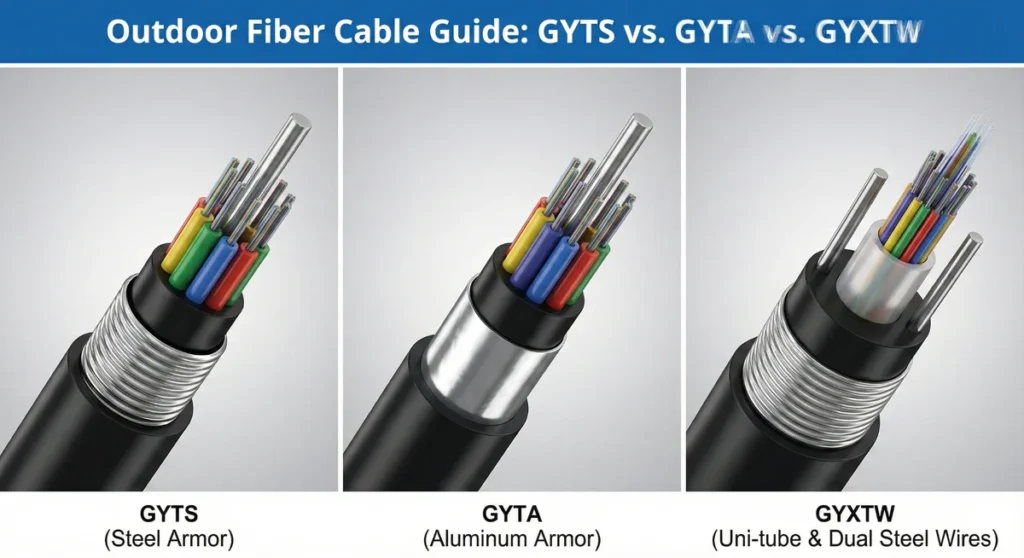
To choose the right outdoor cable, match the armor to the threat. Use GYTS (Steel Tape) for general duct and aerial spans requiring rodent resistance. Use GYTA (Aluminum Tape) for humid, long-haul pipelines requiring superior moisture sealing. Use GYXTW (Uni-tube) for budget-sensitive access networks with low fiber counts.
At Aimit Communication, we manufacture all three types daily. Let’s dive into the specific structure differences so you can finalize your procurement list with confidence.
Why is GYTS the default choice for duct and aerial projects?
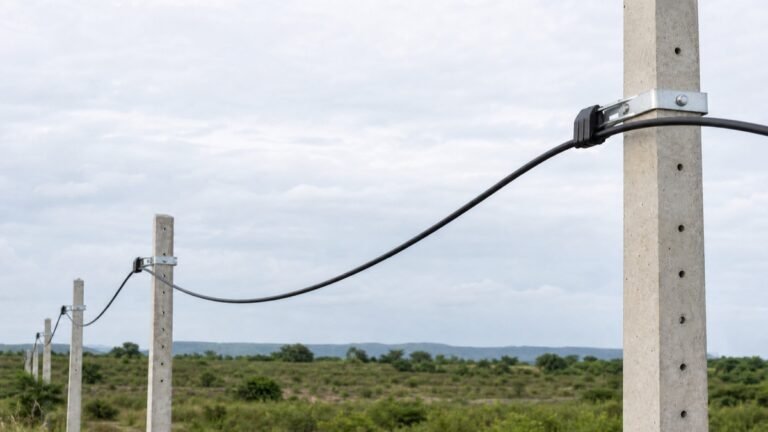
If you are pulling cable through a pipe where rats might be present, or lashing it to a pole where it faces mechanical pressure, you need physical hardness. Standard PE sheaths are not enough to stop a rodent's teeth.
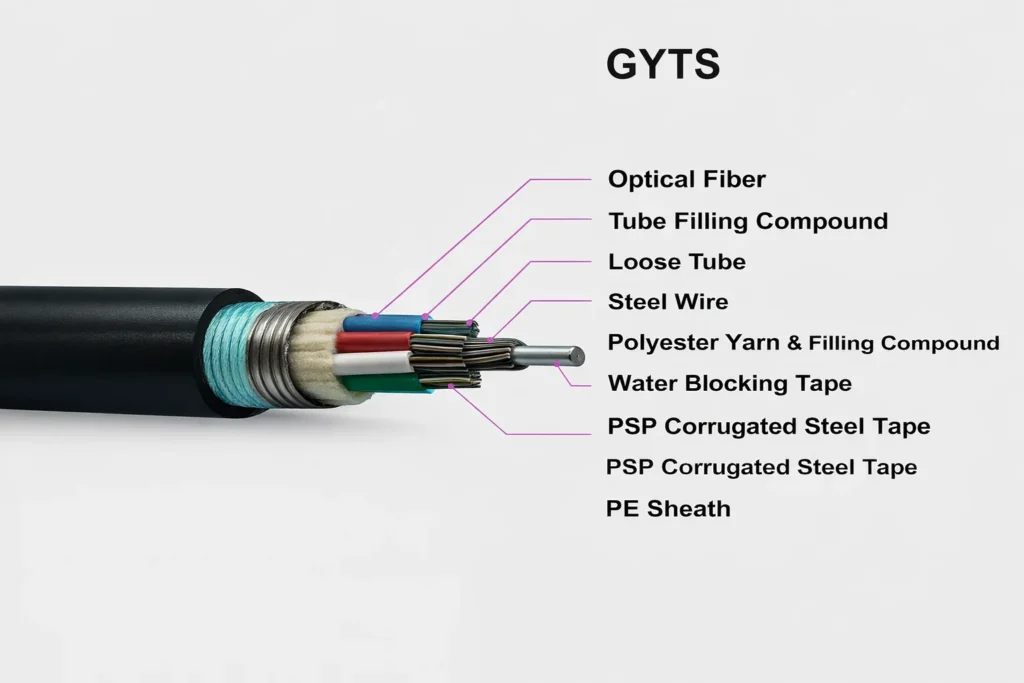
GYTS is the industry standard for "Anti-Rodent" and "Anti-Crush" applications. Its Corrugated Steel Tape (PSP) armor provides a crush resistance of 1000N/100mm, acting as a hard physical barrier against rodent bites and installation stress, making it the safest default for OSP networks.
Dive Deeper: The Steel Advantage
The "S" in GYTS stands for Steel. We use double-sided chrome-coated corrugated steel tape. It overlaps the loose tubes to form a solid tunnel.
Product Link: View GYTS Steel Armored Cable Specs
GYTS Technical Data
| Feature | Specification | Benefit |
|---|---|---|
| Armor | PSP (Steel Tape) | High Crush Resistance & Rodent Proof |
| Tensile Strength | 1500N (Short Term) | Handles pulling tension well |
| Structure | Stranded Loose Tube | High fiber count (up to 144) |
| Application | Duct / Aerial Lashing | The "All-Rounder" |
When is GYTA superior to GYTS for underground pipelines?
Steel is strong, but it has a weakness: rust. If your project involves old, flooded ducts or is located in a tropical rainforest region, water ingress is the primary enemy, not rodents.
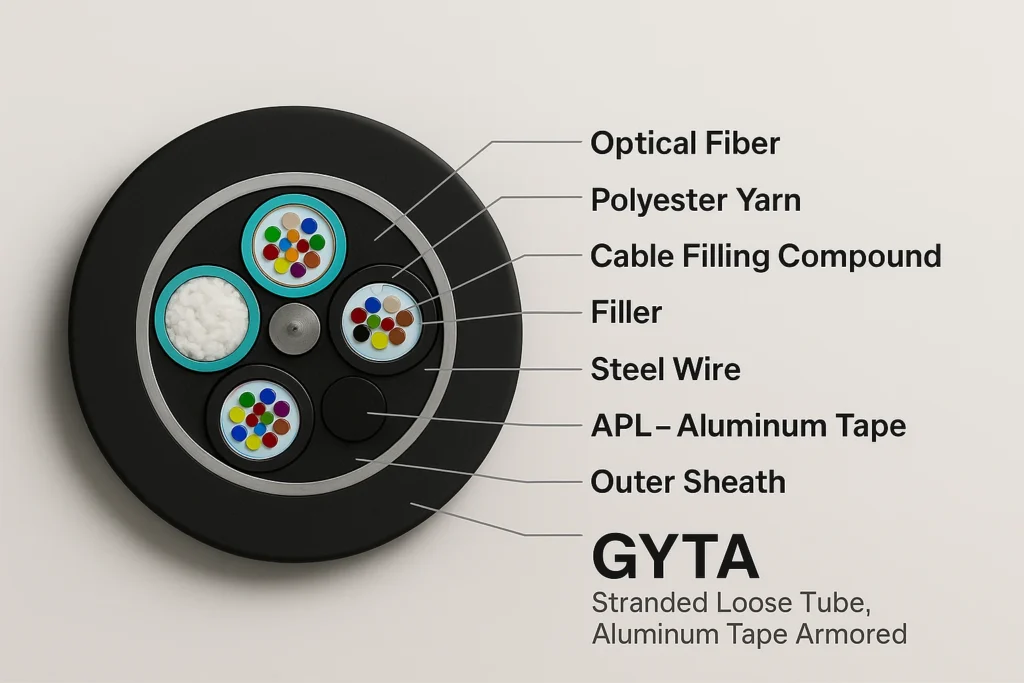
You should choose GYTA when moisture resistance is the priority. GYTA uses an Aluminum Polyethylene Laminate (APL) armor. Aluminum bonds more tightly with the PE sheath than steel, creating a superior moisture barrier that prevents water penetration in flooded or high-humidity ducts.
Dive Deeper: The Chemical Bond
While Aluminum is softer than Steel (so GYTA has slightly lower crush resistance than GYTS), its Polyethylene coating melts into the outer jacket during extrusion, creating a near-hermetic seal.
Product Link: View GYTA Aluminum Armored Cable Specs
GYTS vs. GYTA Comparison
| Scenario | Choose GYTS (Steel) | Choose GYTA (Aluminum) |
|---|---|---|
| Dry / General Duct | ✅ Best Choice | ⭕ Acceptable |
| Flooded / Wet Duct | ❌ Risk of Rust | ✅ Best Choice |
| Rodent Risk | ✅ Best Choice | ❌ Too Soft |
| Aerial Lashing | ✅ Good (Stronger) | ✅ Good (Lighter) |
Is GYXTW suitable for high-capacity backbone networks?
Sometimes, you don't need a heavy, 144-core backbone cable. For "Last Mile" access networks, budgets are tight, and duct space is limited. Using a bulky stranded cable here is a waste of money.
No, GYXTW is not designed for high-capacity backbones. It is a "Uni-tube" Light Armored cable designed specifically for low fiber counts (2-24 cores). Its compact central tube structure and parallel steel wires offer a lightweight, cost-effective solution for access networks, but it lacks the scale for high-density transmission.
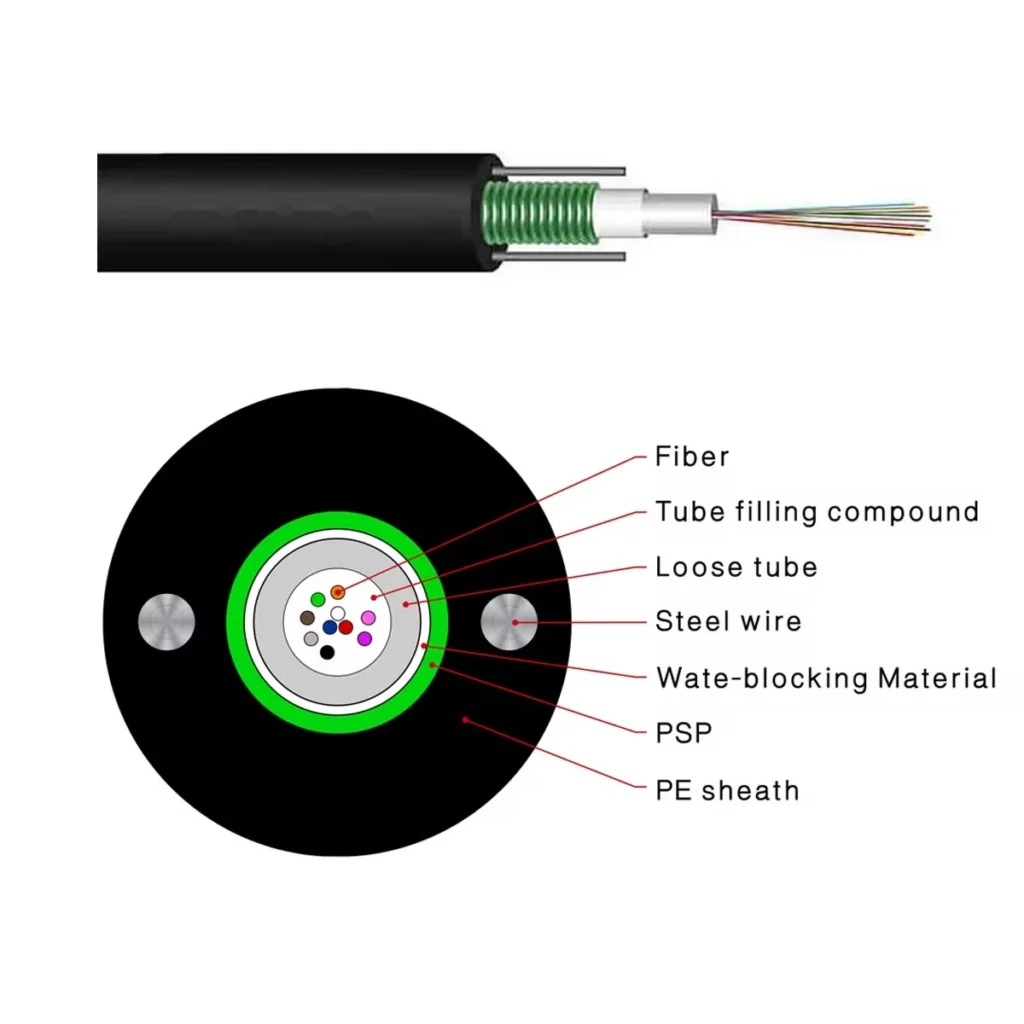
Dive Deeper: The Uni-tube Design
GYXTW is unique. It doesn't have multiple tubes stranded around a center. It has one big tube in the middle. This reduces the diameter to ~8.0mm, saving huge amounts of shipping cost and duct space.
Product Link: View GYXTW Uni-tube Cable Specs
GYXTW Spec Matrix
| Parameter | Value | Note |
|---|---|---|
| Fiber Count | 2 - 24 Cores | Limited by tube size |
| Diameter | 8.0 - 9.0 mm | Very Compact |
| Strength Members | 2x Parallel Steel Wires | Embedded in sheath |
| Cost | Low | Most economical OSP cable |
Conclusion
Choosing outdoor fiber cable isn't about which one is "better"—it's about the environment.
- Need rodent protection? Buy GYTS (Steel).
- Need water protection? Buy GYTA (Aluminum).
- Need cheap connectivity (2-24 cores)? Buy GYXTW.
At Aimit, we test every drum for attenuation and tensile strength before it leaves our Shenzhen factory. If you are still unsure which armor type fits your local climate, let me know.
Need a quote or a datasheet? Contact our engineering team today.