Do pre-terminated fiber solutions really cut deployment time and risk for FTTH and data centers?
Projects slip when field terminations fail. Dust, dim light, and uneven skills turn simple links into rework. With pre-terminated fiber solutions and true plug-and-play deployment, I help teams finish faster—without gambling on onsite polishing.
Pre-terminated assemblies arrive with factory-installed, 100% tested connectors. They remove splicing, polishing, and most onsite testing, so crews pull, plug, and pass. Typical installs finish up to 30–50% faster while maintaining consistent loss and documentation that speeds acceptance and audits.
On a Mexico FTTH build, switching to pre-terminated drops cut install time in half. In a US data center, a skeptical PM (Bayan) finished a weekend cutover in hours. These outcomes are common when we replace “mini-manufacturing” on the floor with controlled factory work and documented tests.
What problems in traditional field termination slow projects down?
Field termination looks flexible, but risk hides in every step—cleave, epoxy, polish, inspect, test. The jobsite is not a cleanroom, and pressure to hit dates invites shortcuts. I’ve seen teams re-terminate dozens of links due to a single dusty table.
Traditional field termination fails more because it depends on variable skills and dirty environments. Dust, poor lighting, and time pressure raise insertion loss and reflection, trigger intermittent faults, and extend troubleshooting. Those hours compound across racks, floors, and neighborhoods.
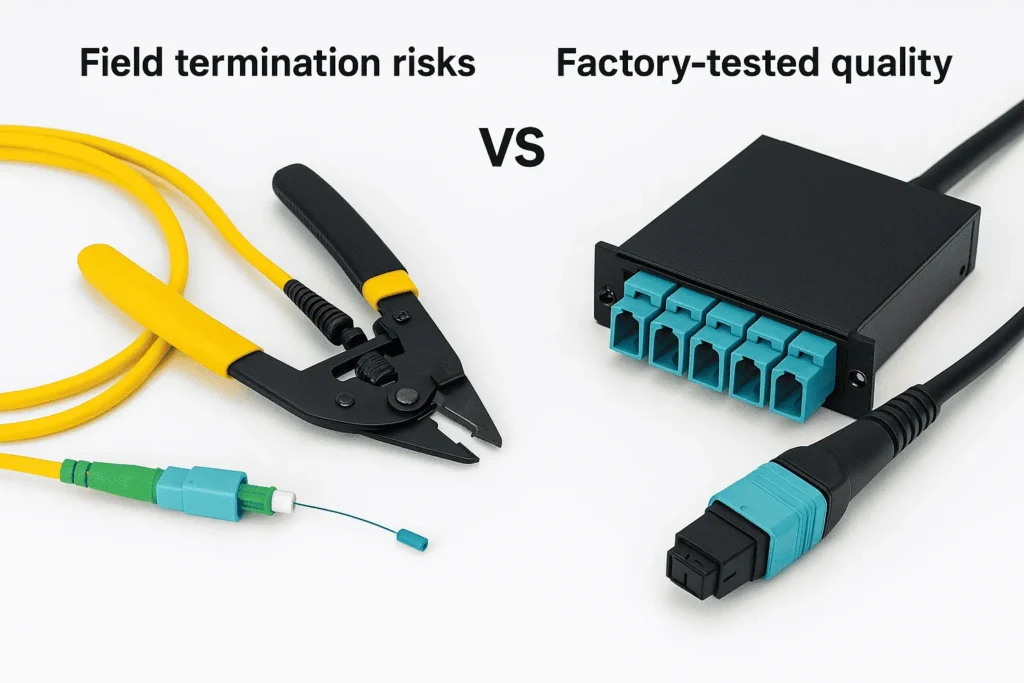
Typical failure modes I see onsite
- Contamination before inspection leads to scratches and pits.
- Under/over-polish creates back reflection and modal issues.
- Loose handling bends fiber beyond spec during tray work.
Risk & time comparison (field vs. factory)
| Factor | Field Termination | Pre-terminated (Factory) |
|---|---|---|
| Contamination | High (dust/debris) | Low (cleanroom & sealed) |
| Polish quality | Variable by tech | Machine-controlled, uniform |
| Connector errors | Frequent epoxy/cleave issues | Eliminated; verified at source |
| Testing | Spot-checks only | 100% IL/RL with report |
| Time per link | 5–10 min + setup | Seconds (plug-in) |
External read: balanced overview of field vs. pre-term trade-offs at Windy City Wire (helpful for stakeholders): link.
Install checklist (field vs. pre-term)
| Step | Tool | Pass/Fail Criteria | Pitfalls |
|---|---|---|---|
| Pull | Pulling eye | No twist; within tension spec | Sharp edges; over-pull |
| Clean/Inspect | Probe, wipes | No scratches/pits | “Cleaned but not inspected” |
| Connect | Torque tool | Click/seat verified | Cross-mate wrong polish |
| Test | OLTS/OTDR | IL/RL within budget | Skipped documentation |
For reducing onsite mistakes, see AIMIFIBER guide: installation errors to avoid.
What exactly are pre-terminated fiber solutions—and how do they work?
Think of them as prefabricated links built under control. We handle fragile steps in our lab, then ship assemblies labeled, bagged, and documented. Your crew focuses on routing and protection, not polishing or fusion routines.
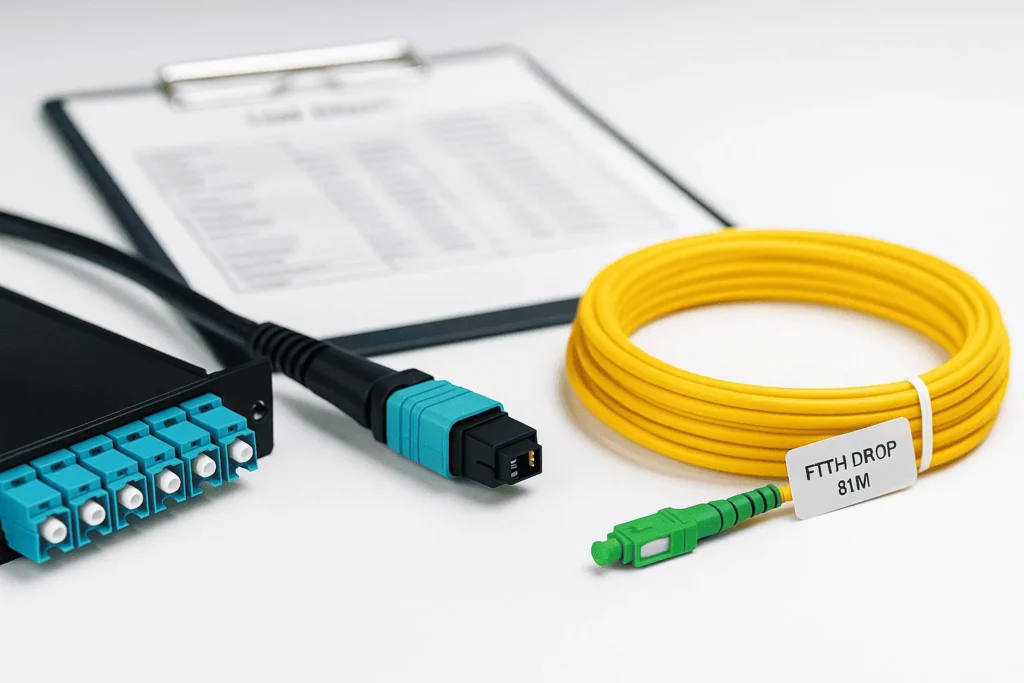
Pre-terminated fiber is a factory-built system—cables, connectors, and modules made and tested as a unit. You receive cut-to-length trunks, drops, or harnesses with MPO/MTP, LC, SC, or hardened ends, plus IL/RL reports. Crews route and plug, then do a quick validation.
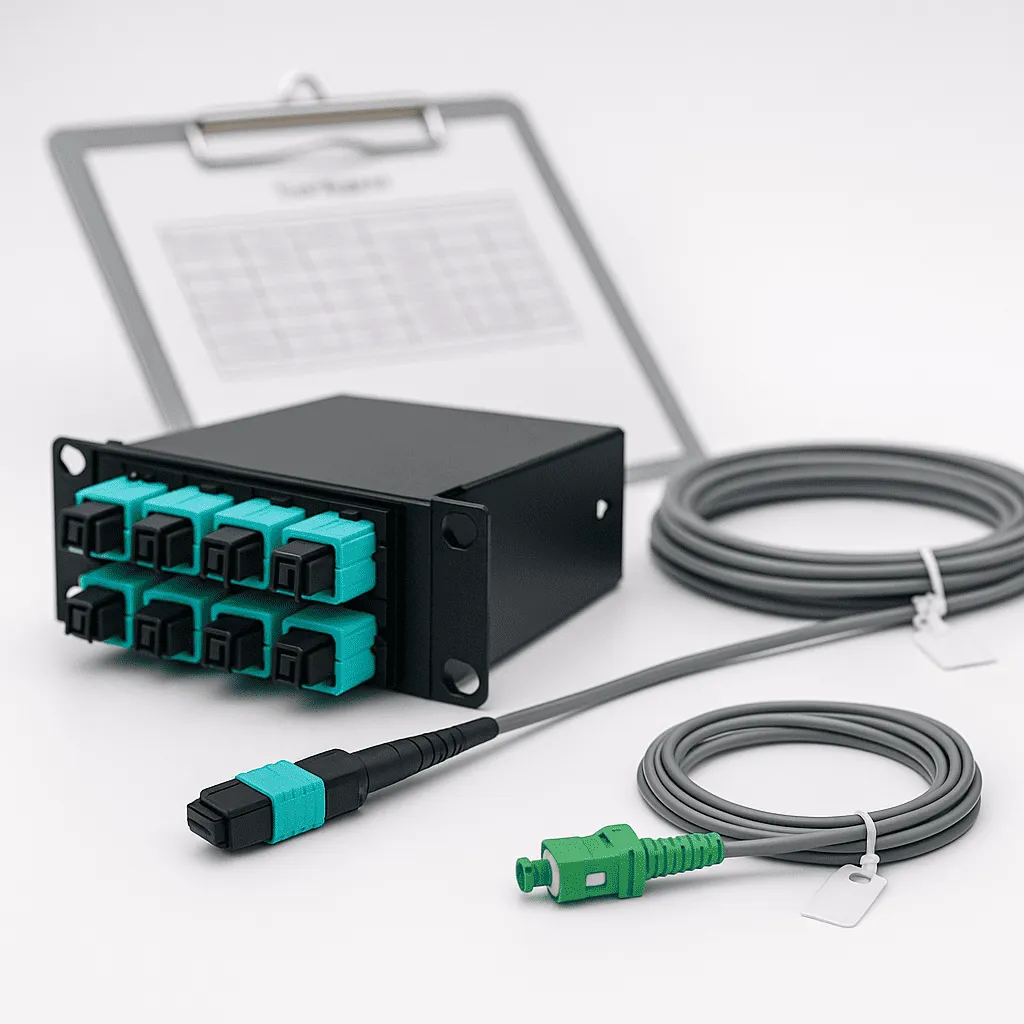
What’s typically in scope
- Trunks (MPO/MTP, 12/24/16/32F)
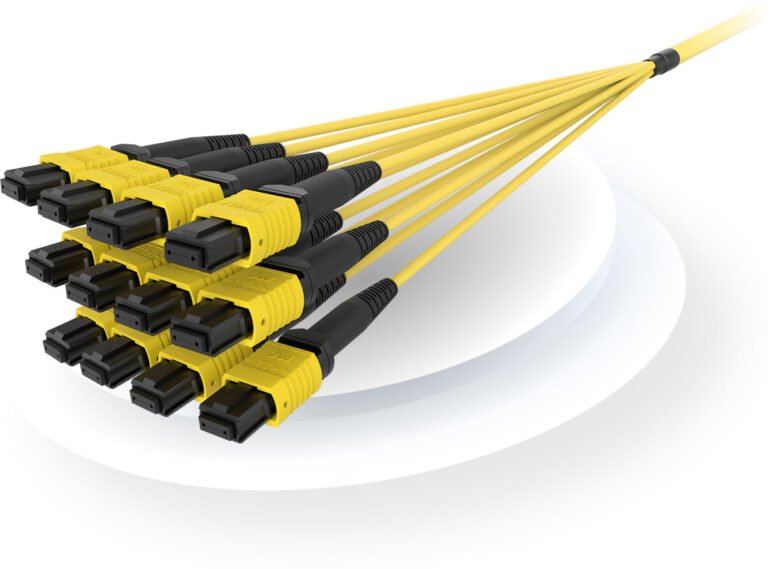
- Breakouts/harnesses (MPO-LC/SC, DR8)
- Cassettes and high-density panels
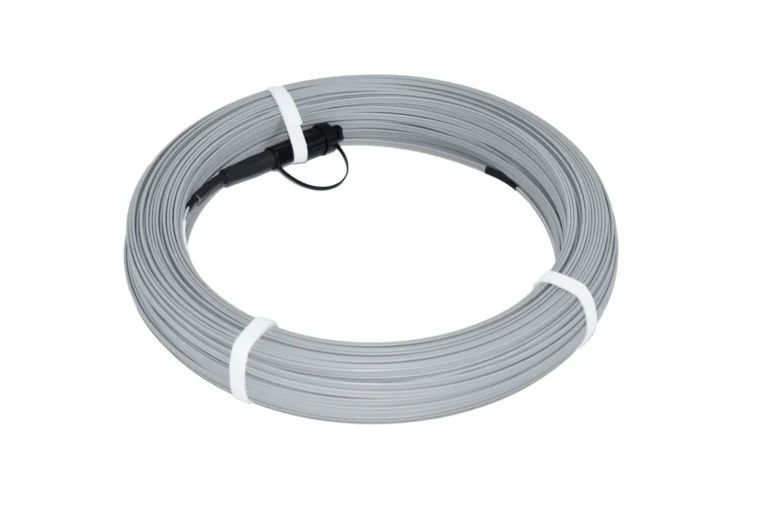
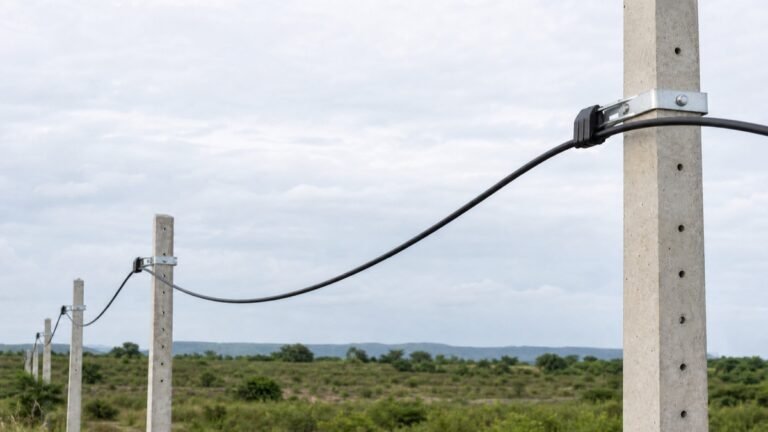
- Ruggedized FTTA/FTTH drops (OptiTap®, FullAXS, NSN)
External primer: Opticonx on pre-terminated cables: link.
Internal overview: AIMIFIBER Pre-Terminated Solutions.
Spec comparison (typical values)
| Parameter | MPO/MTP Trunk | MPO-LC Breakout | FTTH Drop (SC/APC) | Notes |
|---|---|---|---|---|
| Fiber | OS2 / OM3-OM5 | OS2 / OM3-OM5 | G.657.A1/A2 | Per project |
| IL (dB) | ≤0.35 typical | ≤0.30 typical | ≤0.30 typical | Connector grade drives range |
| RL (dB) | ≥30 (MM) / ≥50 (SM) | ≥30/≥55 | ≥60 (APC) | Typical |
| Jacket | LSZH/OFNP/PE | LSZH/OFNP | PE/LSZH | Environment-specific |
| Docs | IL/RL report | IL/RL report | IL/RL report | 100% tested |
Where each shines (internal references)
- Data center backbones: MPO/MTP trunks & cassettes
- Rapid FTTH last-mile: deployment speed case
How do pre-terminated assemblies accelerate data center rollouts?
Cutovers stall when crews splice in cold aisles. With pre-term, we pre-balance interfaces: trunks to cassettes; cassettes to ports; short patching at the edge. Work orders shrink to route-label-plug-verify. That’s why weekend migrations wrap by Sunday noon.
Pre-terminated systems compress install tasks. MPO trunks land in panels; cassettes map to LC/CS ports; labeling matches rack plans. The result is predictable time, clean cable management, and faster QA. Many teams report 30–50% time savings on like-for-like scopes.
MPO/MTP compatibility matrix (typical rack scenarios)
| Port/Rack Scenario | Trunk | Cassette | Patch Panel | Module | Notes |
|---|---|---|---|---|---|
| 10G ToR (LC) | 12F MPO | MPO→LC | 1U HD | SR/LR | Keep path loss ≤1.5 dB |
| 40G SR4 | 8/12F MPO | — | 1U HD | SR4 | Polarity A/B/C planning |
| 100G DR/FR | 2×12F / 16F | MPO→LC/CS | 1U/2U | DR/FR | Check DR8 breakouts |
| 400G SR8/DR8 | 16F MPO | MPO→CS/LC | 1U HD | SR8/DR8 | Fiber map discipline |
Internal design guide: AIMIFIBER data-center cabling.
Quick install flow (what crews actually do)
- Mount panels; verify polarity labels.
- Route trunks with pulling eyes; respect bend radius.
- Seat connectors; torque latch; protect dust caps.
- Validate paths with OLTS; spot OTDR on suspect runs.
- Patch active gear; log port maps.
BOM checklist for a weekend cutover
| Item | Spec to confirm | Doc required | Lead time | Incoterm |
|---|---|---|---|---|
| MPO Trunks | Fiber count / polarity | IL/RL report | 2–3 wks | EXW/CIF |
| Cassettes | MPO→LC/CS type | Label map | 1–2 wks | EXW/CIF |
| Patch Cords | Lengths / boots | RoHS/CE | 1 wk | EXW/CIF |
| Panels | 1U/2U/4U HD | Layout drawing | Stock | EXW |
For a plain-language explainer your stakeholders will like, see plug-and-play approach or this external overview from Ascent Optics: link.
How should I plan and procure pre-terminated links for FTTH without surprises?
Street cabinets and MDUs punish loose processes. Measure routes with slack logic, lock connector types early, and tag every leg to the dwelling. We kit assemblies per drop length so field teams just match labels and plug.
Plan FTTH with measured lengths, fixed connector specs, and labeled kits. Use rugged jackets (PE/LSZH as needed), SC/APC terminations, and weather-rated boxes. Pre-labeled bags per address keep crews moving and reduce callbacks by eliminating mix-ups at the curb.
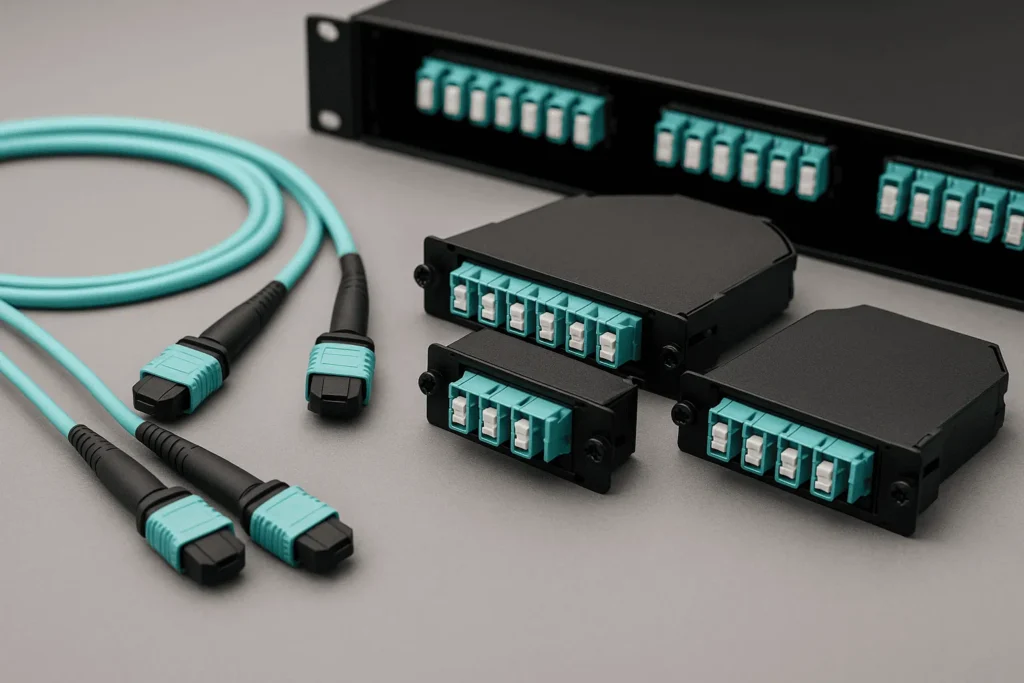
Drop cable planning tips (my field notes)
- Standardize SC/APC for last-mile unless design dictates otherwise.
- Use G.657.A2 for tight bends in MDU risers.
- Pre-book 10–15% spare lengths for reroutes and learning curve.
Length set strategy (example)
| Segment | Typical Lengths | Connector | Jacket | Notes |
|---|---|---|---|---|
| Curb→ONT | 3/8/14/20/30 m | SC/APC | PE/LSZH | Kit per address |
| Riser→Floor | 10/15/25 m | SC/APC | LSZH | Mark floor/flat |
| Cross-box | 1–5 m | SC/APC | LSZH | Label both ends |
Internal how-to: deployment case & time savings.
Acceptance & QA
- Verify IL/RL vs. budget; capture PDFs from OLTS.
- Photo panels and labels; archive to closeout pack.
- Keep spare cassettes and cords in the same label scheme.
Conclusion
Pre-terminated fiber replaces variable field work with controlled factory output. That change shortens installs, stabilizes loss budgets, and simplifies audits. In my projects—from Mexico FTTH to US rack upgrades—teams finish faster and call back less. If you’re under a tender, a weekend migration, or a city-block build, start with route measuring, connector standards, and labeled kits. Then leverage AIMIFIBER’s one-stop assemblies—trunks, cassettes, and drops—to turn “plug-and-play” from a slogan into your schedule advantage.