How do I choose the right FTTH drop cable for aerial, duct, and indoor projects?
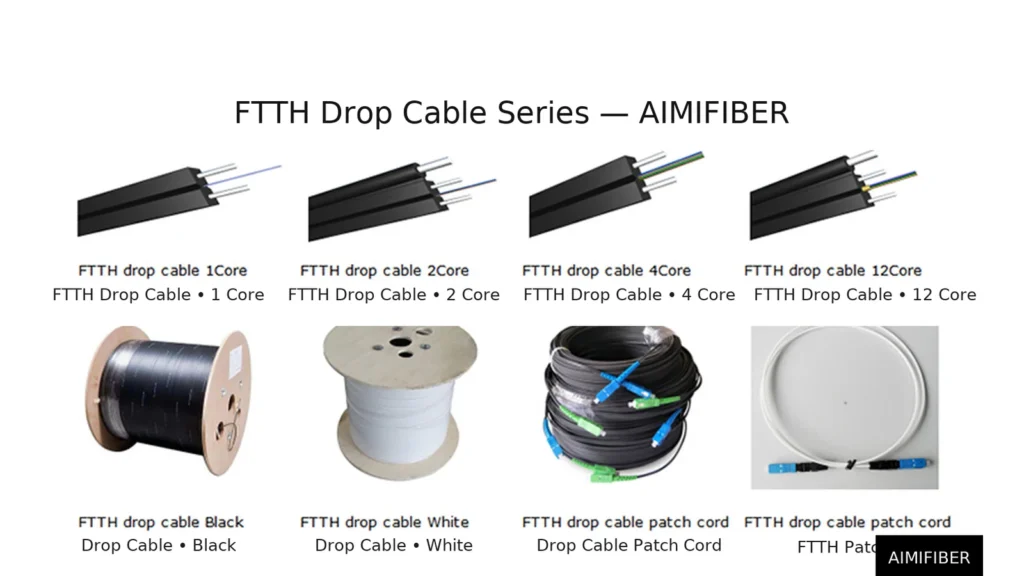
Choosing the wrong drop cable for the "last mile" is a nightmare I see too often. A flat cable used outdoors snaps in the wind; an indoor cable without LSZH fails fire inspections. It’s not just about "single mode"—it’s about the structure fitting the environment.
To choose the right FTTH drop cable, match the structure to the installation environment. Use Self-supporting Figure-8 cables (GJYXCH) with steel messengers for aerial spans to handle wind load. Use Round Double-Sheath cables (GJYXH03) for underground ducts to prevent moisture and friction. Use Flat Butterfly cables (GJXFH) with G.657A2 fiber for indoor routing around tight corners.
At Aimit Communication, producing over 1,000,000 core KM annually, I’ve seen that 80% of network failures happen in the drop segment due to wrong selection. Let’s break down the technical specs you actually need to look for.
Which drop cable specification is best for outdoor aerial installation?
When stringing cable from a pole to a subscriber's wall, the biggest enemy isn't signal loss—it's tension. Standard indoor cables only handle about 200N of pull, which means they will sag or snap during a storm.
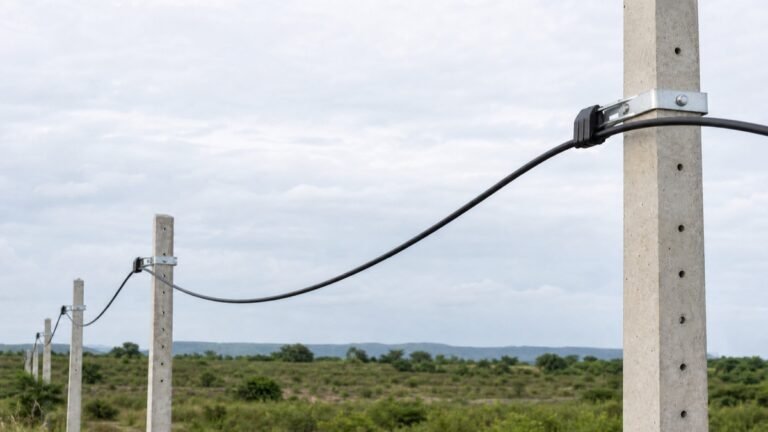
For aerial spans under 50 meters, the best choice is the GJYXCH Self-Supporting Drop Cable. Its "Figure-8" structure includes a dedicated 1.0mm Phosphate Steel Messenger Wire, providing a short-term tensile strength of 600N, ensuring the fiber remains stress-free even under wind or ice load.

Dive Deeper: The Importance of Phosphate Steel
Many cheap cables use galvanized wire which rusts after 3-5 years. At Aimit, we use Phosphate Steel Wire for the messenger. It adheres better to the jacket and resists corrosion much longer.
Product Link: View our GJYXCH Self-Supporting Drop Cable Specs
Aerial Drop Cable Spec Matrix
Here is the data from our lab tests for the GJYXCH model:
| Parameter | Specification | Why it matters |
|---|---|---|
| Structure | Figure-8 (Messenger + Unit) | Separates tension from the fiber core. |
| Tensile Strength | 600N (Short Term) / 300N (Long Term) | Essential for spans < 50m. |
| Crush Resistance | 2200N / 100mm | Resists clamp pressure during fixing. |
| Messenger Wire | 1.0mm Phosphate Steel | Anti-rust, high strength. |
| Strength Member | 2x Parallel Steel/FRP | Double reinforcement for the core. |
What structure prevents damage in underground duct installations?
Pulling a flat "butterfly" cable through a crowded pipe is a mistake. The flat shape twists and creates high friction against the pipe walls. Plus, if water gets into the pipe (which it always does), standard drop cables lack sufficient protection.
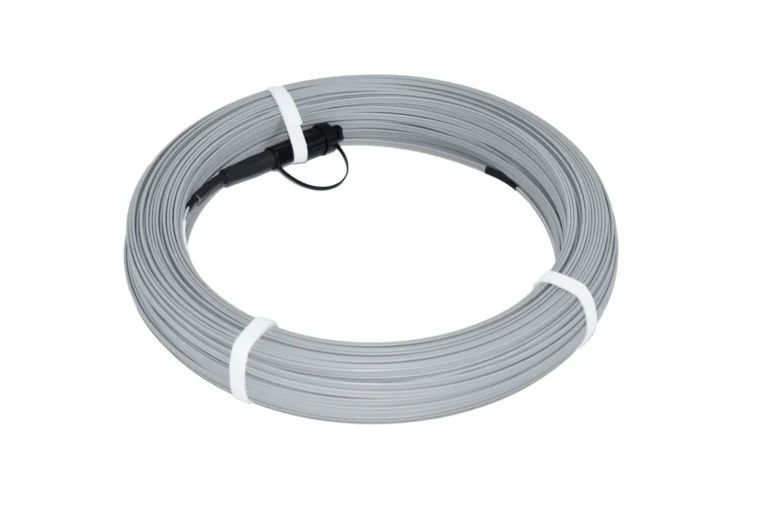
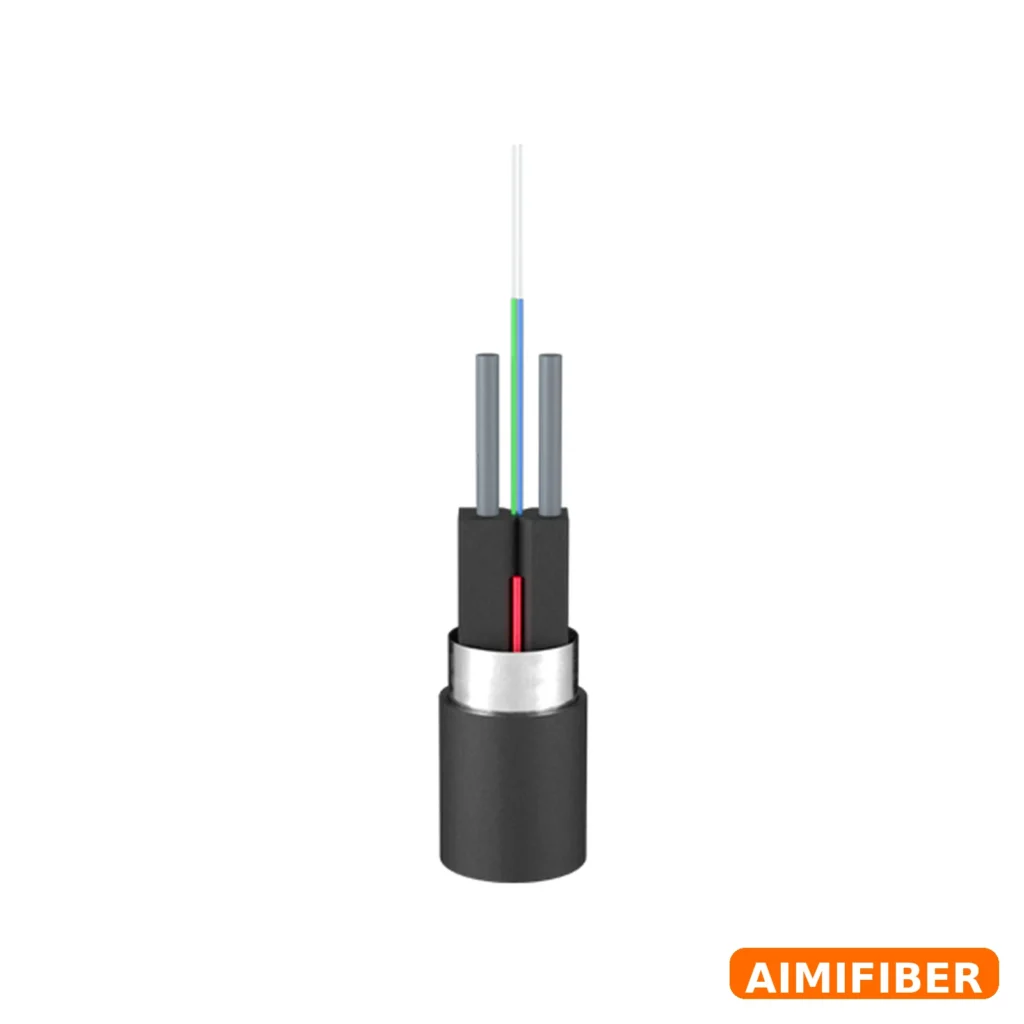
The superior choice for ducts is the GJYXH03 Round Drop Cable. It features a "Cable-in-Cable" design where a standard drop unit is wrapped in water-blocking tape and protected by a robust, round PE outer sheath (6.0mm diameter), significantly reducing pulling friction and preventing water ingress.
Dive Deeper: Round vs. Flat Friction
I always tell my clients: "Round pegs fit round holes." The round geometry of the GJYXH03 reduces surface contact area by about 40% compared to a twisting flat cable.
Product Link: Check the GJYXH03 Round Duct Drop Cable
Duct Installation Checklist
| Feature | Round Cable (GJYXH03) | Standard Flat Cable | Verdict |
|---|---|---|---|
| Friction | Low (Smooth PE) | High (Twists easily) | Round wins for pulling >50m. |
| Water Blocking | Yes (Dry Tape) | No / Limited | Round is mandatory for flooded ducts. |
| Rodent Protection | Medium (Thick PE) | Low | Round offers a sacrificial layer. |
| Diameter | 6.0 ± 0.3 mm | 2.0 x 3.0 mm | Round is tougher. |
Why is G.657A2 fiber mandatory for indoor cabling?
Once the cable enters the house, the challenge shifts from "strength" to "flexibility." You have to route cables around door frames, skirting boards, and sharp corners. Standard G.652D fiber will suffer high attenuation (signal loss) when bent.
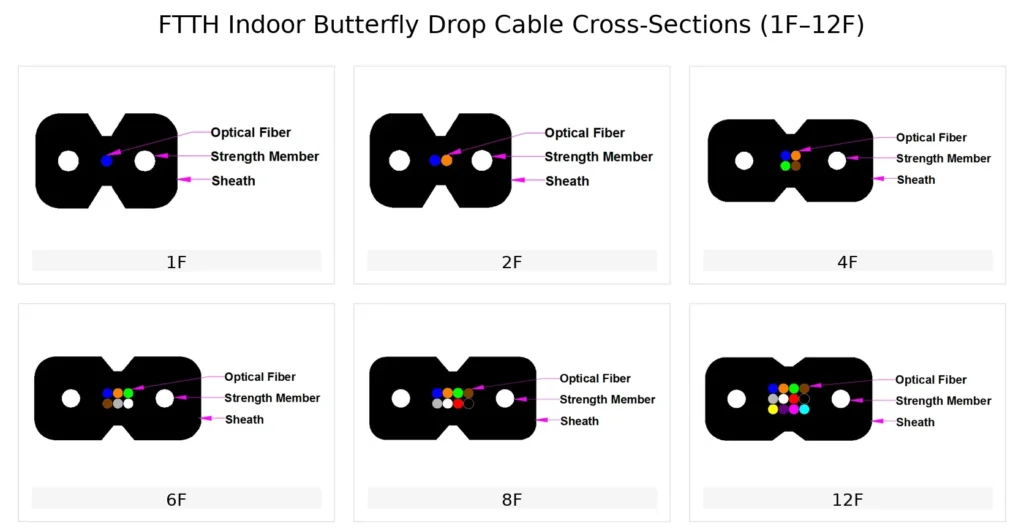
For indoor cabling, you must use the GJXFH Flat Drop Cable equipped with G.657A2 fiber. This fiber standard allows for a minimum bending radius of 7.5mm with almost zero signal loss, while the LSZH (Low Smoke Zero Halogen) jacket ensures compliance with indoor fire safety codes.
Dive Deeper: Safety and Signal
We use FRP (Fiber Reinforced Plastic) strength members for our indoor GJXFH series. Since FRP is non-metallic, it is fully dielectric—meaning no shock hazard if you accidentally drill near a power line.
Product Link: See our GJXFH Indoor Drop Cable details
Bending Radius Comparison (1550nm)
| Fiber Type | Min. Bending Radius | Macro-bending Loss (1 turn) | Application |
|---|---|---|---|
| G.652D | 30 mm | > 0.5 dB (High Risk) | Backbone / OSP |
| G.657A1 | 10 mm | < 0.25 dB | General Indoor |
| G.657A2 | 7.5 mm | < 0.1 dB | Tight Corners / FTTH |
Conclusion
Selecting the right FTTH drop cable isn't just about the fiber count; it's about the mechanical structure.
- Going Aerial? You need the 600N tension from the GJYXCH.
- Going Underground? You need the water-blocking and round shape of the GJYXH03.
- Going Indoor? You need the G.657A2 flexibility and LSZH safety of the GJXFH.
At AIMIFIBER, we manufacture all three types in our Shenzhen facility with strictly tested raw materials. If you need a specific spec sheet or a sample kit to test the tensile strength yourself, just drop me an email.
Ready to upgrade your FTTH network reliability? Contact our engineering team today.